GE Refrigerator Fix: A Practical DIY Repair Guide
Step-by-step GE refrigerator fix for homeowners. Learn safe at-home diagnostics, common issues, tools, and when to call a pro. Practical, brand-specific troubleshooting guide for GE fridges.


This guide helps homeowners perform a safe GE refrigerator fix at home. You’ll learn how to diagnose common problems, verify power and temperature settings, and complete practical, step-by-step repairs for issues like not cooling, leaks, and odd noises. Follow the steps and consult a pro if the problem persists.
Not Cooling? Understanding the GE Refrigeration System
A GE refrigerator relies on a series of components working in concert to keep perishable foods at safe temperatures. When the unit stops cooling, the culprit is often a combination of a faulty defrost cycle, a dirty condenser coil, a misadjusted thermostat, or a sealed system issue that requires professional attention. The GE refrigerator fix often begins with simple checks you can perform safely, such as confirming power supply, inspecting door seals, and listening for unusual compressor noises. According to How To Refrigerator, the most effective DIY fixes start with confirming that the unit is powered on, the kitchen breaker is intact, and the door gaskets seal properly. This initial diagnosis sets the stage for deeper inspections without risking safety or improper repairs. In many homes, these early steps reveal that the problem is not cooling caused by a failing compressor but by airflow obstruction or a failed defrost timer that can be replaced without refrigerant handling.
GE Refrigerator Diagnostics: Core Concepts and Symptoms
GE fridges share common design features like a condenser coil behind the grille, an evaporator coil in the freezer compartment, a defrost system, and a thermostat. When you notice warm air from the fridge or frost buildup, it signals a disruption in the normal cycle. While some issues are simple to resolve, others require professional service. The How To Refrigerator team notes that by far the most frequent at-home fixes involve cleaning coils, tightening door seals, and confirming thermostat settings. Awareness of how these components interact helps you distinguish between a simple adjustment and a component failure that needs replacement.
Safety First: When to DIY and When to Hire a Pro
Working on a GE refrigerator involves electrical components and, in some cases, refrigerant systems. Always unplug the unit before starting any inspection. Wear eye protection and gloves, and never poke around near exposed wiring or the compressor. If you encounter refrigerant lines, signs of oil seepage, or you suspect a sealed-system leak, stop and call a licensed technician. The goal is to avoid electrical shocks and refrigerant exposure. The GE refrigerator fix can be safe and cost-effective when you stay within your skill set and recognize when professional help is required. How To Refrigerator emphasizes conservative at-home fixes first and escalation if performance does not improve.
Preparing Your Workspace and Tools
Before you touch the appliance, create a clean, uncluttered workspace. Gather the necessary tools, have a digital camera handy to document internal connections, and place towels to catch any water. A well-prepared setup reduces missteps and helps you follow the sequence of checks more reliably. This prep work is a crucial part of the GE refrigerator fix, because organized actions prevent accidental damage and make it easier to reassemble after testing. Keeping a model number handy also helps you look up torque specs and replacement parts quickly.
Inspecting Defrost System and Thermostat Basics
A defective defrost timer or heater can prevent ice from melting, causing frost buildup that blocks airflow. If you notice thick frost or ice on the evaporator, this is a hint that the defrost cycle is not functioning. The thermostat should shut off the defrost heater after a short period. When these components fail, you’ll see temperature swings and frost accumulation. A careful, non-invasive inspection can confirm whether the timer or thermostat needs replacement. For many GE refrigerators, replacing a faulty timer or thermostat is a straightforward fix that doesn’t involve hazardous materials.
Airflow and Condenser Coils: Cleanliness Matters
Condenser coils remove heat from the refrigerator and are usually located behind a grille at the back or bottom of the unit. When coils are dirty or blocked by dust, the fridge runs longer and struggles to maintain cool temperatures. Cleaning the coils with a soft brush or vacuum can restore airflow. This is one of the most impactful GE refrigerator fix steps because it directly affects cooling efficiency. If you can access the coils safely, unplug the unit first and work from the outside in to avoid dislodging components from within.
Door Seals, Gaskets and Alignment
A leaking door seal lets warm room air infiltrate the fridge, forcing the compressor to work harder and reduce internal temperatures. Inspect door gaskets for cracks, tears, or gaps. A simple soapy water test can reveal air leaks: spray or wipe with a soapy solution and watch for bubbles along the seal when the door is closed. If you find a damaged gasket, it’s often a quick replace. Misalignment due to sagging hinges can also create gaps that mimic a failed seal. Correct alignment, along with a fresh gasket, can restore airtight performance.
Noises, Vibrations, and Unusual Behavior
Unusual buzzing, rattling, or constant running noises can indicate a loose fan blade, a failing compressor, or debris in the fan shroud. If you hear grinding or high-pitched squeals, shut down the unit and inspect the fan and motor area. In some GE models, a faulty start device or capacitor can create a false sense of a major failure. Distinguishing noisy cooling sounds from mechanical irritation helps you decide whether to tighten components, clean the fan housing, or seek service.
When to Call a Pro and Maintenance Tips
If basic checks do not restore normal operation within a reasonable timeframe (for example, 2–4 hours of observed performance), or you identify refrigerant lines or a sealed-system leak, contact a licensed technician. The GE refrigerator fix is often cost-effective when performed early, but refrigerant handling requires certified expertise. Even if you fix the problem yourself, schedule routine maintenance—clean coils every 6–12 months, inspect seals seasonally, and keep the interior organized to reduce stress on the cooling system. The How To Refrigerator team also recommends keeping the model and repair records handy for warranty purposes.
AUTHORITY SOURCES
- https://www.energy.gov/eere/buildings/articles/choosing-energy-efficient-refrigerators
- https://www.osha.gov/
- https://www.epa.gov/
Tools & Materials
- Phillips head screwdriver(Size #2 for most GE panels)
- Flathead screwdriver(For screws in some panels)
- Nut driver set(For mounting hardware)
- Multimeter(For testing electrical components)
- Soft brush / coil brush(To clean condenser coils)
- Vacuum with brush attachment(Dust and debris removal)
- Microfiber cloths(Wipe surfaces and seals)
- Towel or shallow pan(Catch condensate or leaks)
- Replacement door gasket or defrost timer/thermostat (part as needed)(Only if diagnosed as faulty)
- Gloves and safety glasses(Personal protection)
Steps
Estimated time: 1-3 hours
- 1
Unplug and verify power
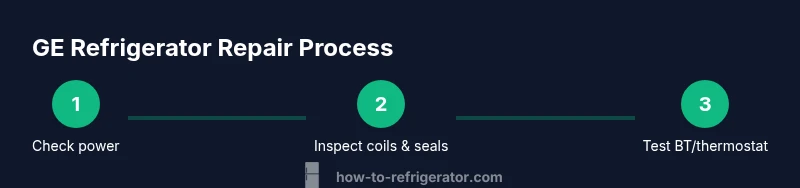
Disconnect the GE refrigerator from the wall outlet and confirm the circuit is not supplying power. This prevents shocks while inspecting electrical components. Use a non-contact voltage tester if available to confirm no live voltage near exposed parts.
Tip: If you must move the fridge, have a helper and unplug before pulling it away from the wall. - 2
Inspect door seals and alignment
Close the doors on a dry surface and check for air leaks around gaskets. A flashlight can help you spot gaps or cracks. If you notice leakage, replace damaged seals or adjust hinges to restore a snug fit.
Tip: Clean the gasket with mild soap and water before deciding on replacement to confirm the extent of wear. - 3
Check thermostat and temperature settings
Ensure the internal temperature is set within recommended ranges and verify thermostat responsiveness by adjusting and listening for the indicator click. If the setting doesn’t register changes, a faulty thermostat may require replacement.
Tip: Document the current setting before making any adjustments so you can revert if needed. - 4
Inspect defrost system components
Look for frost buildup along the evaporator and ensure the defrost timer is cycling properly. A stuck timer or melted-ice residue can impede airflow and cooling.
Tip: If you suspect a timer fault, avoid disassembling the sealed refrigerant area; replace the timer or call a pro. - 5
Clean condenser coils
Locate the coils behind the grille or at the back and remove dust using a coil brush or vacuum. Clean coils improve heat exchange and reduce energy use.
Tip: Do not use high heat or metal tools that can bend fins; work slowly and from the outside in. - 6
Check airflow and interior vents
Make sure internal vents aren’t blocked by items. Proper airflow ensures cold air circulates; rearrange shelves to prevent airflow restriction.
Tip: Leave space around stored items to promote air movement. - 7
Inspect fans and fan guards
Rotate the fan blades by hand to ensure they spin freely. Check for obstructions and test the fan operation after reassembly.
Tip: Clear any debris before reconnecting power to prevent fan damage. - 8
Assess the ice maker and water line (if present)
If the ice maker is malfunctioning, check water supply, line connections, and filters. A blocked line or faulty solenoid can cause no ice or slow dispensing.
Tip: Turn off water supply before inspecting, and flush the line after reconnecting. - 9
Test after reassembly and monitor
Plug the fridge back in and observe performance over 2–4 hours. Check for consistent cooling, frost-free operation, and absence of leaks.
Tip: Keep a log of temperature readings to verify consistency.
FAQ
Is it safe to DIY a GE refrigerator fix?
DIY fixes are safe for non‑hazardous tasks (power checks, coil cleaning, gasket replacement) when you unplug the unit and follow steps carefully. Avoid refrigerant handling and electrical work beyond your comfort level.
Yes, for safe at-home steps like cleaning coils and checking gaskets, but don’t touch refrigerant or high‑voltage components.
What is the most common GE refrigerator issue I can fix myself?
Not cooling due to dirty condenser coils or a faulty door seal is common and often fixable with cleaning or gasket replacement. Start with those before moving to thermostat or defrost problems.
Most often, not cooling is caused by dirty coils or bad door seals, which you can address safely at home.
When should I call a pro?
If you suspect a sealed-system leak, refrigerant issue, or a faulty compressor, call a licensed technician. Uncertain diagnoses or signs of refrigerant exposure require professional handling.
Call a professional if you see refrigerant signs or if the compressor or sealed system seems involved.
Will fixing the gasket improve energy efficiency?
Yes. A good door seal reduces warm air infiltration, which lowers the compressor workload and improves cooling efficiency and energy use over time.
A good gasket stops warm air from entering and helps the fridge run more efficiently.
Do I need to unplug the fridge for every inspection?
Unplugging before any inspection or coil cleaning is essential for safety. Reconnect only after you’ve completed the check and are ready to test.
Always unplug before starting and reconnect only when you’re ready to test.
Where can I buy GE fridge parts?
Parts can be sourced from GE’s official parts suppliers or reputable appliance parts retailers. Check your model number to ensure compatibility.
Use reputable suppliers and match your model number to get the right part.
Watch Video
Top Takeaways
- Identify the likely cause before disassembly.
- Condenser coil cleanliness dramatically improves cooling efficiency.
- Door seals and airflow are common culprits for not cooling.
- Escalate to a licensed technician for refrigerant or sealed-system work.