Disposing of Refrigerator: Safe, Legal, and Eco-Friendly
Learn how to dispose of a refrigerator safely and legally, including refrigerant recovery, choosing a recycler, donation options, and keeping records for proof of proper disposal. This homeowner-friendly guide covers regulations, options, and best practices for a responsible exit for your old appliance.


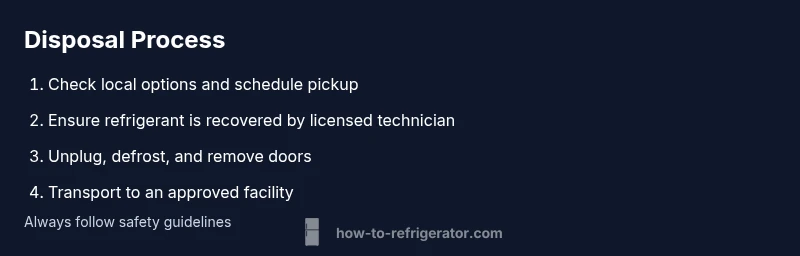
To dispose of a refrigerator responsibly, first confirm local regulations and use an EPA-certified recycler. According to How To Refrigerator, unplug, defrost, and disconnect water lines; arrange refrigerant recovery by a licensed technician; remove doors to prevent entrapment; transport to an approved facility; keep disposal receipts. Avoid venting refrigerant or leaving it curbside.
Understanding why disposing of refrigerator matters
Disposing of refrigerator properly is about more than freeing up space. It reduces environmental harm, keeps your home safe, and ensures you stay compliant with local and national regulations. When a unit ends up at an improper dump site or is vented, refrigerants and oils can leak into soil and groundwater, and toxic components can pose risks to people and wildlife. Homeowners have a responsibility to handle old appliances with care. By following established disposal pathways—recycling centers, take-back programs, or municipal collection—you can minimize waste, maximize material recovery, and support broader environmental goals. Understanding these implications helps you make informed choices and avoid penalties that come from improper disposal. How you dispose of a refrigerator also affects neighbors who rely on clean neighborhoods and accessible recycling streams.
To begin, recognize that this task isn’t just about moving a heavy box out of your house; it’s about planning for a safe, compliant, and sustainable exit for one of the most resource-intensive home appliances.
Regulatory and environmental considerations
Disposing of refrigerator units falls under a mix of local ordinances, state rules, and federal guidelines governing appliance recycling and refrigerant handling. In the United States, the Environmental Protection Agency regulates the proper recovery of refrigerants and obligates manufacturers and recyclers to follow specific procedures. Many municipalities require appliances to be diverted from landfills and routed to certified recycling facilities. This is not only a legal requirement in many areas but also a public health and environmental protection measure. Before you move the appliance, contact your city or county’s solid-waste or recycling department to learn about pick-up schedules, required documentation, and any fees. Utilities sometimes offer take-back programs or rebates for recycling old units, so it’s worth asking about those options. How To Refrigerator Analysis, 2026 notes that compliant disposal programs reduce environmental risk and improve material recovery rates.
Donating or recycling: options before disposal
If the fridge still works, donation can be a practical and altruistic option. Local charities, shelters, or appliance recycling programs may accept functional units, especially if they come with a working compressor and cooling system. If the unit is beyond repair, recycling is the next best path. Look for EPA-certified recyclers or programs that explicitly handle refrigerants and ferrous/non-ferrous metals. When evaluating options, request a disposal receipt or certificate of recycling to document that the appliance was processed responsibly. If possible, choose a recycler that provides data on material recovery rates and refrigerant handling practices, which helps you demonstrate environmental stewardship to neighbors and authorities.
Preparing for disposal: safety basics
Safety should be your top priority before any physical handling begins. Unplug the refrigerator from the power source, then allow it to defrost completely to prevent leaks and spills. Wear protective gloves and sturdy footwear to guard against sharp edges and heavy components. If your fridge has a water line for an ice maker, shut off the water supply and detach the line. Remove or secure shelves and drawers to prevent them from shifting during transport. Label the appliance with your contact information and intended destination so the hauler can identify it quickly. If you’re unsure about any step, err on the side of caution and contact a licensed disposal service for guidance.
Handling refrigerants and why licensed technicians are required
Refrigerant recovery is a critical safety and environmental step. Most modern refrigerators contain refrigerants that can harm the atmosphere if released.Do not attempt to discharge or vent refrigerants yourself; this is illegal in many jurisdictions and dangerous to health. A licensed technician or EPA-certified contractor must recover the refrigerant using approved equipment before the unit is processed. Request documentation of refrigerant recovery as part of your disposal records. By ensuring proper recovery, you protect air quality and comply with environmental laws while enabling the appliance to be recycled for metal and plastic parts.
Door removal, labeling, and protecting bystanders
To prevent injuries or entrapment, remove the fridge doors or secure them open. This simple precaution makes it safer for anyone handling the appliance, especially children and pets in the home. Keep a clear path and use temporary signage or tape to alert movers that the unit is being prepared for disposal. If doors cannot be removed due to hinge design, make sure the doors are secured in a way that they cannot close unexpectedly during transport. Proper labeling helps the disposal team identify the appliance’s destination and any special handling requirements.
Transporting the fridge: equipment, helpers, and routes
Transport requires planning and the right equipment. Use a heavy-duty appliance dolly and moving straps to minimize back strain and wall damage. Enlist at least one helper to guide the unit and maintain balance on stairs or uneven surfaces. Remove all packing materials, clear the path, and measure doorways in advance to ensure the fridge can pass through without obstruction. If stairs or a long driveway are involved, take extra time and adjust your route to avoid sharp turns or sudden shifts. Finally, confirm the destination’s hours of operation and check in with the facility ahead of arrival to prevent delays.
Documentation and receipts: proof of proper disposal
Keep comprehensive records of every step in the disposal process. Collect an itemized disposal receipt from the recycler or hauler, and store any refrigerant-recovery certificates or permits. Note the fridge’s make, model, serial number, and any service notes from the technician who recovered refrigerants. Documentation is useful for buyer or appraiser inquiries, warranty considerations, or tax credits related to recycling. If you donated the appliance, request a donation receipt with a brief description of the item and its condition. Retain copies for at least several years, depending on local requirements.
Common mistakes and how to avoid them
Avoid curbside dumping without confirming program eligibility, as many cities ban it for large appliances. Do not vent refrigerants, and never attempt DIY recovery. Skipping documentation can lead to disputes or penalties later. Rushing the process tends to overlook hazardous connections or water lines that should be disconnected. Finally, avoid buying cheap hauling services that lack proper licensing—enlist a certified recycler or professional hauler even if it costs a bit more, because responsible disposal pays off in environmental and legal protection.
What happens after disposal and final homeowner tips
After a refrigerator is processed, recyclable metals are recovered, insulating foams may be treated, and residual materials are managed according to waste streams. Recyclers often separate plastics, glass, metal, and electronic components for reuse. If you’re a homeowner seeking to minimize future waste, consider keeping your next appliance for a longer period and scheduling regular maintenance to extend its life. Look for take-back programs for future replacements and learn about tax incentives or utility rebates that support eco-friendly disposal. By following these steps, you’ll maximize environmental benefits and stay in good standing with local regulations. The How To Refrigerator Team recommends sticking to certified recyclers and documenting every step to ensure responsible disposal.
Tools & Materials
- appliance dolly(Heavy-duty dolly rated for at least 400-600 lbs, with secure strap.)
- moving straps(2-person strap system to stabilize load.)
- work gloves(Cut-resistant for grip and hand protection.)
- screwdrivers (Phillips & flathead)(To remove panels or doors if needed.)
- adjustable wrench(Used to disconnect water lines if present.)
- utility knife(Optional for packaging or trimming protective materials.)
- marker & tape(Label components and destinations; secure packaging.)
- protective blankets/ plastic wrap(Prevent surface damage during transport.)
Steps
Estimated time: 3-6 hours
- 1
Verify disposal options with local authorities
Before any physical work, contact your city or county solid-waste department to confirm accepted disposal pathways, schedules, and fees. This ensures you follow local rules and avoid penalties. Prepare questions about recycling options, take-back programs, and required documentation.
Tip: Call ahead to confirm the latest requirements and any required paperwork. - 2
Arrange refrigerant recovery with a licensed technician
If the appliance contains refrigerant, you must arrange recovery through a licensed technician or EPA-certified recycler. Do not attempt to vent or release refrigerant yourself. Record the service provider details for your disposal receipt.
Tip: Request a written recovery certificate and keep it with your disposal records. - 3
Unplug, defrost, and disconnect water lines
Unplug the unit from power and allow it to defrost completely. If there is an ice maker or water line, shut off the supply and disconnect carefully. Clean and dry surfaces to prevent mold during storage or transport.
Tip: Defrosting prevents slushy ice blocks that slow down removal. - 4
Remove doors or secure them open
If possible, remove the refrigerator doors. If removal isn’t feasible, prop them securely open and use clear signage to prevent entrapment. This step reduces injury risk for movers and bystanders.
Tip: Keep the hinge areas clear to avoid damaging nearby walls. - 5
Prepare the appliance for transport
Remove shelves, drawers, and loose parts; wrap surfaces with blankets to prevent scratches. Place the fridge on the dolly, securing it with straps to minimize shifting during movement.
Tip: Test balance on the dolly before starting the move. - 6
Transport to an approved facility
Move the unit along a planned route to a licensed recycler or approved disposal site. Watch doorways and stairs, and avoid steep ramps that could destabilize the appliance.
Tip: If stairs are involved, ask for extra help or a lift to prevent tipping. - 7
Obtain disposal receipts and documentation
Secure a disposal receipt or certificate of recycling from the facility. Note the date, location, and any material recovery data for your records.
Tip: Digitize receipts and store them in a dedicated disposal folder. - 8
Follow up and keep records
Keep a record of the process, including the recovered refrigerant documentation and any donations or take-back confirmations. This helps with future resale, tax considerations, or warranty inquiries.
Tip: Retain records for several years as required by local regulations. - 9
Confirm completion of eco-friendly disposal
Verify that the recycler has processed the appliance according to environmental standards and that no hazardous materials were released. This confirmation helps you demonstrate responsible disposal to neighbors and authorities.
Tip: Request a short summary of the materials recovered and recycled.
FAQ
Do I need to remove the doors before disposal?
Yes, removing doors or securing them open is strongly advised to prevent entrapment during handling. If doors can’t be removed, ensure they won’t close unexpectedly.
Yes, remove or secure the doors to prevent anyone from getting locked inside.
Can I discard a fridge curbside?
Curbside disposal is often restricted for large appliances. Check with your city, utility, or recycler for approved pickup options and required steps.
Don’t leave a fridge at the curb; use an approved recycler or program.
Who pays for refrigerator disposal?
Costs vary by program and location. Municipal programs or utilities may offer free or subsidized disposal, while private services may charge a fee.
Costs vary; check with your city or utility about any fees or rebates.
What about refrigerant and components?
Refrigerant must be recovered by a licensed technician. Never vent refrigerant yourself; improper handling is illegal and harmful.
Refrigerant should be recovered by a licensed professional; don’t vent it yourself.
Can I donate an old fridge?
If the refrigerator is still functional, some charities or appliance banks may accept it. Check local programs and pickup options.
Yes, if it still works, you can donate to a charity that accepts appliances.
How long does disposal take?
Process times vary by location and program. Plan for a few days if scheduling pickups or drop-offs.
Timing varies; it could take a few days depending on the program.
Watch Video
Top Takeaways
- Plan disposal with local authorities.
- Hire licensed technicians for refrigerant recovery.
- Keep disposal receipts and documentation.
- Choose certified recyclers for true eco-friendly outcomes.