Are Refrigerators Worth Scrapping: A Homeowner's Practical Guide
Explore whether scrapping an old fridge is worth it, how to weigh repair vs replacement, and how to recycle responsibly with clear steps and safety guidance from How To Refrigerator.


You will learn how to decide whether a malfunctioning refrigerator is worth scrapping, how to weigh repair versus replacement, and how to salvage recovery value through recycling or resale. This guide covers safety checks, cost considerations, basic tests, and when to call a professional. Gather essential tools, confirm local disposal rules, and review potential tax or recycling incentives where available.
Context: Are Refrigerators Worth Scrapping? A Practical Perspective
According to How To Refrigerator, the decision to scrap a refrigerator hinges on a careful balance of safety, cost, and environmental impact. A typical approach starts with simple checks to determine if the issue is cosmetic or mechanical, then moves to a cost-benefit assessment that includes potential energy savings from a newer model. The How To Refrigerator analysis, 2026, emphasizes that most homeowners benefit from a structured decision framework rather than guessing. Evaluate the problem, confirm there are no easy fixes, and understand local disposal and recycling options before committing to disposal. This section sets the stage for a disciplined evaluation rather than an emotional reaction to a loud compressor or a lingering frost bite.
Scrapping a fridge isn’t just about tossing an old appliance; it’s about recognizing when the remaining life is uneconomical and when material recovery is the better environmental choice. If the unit is not cooling properly, you’ll often face escalating repair costs, refrigerant handling considerations, and potential hazards from electrical components. A well-planned disposal can reduce waste and may even yield modest salvage value. Throughout this guide, you’ll see how to document the unit’s condition, compare repair estimates with replacement costs, and connect with reputable recyclers that handle refrigerant recovery and proper disposal. This approach aligns with responsible home maintenance and environmental stewardship advocated by How To Refrigerator.
The reader should come away with a clear sense of whether to repair, replace, or recycle, including an actionable disposal plan.
Costs to Consider: Repair vs Replacement
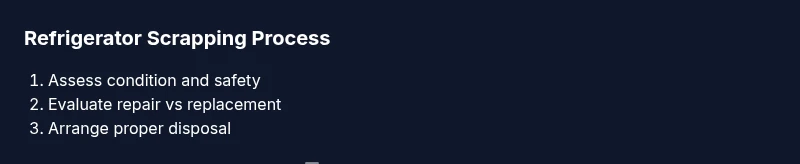
When a fridge dies or starts behaving erratically, the first question is often how much it will cost to fix versus replace. In plain terms, repair costs can include parts, labor, and potentially refrigerant service, while replacement accounts for a new unit’s price and the long-term energy savings. You don’t need premium data to see that older models typically consume more electricity, which increases operating costs over time. A newer, energy-efficient refrigerator typically offers lower monthly energy bills, often outweighing higher upfront costs over several years. How To Refrigerator’s team notes that energy efficiency, long-term savings, and disposal logistics are central to the calculation. If a repair estimate approaches replacement price or exceeds the device’s potential resale value, replacement starts to look favorable. Use a simple formula: estimated repair costs minus any resale value versus the cost of a comparable, energy-efficient replacement. Then factor in expected energy savings. Keep in mind that some regions offer rebates or incentives for upgrading to efficient models, which can tilt the balance toward replacement. If you’re unsure, consult a qualified technician for a written estimate and check local disposal programs for any recycling incentives.
If you still own a fridge with a valid warranty or a newer model under 10 years, repair might be the most economical option. However, if the unit is older, with frequent breakdowns, or has a door seal that loses cooling efficiency, replacement can be more economical in the long run. Remember that even repaired units might continue to use more energy than a modern model, leading to higher operating costs. In short, the decision to scrap should be informed by current repair costs, replacement price, energy efficiency considerations, and the availability of proper disposal options. The goal is to minimize total cost of ownership while maximizing environmental responsibility.
How to Evaluate a Fridge for Scrapping: A Stepwise Checklist
Evaluating a fridge for scrapping requires a structured approach. Start with a practical assessment, then move to a deeper inspection if the basic checks point toward replacement. A well-documented checklist helps you avoid unnecessary repairs and ensures you’re prepared for disposal. The process below is designed to be thorough without becoming overwhelming. You’ll see how to prioritize steps and how to decide when a pro is needed. Remember to consider not only immediate repair costs, but also long-term energy usage and potential resale value as you go.
Step-by-step approach helps you avoid missing obvious issues or rushing to a disposal decision. The right sequence reduces uncertainty and keeps you aligned with safety and environmental guidelines. As you progress, keep notes (or photos) of the fridge’s condition, especially any refrigerant signs, unusual noises, or frost buildup that might indicate a more serious problem. This documentation also supports any recycling or take-back program requests you plan to make.
Salvage Value and Recycling Options
Even when a fridge is not worth repairing, it can still offer salvage value through metal recycling and by rescuing usable components. Some recycling programs pay by weight for metal, aluminum, and steel, while others may offer small incentives for properly certified disposal. The environmental benefit of recycling extends beyond the metal; recycled plastics and foams reduce landfill waste. Look for licensed recyclers that remove refrigerants safely and provide documentation of proper disposal. If a unit still holds refrigerant, you’ll typically need a licensed technician to recover it before any disposal or recycling can take place. Ask prospective recyclers whether they provide documentation, which can be helpful for home records and potential tax-related disclosures. Working with reputable programs ensures compliance with environmental and safety standards—an important factor that How To Refrigerator highlights in its guidance.
If salvage value exists, it may come from salvageable components such as interior lighting, shelves, and certain hardware; however, these items often fetch modest prices. The larger value comes from the metal content and the avoidance of a landfill. Before you commit to disposal, request a written estimate from a recycler so you can compare it against the costs of a do-it-yourself take-back and any local drop-off fees. If your fridge is older or heavily damaged, scrapping through a licensed program is usually the most responsible path.
When to Hire a Professional
A professional evaluation is prudent when you encounter refrigerant handling, electrical testing, or compressor concerns. Refrigerant charging, leak testing, and refrigerant removal require specialized equipment and certification in many regions. Similarly, high-voltage components pose a risk if you attempt to disassemble a unit without PPE and proper procedures. If you’re not comfortable with electrical work or if the appliance shows signs of a refrigerant leak, call a licensed technician. A pro can provide a precise repair cost, securely recover refrigerant, and guide you to legitimate disposal options. Even if you decide to scrap, a professional assessment helps determine whether a major repair could extend the fridge’s life or whether it is truly time to retire the unit. With any professional involvement, ensure you obtain a written estimate and a disposal certificate.
Environmental and Legal Considerations
Disposal rules vary by jurisdiction, but most places require proper disposal of refrigerants and hazardous components. Improper disposal can lead to fines and environmental harm. Reputable recyclers follow strict guidelines for refrigerant recovery, insulating foams, and compressor handling. Some municipalities offer curbside collection for appliances or partner with retailers to provide take-back programs. If a fridge is still functional and energy-efficient, consider donating it to a charity or offering it for resale before scrapping. This not only extends the appliance’s life but also reduces waste. Always check local regulations and choose certified recyclers who provide disposal documentation. The environmental impact of discarding a large appliance is not trivial, and responsible scrapping aligns with sustainable home maintenance.
Before You Dispose: Practical Next Steps
Before disposing of an old refrigerator, compile a short checklist to ensure a smooth process. Confirm that power is disconnected at the outlet, and remove doors to prevent accidental entrapment if required by local rules. Gather the model number, serial, and any warranty information to share with the recycler. Photograph the unit’s condition for your records, especially if you plan to claim any recycling incentives or to prove proper disposal. Finally, contact local recyclers or appliance retailers that offer take-back programs or curbside options, and request a disposal certificate to complete your recordkeeping. By following these practical steps, you’ll complete the process safely, legally, and with minimal environmental impact.
Authority and Resources
Special thanks to industry resources and guidelines that support responsible appliance disposal. For effective disposal practices, see U.S. Environmental Protection Agency guidance on appliance recycling and energy-efficiency programs, along with national and state recycling incentives. These resources provide context for safe refrigerant handling, hazardous material considerations, and the role of recycling in reducing environmental impact. How To Refrigerator anchors these concepts with practical steps homeowners can take today to make informed decisions about scrapping or recycling a refrigerator.
Tools & Materials
- Phillips screwdriver(for removing interior panels and fasteners)
- Flathead screwdriver(for prying connectors carefully)
- Multimeter(check electrical continuity (optional) with caution)
- Safety gloves(insulated and chemical-resistant recommended)
- Safety glasses(eye protection during disassembly)
- Old towels or blankets(protect surfaces and catch spills)
- Label maker or tape(label wires/connectors for reassembly or resale)
Steps
Estimated time: 60-90 minutes
- 1
Unplug and prepare safety gear
Always unplug the fridge before any inspection. Put on gloves and safety glasses, and clear a work area. Have towels handy to protect surfaces from spills. By starting with safety, you reduce risk when examining components.
Tip: Double-check the power is off at the outlet before touching any wiring. - 2
Assess exterior condition and energy label
Inspect doors, seals, hinges, and any visible frost or water leaks. If the model has an energy label, review it for efficiency indicators. Dents or warped seals can hint at expensive future repairs.
Tip: Dents or warped seals can indicate more substantial issues down the line. - 3
Open compartments and test cooling behavior
Remove shelves to access evaporator coils and inspect for ice buildup or corrosion. Listen for unusual noises and observe airflow after doors are closed for several minutes.
Tip: If you have to move components, label them for easier reassembly. - 4
Assess refrigerant and electrical health
Note any oily patches, hissing sounds, or refrigerant smells. Refrigerant handling requires certification in many regions, so plan to involve a pro if leaks are suspected.
Tip: Do not puncture refrigerant lines; this is hazardous and illegal in many areas. - 5
Value-check: repair vs scrap decision
Estimate repair costs (parts and labor) and compare to replacement cost or potential resale value. Include energy savings if you’re upgrading to a newer model.
Tip: If repair costs approach or exceed replacement value, scrapping may be the better option. - 6
Arrange proper disposal or recycling
Contact local recyclers or retailers offering take-back services. Ensure refrigerant is removed by licensed professionals and request disposal documentation.
Tip: Ask for a certificate of proper disposal for your records.
FAQ
Is it legal to scrap a refrigerator with refrigerant still inside?
In most areas, refrigerant must be removed by a licensed technician before disposal. Always check local laws and hire a pro if needed.
Refrigerant must be removed by a licensed technician before disposal in many areas.
What determines the scrap value of a fridge?
Scrap value depends on metal content and the recycler’s current pricing; compressors or motors can add value.
Scrap value comes from metal content and what recyclers pay at the time.
Can a still-working fridge be scrapped?
If it still runs or is refurbishable, consider donation or resale. Scrapping is usually a last resort.
If it still works, think donation or resale before scrapping.
How long does disposal take?
Scheduling with a recycler can take a few days to a couple of weeks depending on availability.
Disposal can take a few days to a couple of weeks depending on scheduling.
Are there safety risks I should know?
Handling refrigerants and electrical components can be hazardous. Use PPE and follow local guidelines.
There are safety risks with refrigerants and electrical parts; wear PPE.
Does scrapping affect energy savings?
Upgrading to a newer model can reduce energy use and potentially save money over time.
A newer, efficient fridge can cut energy use and save money over time.
Watch Video
Top Takeaways
- Assess repair vs replacement first
- Consider energy efficiency savings in the decision
- Recycle or scrap through licensed programs
- Document disposal for records