Why Is Water Leaking Inside My Refrigerator? How To Fix
Urgent, practical guide to diagnose and fix water leaks inside refrigerators. Learn common causes, safe steps, and maintenance tips to prevent future leaks.


Water inside your refrigerator is usually caused by a blocked defrost drain or a faulty door seal. Try clearing the defrost drain and inspecting seals, then reassemble and monitor for leaks. If the leak persists, stop using the unit and consult a professional.
What this problem looks like\n\nWater pooling inside the fridge is alarming and can show up as a puddle on the floor, condensation on shelves, or a constant drip near the back wall. You might also notice frost buildup or a damp smell. The issue is often not a refrigerant problem but a drainage or seal issue. According to How To Refrigerator, many leaks originate from the defrost process and the drainage path designed to carry melted frost away from the freezer. When that path becomes clogged or frozen, water backs up and spills into the cabinet. The good news is that most leaks are fixable with a few steps and the right tools. Start by tracing where the water is coming from and whether it’s clean water or discolored fluid from a defrost solution. Clean, dry surfaces help you see the true source and decide on the right fix. In 2026, proactive maintenance can prevent many leaks before they start, so tackle this promptly and safely.
Common causes and how to spot them\n\n- Blocked defrost drain: The most common culprit. Melted frost isn’t draining properly and ends up inside the fridge.\n- Damaged or dirty door gasket: Warm air leaks in, causing condensation and drip.\n- Ice maker or water line leak: A small leak can look like a steady stream behind the unit.\n- Cracked or loose drain pan: A pan that doesn’t sit correctly can spill when the compressor cycles.\n- Condensation from high humidity: Sometimes, poor airflow around the back of the fridge leads to moisture buildup.\n\nIdentifying the exact source is the key. If you notice water coming from the back wall, focus on the drain; if it’s near the door seal, inspect the gasket.
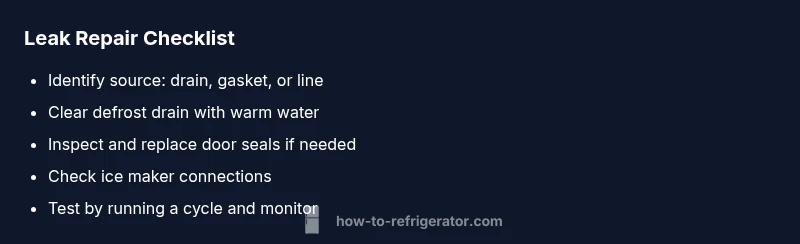
Diagnostic flow: from symptom to likely cause\n\n1) Symptom check: Where is the water pooling — inside shelves, on the bottom, or around the back? Different locations point to different causes.\n2) Drain inspection: Look for a clogged or frozen defrost drain. Clear if possible.\n3) Door seal test: Close the door on a sheet of paper or a dollar bill to see if it drags out; a loose seal means humid air intrusion.\n4) Ice maker and water line: If your fridge has an ice maker, inspect the supply line and valve for leaks.\n5) Drain pan check: Ensure the pan under the fridge is properly seated and not cracked.\n6) If leaks persist after these checks, consider professional service.
Step-by-step fixes for the defrost drain (top fix)\n\n1) Safety first: Unplug the fridge and move it away from the wall. Allow any ice to melt and dry surfaces.\n2) Locate the defrost drain: It’s usually at the back of the freezer compartment or near the bottom rear interior.\n3) Clear the drain: Use warm water and a flexible pipe cleaner or a turkey baster to flush out the drain hole. Gently dislodge any ice or debris.\n4) Refill and test: Flush with more warm water until the flow is clear and slow to a trickle.\n5) Reassemble: Dry everything completely, replace any panels, reconnect power, and monitor for leaks.\n\nTip: Do not use harsh chemicals inside the drain; they can damage gaskets and insulation.
Step-by-step fixes for the door seal and water line (secondary fixes)\n\n1) Check the door gasket: Inspect for cracks, tears, or deformation. If needed, clean with mild soap and water, then dry thoroughly.\n2) Test the seal: Close the door on a slip of paper; if it pulls out easily, the gasket needs replacement or adjustment.\n3) Ice maker and water line: If you have an ice maker, inspect the fill tube and supply line for kinks or drips. Tighten fittings and replace damaged tubes.\n4) Pan and routing: Ensure the drain pan is properly positioned and the drain line from the fridge to the pan isn’t kinked.\n5) Run a test cycle: After reassembly, run a cooling cycle and watch for any new drips.\n\nPro tip: Keep the interior dry for the first 24 hours after fixes to confirm the leak is resolved.
Safety tips and common mistakes to avoid\n\n- Always unplug before handling electrical components or removing panels.\n- Do not block or bend any drain tubes with tools.\n- Avoid using strong cleaners near electrical parts; use mild soap and water.\n- Do not ignore visible water leaks; they can mold or damage insulation over time.\n- If you hear buzzing or smell burning plastic, stop and unplug the unit immediately and seek professional help.\n\nSafety matters: Water and electricity are a dangerous combination, so err on the side of caution and call a pro if you’re unsure.
Preventing future leaks: maintenance you can do this weekend\n\n- Schedule regular defrost drain checks: flush the drain line every 3-6 months, especially in humid climates.\n- Clean door seals monthly and replace deteriorating gaskets promptly.\n- Keep the freezer door closed as much as possible to reduce frost buildup.\n- Clean the coil area and ensure proper air circulation around the back of the fridge to prevent condensation.\n- Use a simple baking soda solution to neutralize odors and reduce buildup that can attract moisture.\n\nSmall habits lead to big savings in prevention.
When to call a professional: red flags and guidance\n\nIf you have tried clearing the defrost drain, inspecting seals, and checking the ice maker without success, or if you notice refrigerant smell, buzzing or hot components, it’s time to contact a technician. Persistent leaks may indicate more complex problems like a damaged evaporator coil, cracked pan, or wiring issue. The How To Refrigerator team recommends seeking professional help when power is involved or if you’re uncertain about the repair steps. A licensed technician can safely diagnose and repair leaks with the right parts and tools.
Steps
Estimated time: 30-60 minutes
- 1
Power down and locate drainage path
Unplug the fridge and locate where the water originates. Be sure to remove items from shelves to access the back wall and drain; dry any surfaces you touch to avoid slips.
Tip: Keep a towel handy and mark the drain location for reference. - 2
Clear the defrost drain
Pour hot water through the drain line and use a flexible wire or pipe cleaner to dislodge ice or debris. Repeat until the water flows freely.
Tip: Do not use excessive force; gentle poking works best. - 3
Check the drain pan and reseat
Inspect the pan underneath for cracks or misalignment. Reseat it firmly and clean any spill residue.
Tip: Make sure the fridge is level so the pan sits correctly. - 4
Inspect door seals
Examine gaskets for cracks or deformation. Clean with mild soap and water, then dry; test seal by closing on a slip of paper.
Tip: If the seal is damaged, replacement is often cost-effective and reduces future leaks. - 5
Check ice maker and water line
Inspect tubing for kinks or leaks and tighten fittings as needed. If damaged, replace the line with a compatible part.
Tip: Turn off the water supply before replacing lines. - 6
Restore power and monitor
Plug the fridge back in and observe for leakage over the next 24-48 hours. Re-check the drain after 2-3 cycles.
Tip: Keep the area dry and watch for any new drips.
Diagnosis: Water pooling inside refrigerator or around bottom
Possible Causes
- highBlocked defrost drain leading to backflow of melted frost
- mediumDamaged or dirty door gasket letting humid air in
- mediumIce maker water line leak or valve issue
- lowCracked or loose drain pan under the unit
Fixes
- easyFlush/clear the defrost drain with warm water and a flexible tool
- mediumReplace or clean a damaged door gasket and ensure proper door alignment
- mediumInspect ice maker line and valve; replace faulty tubing or fittings
- easyInspect and reseat or replace the drain pan if cracked
FAQ
What is the most common cause of water leaking inside a refrigerator?
The most common cause is a blocked defrost drain or a faulty door gasket allowing warm, humid air to condense inside. Inspect these areas first before exploring more complex components.
The most common cause is a blocked defrost drain or a faulty door gasket; start by checking those areas.
How do I fix a defrost drain clog?
Unplug the fridge, locate the defrost drain, and flush it with warm water. Use a flexible tool to dislodge ice or debris, and repeat until clear.
Unplug the fridge, flush the drain with warm water, and gently remove any ice or debris.
Will a leaky door seal cause water inside the fridge?
Yes. A damaged door gasket can allow humid air to enter, causing condensation that appears as leaks. Consider replacing the gasket if cleaning doesn’t help.
Yes, a bad door seal can cause condensation leaks; replace if cleaning fails.
What should I do if the leak is from the ice maker?
Check the water line and connections for tightness or damage. Replace any cracked tubing and ensure the valve is not stuck open.
Inspect the ice maker line and connections; replace damaged tubing and check the valve.
Is it safe to use chemical cleaners to fix leaks?
Avoid strong chemical cleaners near electrical parts. Use mild soap and water for exterior and interior surfaces, and never pour cleaners into the drain.
Avoid strong cleaners near electrical parts; stick to mild soap and water.
How can I prevent leaks in the future?
Regularly inspect doors, clean the defrost drain, and keep the back of the fridge clear for proper airflow. A simple monthly check can prevent many leaks.
Do periodic checks of the drain and door seals to prevent leaks.
Watch Video
Top Takeaways
- Inspect the defrost drain first for clogs or freezes
- Test and seal door gaskets to stop humid air entry
- Check ice maker lines and drain pan for leaks
- Before calling a pro, perform a safe, staged DIY check