Why Is My Refrigerator Leaking Water Inside? A Step-by-Step Troubleshooting Guide
Learn why is my refrigerator leaking water inside and follow a step-by-step plan to diagnose and fix safely—defrost drains, door seals, ice-maker lines, and prevention tips from How To Refrigerator.


Most interior leaks are caused by a clogged defrost drain or a blocked drainage path. Start by unplugging the fridge, locate the defrost drain in the freezer, and clear it with warm water or a pipe cleaner. If leaks persist, inspect door seals and the ice-maker supply line, then test by running a defrost cycle.
why is my refrigerator leaking water inside
If you’re wondering why is my refrigerator leaking water inside, you’re not alone. According to How To Refrigerator, the most common causes are the defrost drain clog, a blocked drainage path, or a compromised door seal. Quick action can prevent water damage and mold, so start with the simplest checks first. This section outlines the usual failure points and practical steps you can take safely. Always unplug the appliance before poking around, and keep your hands dry when inspecting electrical components. By following these steps, homeowners can often resolve interior leaks without a service call or at least narrow down the culprit for a pro.
Common Causes of Water Leaks Inside a Refrigerator
Interior leaks crop up most often from predictable parts of the refrigeration cycle. The defrost drain in many fridges carries meltwater from the freezer to a drain pan under the unit. If that drain is clogged with ice or debris, water can back up into the freezer or drip into the fridge. Other frequent culprits include damaged door gaskets that let humid air inside, and leaks in the ice-maker supply line or dispenser tubing. Spills from containers and moisture from ice bins can also pool and appear as a leak. Understanding these causes helps you tackle the problem in a logical order and avoid unnecessary parts replacement.
Quick Checks You Can Do Safely
Before you dive deeper, perform these quick checks: - Unplug the fridge and pull it away from the wall to inspect the back and bottom for dampness. - Check the defrost drain hole inside the freezer for clogs; remove frost and flush with warm water. - Inspect the evaporator pan underneath for cracks or overflow; ensure the pan is properly positioned. - Examine door gaskets for cracks, gaps, or deformation; close doors firmly and test with a lighted tissue at the seam. - If you have an ice-maker, inspect the water line for kinks or loose fittings and ensure the shut-off valve is fully open. If you see ice buildup, you may need to run a quick defrost cycle.
How to Diagnose Systematically
Use a simple diagnostic flow to pinpoint the leak source: Symptom: water appears inside the fridge after defrost or during operation. Check the defrost drain: if clogged, meltwater will pool and/or back up. Inspect the gasket: cracks or gaps allow humid air inside. Examine the ice maker and its connections for moisture or leaks. Check the drip pan and surrounding area for overflow. If none of these fit, observe the leak timeline and test by running a short defrost cycle and monitor. This methodical approach reduces unnecessary replacements and directs you toward the true culprit.
Step-By-Step: Fix the Most Common Defrost-Drain Clog
- Safety first: unplug the fridge and switch off the circuit or unplug the outlet. 2) Locate the defrost drain in the freezer wall or bottom area; remove any obvious ice. 3) Use warm water, a turkey baster, or a flexible pipe cleaner to flush the drain until clear. 4) Reinstall any panels and pour a small amount of water to verify flow to the drain pan. 5) Reconnect power and run a short defrost cycle to confirm the leak is gone. 6) If water returns, move to check door seals or ice-maker lines. Tip: avoid forcing ice out of the drain with sharp tools—damage can create more leaks.
Safety Tips and Common Mistakes
Safety is paramount when troubleshooting a refrigerator. Always unplug before handling electrical components, wear non-slip footwear, and keep water away from outlets. Common mistakes include using excessive force on seals or lines, failing to allow the unit to fully defrost, and ignoring small puddles that indicate ongoing leaks. If you smell burning or see sparking, stop immediately and contact a professional.
Prevention and Maintenance Tips
Regular maintenance can prevent most interior leaks. Schedule periodic defrost drain checks, inspect door seals for cracks or warping, and ensure ice-maker connections are tight and not leaking. Keep the area around the appliance clean and dry, and address spills promptly to avoid apparent leaks turning into mold risks. How To Refrigerator recommends a quick annual inspection to catch developing issues early.
Steps
Estimated time: 25-45 minutes
- 1
Power down and prepare
Unplug the fridge and move it carefully to access the back and bottom panels. Have towels ready and wear protective gloves. This initial step prevents electrocution and makes inspection easier.
Tip: Keep the unplugged cord away from water to avoid hazards. - 2
Locate the defrost drain
Open the freezer and locate the defrost drain hole. If you see ice or frost around the drain, you likely have a clog. Clear the immediate ice so you can flush the line.
Tip: Use a flashlight to spot the drain clearly. - 3
Clear and flush the drain
Flush the drain with warm water using a turkey baster or flexible pipe cleaner. Do not use sharp objects that could puncture the tube. Repeat until water flows freely into the drain pan.
Tip: Test by pouring a small amount of water and watching the flow. - 4
Inspect seals and ice maker
Check door gaskets for cracks or warping; replace if compromised. Inspect the ice-maker line for kinks or loose fittings and tighten or replace as needed.
Tip: Close doors slowly to feel if air leaks around the gasket. - 5
Reassemble and test
Reconnect power, return the fridge to position, and run a short defrost cycle. Monitor for leaks during operation for at least an hour.
Tip: Place a clean towel under the drain area during test. - 6
Decide if professional help is needed
If water continues to accumulate after these steps, or you notice electrical smells or damage, contact a licensed repair service.
Tip: Document observations to share with the technician.
Diagnosis: Water leaking inside the refrigerator
Possible Causes
- highClogged defrost drain
- mediumDamaged door gasket
- lowIce maker supply line leak
Fixes
- easyClear defrost drain with warm water and a pipe cleaner
- easyInspect and replace damaged door seals
- mediumTighten or replace ice maker supply line
FAQ
What causes water to leak inside the fridge after defrost?
A clogged defrost drain is a common culprit. Ice or debris can block the path, causing meltwater to back up into the interior. Clearing the drain and running a defrost cycle usually resolves it.
A clogged defrost drain is often the culprit after defrost. Clearing the drain and testing the cycle fixes it in many cases.
How do I fix a leaky fridge door seal?
Inspect the gasket for cracks or warping; replace if damaged. Clean the seal, ensure it seats evenly, and test by closing the door and feeling for air leaks.
Check the door seal for cracks and replace if needed. Make sure it closes snugly.
Can I fix a leak without a technician?
Many leaks can be addressed by clearing drains, inspecting lines, and reseating seals. If the problem persists or involves electrical components, call a professional.
Yes, many leaks are DIY-worthy, but call a pro if you’re unsure or see electrical issues.
Is it dangerous to have water near electrical components?
Yes. Water and electricity are a dangerous mix. Always unplug the fridge before any inspection and avoid touching damp parts.
Water near electricity is dangerous—unplug first and proceed with caution.
How often should I clean the defrost drain?
Keep an eye on frost buildup and clean the defrost drain when you notice signs of backup or slow drainage. Regular maintenance prevents surprises.
Check the drain when you see frost or backup, and clean as needed.
What if water leaks from the ice-maker line?
Shut off the ice-maker supply at the valve, inspect fittings for moisture or cracks, and tighten or replace as needed. If leaking continues, contact a pro.
If the ice-maker leaks, shut off the line and inspect fittings. If it continues, call a pro.
Watch Video
Top Takeaways
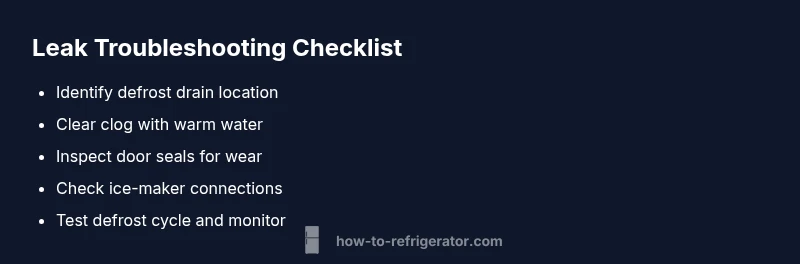
- Identify the defrost drain as the primary suspect.
- Inspect door seals for leaks and wear.
- Clear clogs with warm water—avoid sharp tools.
- Test after fixes and monitor for ongoing leaks.
- Call a pro if leaks persist or safety concerns arise.