Water Leaking Refrigerator Bottom: Urgent Repair Guide
Learn urgent, step-by-step troubleshooting to stop water leaking refrigerator bottom and prevent mold. How To Refrigerator guides homeowners through safe, practical fixes.


Water leaking refrigerator bottom is most often caused by a blocked defrost drain, a loose or damaged water line, or a full or damaged drain pan. Start with the simplest fixes: unplug the fridge, pull it out, and inspect the defrost drain for ice blockage. Clear the drain, check the drain pan for cracks, and tighten or replace any leaky hoses as needed.
What causes water pooling at the bottom of the fridge?
According to How To Refrigerator, water leaking refrigerator bottom is almost always tied to the defrost drain or the water delivery path. A clogged defrost drain causes meltwater to back up and overflow into the fridge or out onto the floor. A loose, cracked, or kinked water line can drip steadily, while a damaged drain pan may spill when the fridge cycles. Condensation alone is less common but can occur if the door is left open or the ambient humidity is high. Regular maintenance reduces these risks and helps you catch leaks before they damage shelves or floors.
In many homes, the defrost drain sits behind the back wall of the freezer compartment. When ice forms in the tube, water can back up and leak to the bottom of the unit. Inspecting this path requires a simple flashlight, a shallow tray, and warm water to flush blockages. If you notice water pooling only when the ice maker runs, focus on the water line and defrost components. For many homeowners, a quick defrost-drain flush or hose tightening resolves the issue without tools.
Quick checks you can safely perform
Before you tear the fridge apart, run through these non-invasive checks to identify the likely culprit. Start with safety: unplug the refrigerator to prevent anyone from getting shocked or accidentally turning it on while you work. Move the unit away from walls to access the back and bottom where leaks often originate. Look for obvious signs of a loose pan or corroded hose connections. Check the drain pan under the fridge; if it’s cracked or displaced, water will spill onto the floor. Inspect the drain tube in the freezer area for ice buildup or kinks. If you see any ice, warm water flushed through the tube usually clears the blockage. Finally, check the door seals; a poor seal can cause excess humidity and condensation that mimics a leak.
How to read the diagnostic flow in your kitchen
A clear diagnostic flow helps you separate symptoms from root causes. If water only appears after ice melts in the defrost cycle, the drain is the primary suspect. If leaks occur even when the ice maker isn’t active, inspect the water line and pan. If the water line is intact but the pan is cracked, replacement is straightforward. When humidity is high, ensure doors seal properly and the fridge isn’t placed in a hot, humid area. This structured approach keeps you from chasing phantom leaks and guides you toward the simplest fix first.
Step-by-step fixes for the most common cause
The most frequent cause is a blocked defrost drain. Start by unplugging and moving the fridge. Remove the freezer panel if needed to access the defrost drain line. Use warm water mixed with a little dish soap and a small funnel or squeeze bottle to flush the drain line. If you encounter ice, gently melt it with a hair dryer on a cool setting or hot water, then flush again. Re-seat the drain line and ensure it exits cleanly into the drain pan. Finally, inspect the drain pan for cracks or misalignment and replace if necessary. Tighten any loose hose clamps and verify there are no leaks around the inlet valve.
Prevention tips to avoid future leaks
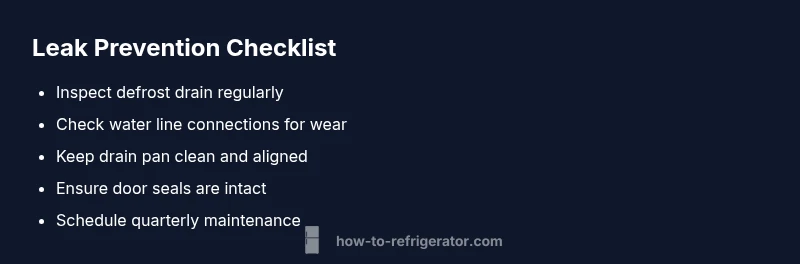
Regular maintenance is your best defense. Schedule a quarterly defrost drain check, especially in humid climates. Keep the area around the fridge clean and dry; wipe up spills promptly and check the door seals for wear. If you have an ice maker, monitor the supply line for signs of wear or cracking and replace as needed. Avoid placing the fridge next to heat sources like ovens or direct sunlight, which can speed up condensation and strain seals. A proper level fridge also prevents pan misalignment and pooling.
Safety notes and common mistakes to avoid
Never poke at electrical components or refrigerant lines. Unplug the unit before inspecting the water line or defrost drain. Avoid using sharp tools that could puncture the drain pan or hose. Do not run water directly into electrical components. If you smell gas or suspect a refrigerant issue, stop and call a professional immediately.
Steps
Estimated time: 45-90 minutes
- 1
Power down and prepare the area
Unplug the fridge and pull it away from the wall. Place towels to catch any residual water. This reduces risk of shock and gives you space to work safely.
Tip: Keep small parts in a labeled container so you don’t lose screws. - 2
Access the defrost drain
Open the freezer panel if needed to locate the defrost drain tube. Use a flashlight to spot ice buildup or a clogged bend in the tube.
Tip: Do not force the tube; gentle probing with a pipe cleaner is safer than a wire hanger. - 3
Flush the defrost drain
Flush the drain with warm water using a squeeze bottle. If you see ice, melt it with gentle heat and retry flushing until the flow is clear.
Tip: Pour water slowly to avoid overflow and watch for a steady outflow into the drain pan. - 4
Check the drain pan and hoses
Inspect the drain pan for cracks or misalignment. Tighten hose clamps on the water inlet line and replace any damaged hoses.
Tip: If you replace a hose, take the old one to a hardware store for an exact match. - 5
Test run and monitor
Plug the unit back in, let it reach operating temperature, and observe for leaks. If water appears again, re-check seals and lines.
Tip: Leave the fridge running for at least 1–2 hours to confirm leak resolution. - 6
Document and prevent future leaks
Note dates of maintenance and any parts replaced. Place a moisture absorber nearby and keep the area dry and clean.
Tip: Schedule a quarterly check to catch evolving issues early.
Diagnosis: Water pooling at the bottom after defrost or ice-maker cycles
Possible Causes
- highDefrost drain blockage causing overflow
- mediumLoose/damaged water supply line or inlet hose
- lowCracked or misaligned drain pan
- lowExcess condensation due to poor door seal or humidity
Fixes
- easyFlush and clear defrost drain with warm water; remove ice buildup
- mediumTighten, reseal, or replace damaged water line and connections
- easyInspect and replace cracked drain pan; re-seat securely
- easyImprove door seals and reduce humidity around fridge
FAQ
Why is water pooling at the bottom of my fridge?
Water pooling at the bottom is often due to a blocked defrost drain, a loose or cracked water line, or a misaligned drain pan. Each cause has a simple fix you can try safely at home, but some issues may require professional help.
Water pooling at the bottom usually means the defrost drain is blocked or a line is leaking. Try clearing the drain first, and if the leak continues, call a pro.
Can a blocked defrost drain cause leaks only when defrosting?
Yes. Ice buildup in the defrost drain can cause meltwater to back up, leaking onto shelves or the floor when the unit cycles. Regularly clearing the drain helps prevent repetition.
Blocked defrost drains often leak during or after defrost cycles. Clear the drain to fix this.
Is it safe to DIY, or should I call a tech for leaks?
Many leaks are DIY-friendly, such as clearing a defrost drain or reseating a drain pan. If you smell refrigerant, hear hissing, or can’t locate the source, contact a professional promptly.
DIY is fine for defrost drains, but call a tech if you suspect refrigerant issues.
How often should I perform drainage checks?
Schedule a drainage check every 3–6 months, especially in humid climates or during seasons with heavy use of the ice maker. Quick spot checks can catch developing problems early.
Do quick checks every few months to stay ahead of leaks.
What maintenance prevents leaks long term?
Regularly clean the seal, keep vents clear, and ensure the fridge is level. Replace cracked hoses and damaged pans promptly to avoid future leaks.
Routine maintenance prevents embarrassing leaks down the line.
When should I replace the drain pan?
If the drain pan is cracked or warped, replace it. A compromised pan cannot collect meltwater safely and can cause spills.
Replace a damaged drain pan to stop leaks.
Watch Video
Top Takeaways
- Identify the defrost drain as the primary leak source
- Flush ice blockages and reseal drains and pans
- Inspect water lines and seals to prevent future leaks
- Unplug and safely test after each fix
- Call a professional if you detect refrigerant smells or persistent leaks