Refrigerator Leaking Water at Bottom: Troubleshooting Guide
Urgent guide to diagnose and fix a refrigerator leaking water at bottom. Step-by-step checks, safe fixes, and prevention from How To Refrigerator.


Water pooling at the bottom of a fridge is most often caused by a blocked defrost drain or an ice maker/water line leak. Start by inspecting the defrost drain for clogs, then check the water line and drain pan. If the fridge is not level, fix the feet to stop overflow. If it persists, call a pro.
Why refrigerator leaking water at bottom happens
A refrigerator leaking water at bottom is a common homeowner issue that usually points to drainage or level problems rather than a failed seal. The key is to identify where the water is coming from: is it condensation that collected and overflowed, or is there a leak from a supply line? The How To Refrigerator team notes that most bottom leaks originate from a blocked defrost drain or an out-of-position drain pan. Understanding this helps you prioritize checks: start with drainage pathways, then move to fittings and leveling. If you catch it early, you can often fix the issue without professional service. Throughout this guide, we’ll use practical checks you can perform safely, with clear steps and safety reminders to protect yourself and the appliance.
Common causes of bottom leaks
There are several frequent culprits behind water pooling at the fridge bottom. A blocked defrost drain allows melted ice to overflow into the overflow drain, potentially causing water to collect under the crisper drawer or spill onto the kitchen floor. A disconnected or damaged water supply line for an ice maker or water dispenser can also leak, dripping water down to the base. A misaligned or loose drain pan can overflow if it isn’t sitting evenly. Finally, improper leveling can alter drainage flow, making water spill where it shouldn’t. By focusing on these areas, you’ll cover over 80% of bottom-leak cases.
Quick checks you can perform right now
Before you unplug or dismantle anything, perform these immediate checks. First, check for standing water in the bottom of the fridge and nearby shelves to see if the leak is internal or external. Next, inspect the defrost drain tube entry at the back of the fridge near the evaporator; clear any visible ice or debris with warm water. If you have an ice maker, check the water line connection at the back of the unit and tighten any loose fittings. Finally, verify the drain pan beneath the fridge is correctly seated and not cracked or overflowing. These simple checks can often stop a leak without tools.
How to inspect the defrost drain in detail
A clogged defrost drain is a leading cause of bottom leaks. To inspect, unplug the fridge, locate the drain at the back wall of the freezer, and remove any accessible ice. Rinse the drain with warm water and a mild, non-caustic cleaner if necessary. A flexible pipe cleaner can gently dislodge buildup. If the drain is completely blocked, you may need to use a thin string or a shop vac to remove debris. After clearing, pour a small amount of warm water down the drain to confirm free flow. Reassemble and run a test cycle.
Ice maker and water line checks you should perform
If your fridge has a built-in ice maker, the water line could be the source of leakage. Inspect the line for kinks, cracks, or loose connections. Tighten fittings and replace damaged sections as needed. If you’ve recently installed a new ice maker or changed the water filter, double-check the routing of the line and ensure it’s not resting on sharp edges that could abrade the tubing. A small leak here can drip down to the bottom and appear as a floor leak.
Leveling, drain pan position, and base clearance
A tilted refrigerator can cause drainage to run toward the floor instead of into the drain. Use a spirit level to check both sides and the front edge. Adjust the leveling feet slowly until the unit is perfectly plumb. Also, ensure the drain pan beneath the compressor is properly positioned, not cracked, and not overflowing. Adequate clearance around the base promotes air flow and reduces condensation that could contribute to bottom leaks.
Safety, maintenance, and when to seek professional help
Safety first: always unplug before opening panels or touching electrical components. Don’t use sharp tools that could damage refrigerant lines or electrical wiring. If a leak persists after all basic checks, or you notice refrigerant smells, irregular noises, or the fridge is not cooling properly, it’s time to call a professional technician. Regular maintenance—cleaning coils, replacing filters, and inspecting lines—reduces future leaks and extends appliance life.
Prevention and long-term care to avoid future leaks
Preventive steps include cleaning the defrost drain annually, keeping the drain pan clean and dry, ensuring proper leveling, and avoiding overfilling the fridge. Maintain stable temperatures to minimize excessive condensation, and replace cracked hoses or fittings promptly. Keeping a simple maintenance calendar helps homeowners catch issues before they become leaks.
Quick wrap-up: what to do next if the leak continues
If the leak persists after you’ve followed these steps, document what you checked and the results, then contact support. The safest option is to arrange for a professional inspection to avoid refrigerant exposure or electrical hazards. How To Refrigerator recommends documenting the model, serial number, and a short video of the leak to speed up diagnosis and service.
Realistic expectations and what homeowners can learn
Most leaks are solvable with home fixes and careful observation. Expect a few attempts for stubborn clogs or complex lines, and plan a maintenance window that won’t disrupt daily routines. The lessons include prioritizing drainage paths, ensuring level placement, and knowing when to seek professional help. By following the steps outlined here, you’ll gain confidence in diagnosing refrigerator leaks and keeping your appliance in peak condition.
Final checklist before you finish
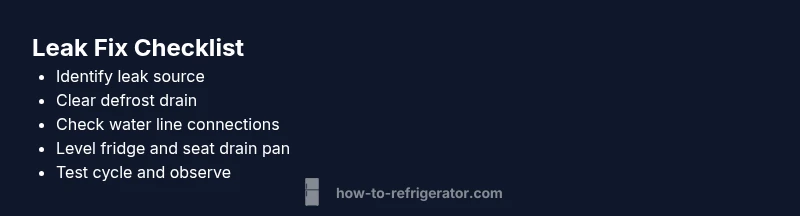
- Confirm the defrost drain is clear
- Verify water line connections are tight
- Check drain pan seating and level
- Ensure unit is level and has adequate clearance
- Schedule professional help if leaks persist
- Note any recurring symptoms for future reference
Steps
Estimated time: 60-90 minutes
- 1
Power off and unplug
Start by unplugging the fridge to ensure your safety while inspecting drainage components. Move items away from the fridge and have towels ready to catch any water. If you cannot unplug safely, switch it off at the breaker and wait for a moment before proceeding.
Tip: Use a flashlight to inspect tight spaces without forcing components. - 2
Access the defrost drain
Remove the rear panel in the freezer to locate the defrost drain tube. Clear visible ice and debris with warm water. If you see buildup, flush gently with a thin brush or pipe cleaner until free-flowing.
Tip: Do not use hot water that could crack plastic tubing. - 3
Check the drain pan and pan position
Walk to the base of the fridge and locate the drain pan. Ensure it is seated correctly and not cracked or overflowed. If misaligned, reposition and level the fridge so the drain path leads correctly to the pan.
Tip: Inspect the pan for cracks and replace if damaged. - 4
Inspect water line connections
If your fridge has an ice maker or water dispenser, check the supply line at the back for kinks or leaks. Tighten fittings and replace cracked tubing as needed. Run a small amount of water to confirm there are no leaks.
Tip: Shut off the water supply before disconnecting lines. - 5
Level the refrigerator
Place a level on the top edge and adjust the front feet until the unit is true plumb. Proper leveling prevents water from pooling at the base and ensures drainage flows correctly.
Tip: Make small, iterative adjustments and recheck level after each change. - 6
Test and observe
Plug the fridge back in and run a short defrost cycle or wait for normal operation. Watch for any new leaks and ensure condensate drains into the pan without overflowing.
Tip: Keep towels nearby during the test to catch any drips. - 7
Document and decide
If leaks recur after these steps, document symptoms and consider professional help. Keep a log of dates and fixes attempted to aid an expert.
Tip: Take a photo of connections and the drain for reference.
Diagnosis: Water pooling at the bottom of the fridge after a defrost cycle
Possible Causes
- highBlocked defrost drain or evaporator drain line
- highLeaking or disconnected water supply line for ice maker or dispenser
- mediumDisplaced or loose drain pan under the fridge
- lowImproper leveling causing overflow from drainage path
Fixes
- easyUnblock defrost drain using warm water and a flexible brush; avoid harsh cleaners
- mediumInspect water line connections at the rear; tighten or replace as needed
- easyRelocate or reseat the drain pan so it sits evenly under the drain hole
- easyLevel the fridge with front feet and verify proper clearance
FAQ
What causes water leaking at the bottom of a fridge?
Leaks at the bottom most often come from a blocked defrost drain, a leaking water line for ice makers, or an overflow due to improper leveling. Inspect these areas first before considering more involved repairs.
Leaks usually come from a blocked defrost drain or a loose water line. Start there to fix the issue quickly.
Can I fix a fridge leak myself, or should I hire a technician?
Many bottom leaks are DIY-friendly, especially those caused by drains or loose connections. If you detect refrigerant smells, frostbite hazards, or persistent cooling issues, contact a professional.
You can usually fix simple drain or line leaks yourself, but call a pro if leaks persist or you notice cooling problems.
Why is water pooling on the floor but not inside the fridge?
Water on the floor often indicates the drain or pan is overflowing or misrouted. Internal condensation generally stays inside the drain system or evaporates; external pooling typically points to drainage or pan issues.
If water is on the floor, check the drain and pan—this is usually a drainage problem.
How often should I clean the defrost drain?
Clean the defrost drain during routine maintenance, especially if you live in a humid environment or notice frost buildup. Quick flushes with warm water can prevent clogs.
Clean the defrost drain as part of your regular maintenance, especially if you see frost buildup.
Should I unplug the fridge if leaks persist?
If leaks continue after basic checks, unplug and wait for a service window. Prolonged leaks can damage flooring and create electrical hazards.
If the leak keeps coming back, unplug and schedule service to avoid hazards.
Watch Video
Top Takeaways
- Identify source of leak before disassembly
- Defrost drain is the most common culprit
- Check water line connections for ice maker/dispenser leaks
- Level the fridge to prevent drainage overflow
- Call a pro if leaks persist after basic fixes