How to Clean Refrigerator Ice Maker: A Practical Step-by-Step Guide
Learn how to clean your refrigerator ice maker safely, remove mineral buildup, prevent odors, and restore reliable ice production with a homeowner-friendly, step-by-step approach.


Goal: Clean and sanitize your refrigerator ice maker to remove mineral buildup, prevent off flavors, and maintain steady ice production. This guide covers unplugging the unit, removing the ice bin, cleaning the dispenser and tray, rinsing, sanitizing, reassembling, and running a test cycle. Safety tips and a step-by-step checklist follow.
Why Cleaning Your Refrigerator Ice Maker Matters
If you rely on a steady supply of ice, learning how to clean refrigerator ice maker components is essential. Over time, mineral deposits from hard water, combined with occasional spills and food particles, can build up inside the ice mold, dispenser, and bin. This buildup can lead to slower ice production, clumpy ice, and off-taste or odors in ice. Regular cleaning helps maintain hygienic conditions inside the ice maker, reduces the chance of mold growth in neglected corners, and supports consistent ice production. By keeping the ice maker free of residue, you also minimize the risk of jams or malfunctions that could affect your fridge’s overall performance. As you work through this guide, you’ll see practical steps you can take on a routine maintenance schedule. The How To Refrigerator team emphasizes safety first and clear, repeatable steps you can perform with everyday kitchen tools.
How Often Should You Clean and Inspect an Ice Maker?
Most homeowners find it helpful to schedule a light clean every few months and a deeper clean every 6–12 months, depending on usage and water quality. If you notice unusual odors, cloudy ice, slow production, or ice that tastes off, it’s a sign you should clean sooner. Regular inspection can catch small clogs or mold growth early, preventing bigger issues and costly repairs. If your ice maker is part of a larger refrigerator system with a water filter, replace the filter according to the manufacturer’s recommendations to keep the water supply clean and ice fresh. The goal is to keep the ice maker interior dry when not in use and to avoid any standing water that might harbor bacteria.
Cleaning Methods and What to Use
There are several safe methods to clean an ice maker, depending on the model and manufacturer guidance. A common, gentle approach uses warm water with mild dish soap for general cleaning of the ice bin, ducts, and ice mold. White vinegar diluted with water is a popular sanitizing option because it can help dissolve mineral deposits without harsh chemicals. Always consult your refrigerator’s user manual for approved cleaners and avoid abrasive scrubbers that could scratch plastic parts. After cleaning, rinse thoroughly with clean water to remove any soap or vinegar residue, then dry all components completely before reassembling. If you have a dishwasher-safe ice bin, you may wash it on a gentle cycle, but hand washing is often safer for plastic components. For models that include a water filter in the ice maker line, ensure the line is flushed well after any cleaning.
Safe Handling and Sanitation Best Practices
Safety should guide every step of the process. Before you begin, unplug the refrigerator to eliminate any risk of electric shock, and wear gloves to protect your hands from sharp edges or cleaning mixtures. Work in a well-lit area and place a towel or bin beneath to catch any drips. Use a soft cloth or sponge to wipe surfaces, avoiding abrasive scrubbers that can scratch. If your ice maker has hard-to-reach corners, a soft-bristle brush can help remove stubborn deposits. After cleaning, sanitize surfaces with manufacturer-approved products if available, then thoroughly rinse with clean water and dry completely to prevent new buildup. Finally, reassemble the ice bin and any removed components, plug the unit back in, and run a brief test cycle to verify normal operation.
Maintenance Tips to Prevent Buildup and Odors
Establish a simple maintenance routine to minimize future buildup. Use cold water for rinsing, keep the ice bin dry when not in use, and wipe away spills promptly. Periodically check the ice mold for cracks or discolored areas and replace parts if needed. If your home has hard water, consider installing a home water softener or using a cold-water supply filter to reduce mineral deposits. Keep the area around the ice maker clean and free of dust, and avoid placing the freezer directly against a wall that could trap moisture. By incorporating these practices, you’ll extend the life of your ice maker and preserve the taste and quality of your ice. The How To Refrigerator team notes that consistency is key—short, regular cleanings beat longer, sporadic efforts.
Authority Sources and Product Variations
Different refrigerator brands implement ice makers with slightly different cleaning needs. Always consult your model’s manual for model-specific instructions and any recommended cleaners. If you use a specialized ice-maker cleaning kit, follow the kit’s directions exactly. In addition, some manufacturers suggest a decontamination step after cleaning to ensure all surfaces are dry and ready for ice production. We’ve included broadly applicable guidance, but your manual is the best source for model-specific cautions and steps.
Common Problems and Quick Fixes
If you notice slow ice production, clumped ice, or ice that tastes strange after cleaning, check the water line for kinks or leaks, confirm the water inlet valve is fully open, and ensure the freezer door seals are intact so humidity isn’t drawn into the ice-making area. A clogged defrost drain can also cause icemaker issues in some models. If cleaning doesn’t restore normal operation, it may be time to contact a professional technician. The goal is to help you diagnose common causes and decide when professional service is warranted.
8 External References to Explore
For additional context on safe cleaning practices and appliance maintenance from reputable sources, see the following references. These sources provide general guidance on appliance upkeep and safety practices, which align with the practical steps in this guide. Remember, always cross-check with your specific model instructions before applying any method.
Authority Sources
- United States Environmental Protection Agency (EPA): https://www.epa.gov/
- U.S. Department of Energy (DOE): https://www.energy.gov/
- University extension resources (EDU): https://extension.org/
- Manufacturer guidelines specific to your refrigerator model (refer to your user manual)
Closeout: Quick Recap and Next Steps
Now you know how to clean your refrigerator ice maker and keep it running smoothly. Schedule routine maintenance, keep notes on what works best for your unit, and adjust your cleaning frequency with your water quality and usage. The How To Refrigerator team recommends documenting your process so future you can reproduce it easily and safely.
Frequently Asked Questions (FAQ) — Bottom Line
This section provides quick answers to common questions homeowners have when cleaning their ice maker, reinforcing the practical tips shared above and helping you troubleshoot common issues without calling a repair technician.
Final Note on Home Maintenance
Regular maintenance of appliances, including ice makers, saves time and reduces the likelihood of unexpected failures. Keep a simple cleaning calendar and follow model-specific recommendations for best results. The How To Refrigerator team is here to guide you toward confident, independent home repairs.
Tools & Materials
- Soft microfiber cloths(For wiping and drying surfaces)
- Mild dish soap(Use a non-abrasive soap)
- Warm water(For washing and rinsing)
- White vinegar(Diluted solution for sanitizing and mineral buildup)
- Bowl or bucket(To hold cleaning solution)
- Toothbrush or small scrub brush(For corners and the ice bin)
- Gloves(Protect hands during cleaning)
- Soft sponge(Gentle scrubbing of interior surfaces)
- Towel or dry cloth(Dry all parts thoroughly)
- Manufacturer’s ice-maker cleaning kit (optional)(Only if your model provides one)
Steps
Estimated time: 30-45 minutes
- 1
Power down and prep
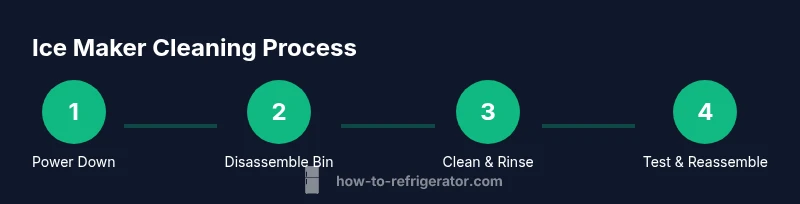
Unplug the refrigerator and clear the area around the ice maker. Remove the ice bin and empty any ice. Prepare your cleaning station with warm water, mild soap, and a towel for drips. This prevents accidental electrical contact and keeps the workspace clean.
Tip: Having a trash bin nearby helps you discard ice quickly without making a mess. - 2
Remove ice bin and mold components
Carefully lift out the ice bin and any removable ice molds or trays. Set them on a clean towel. This gives you access to all surfaces that touch ice and water, where buildup often hides.
Tip: Take a quick photo if your ice bin has multiple pieces that go back together in a particular way. - 3
Inspect for clogs and odor sources
Check the ice maker’s interior, dispenser channel, and bin housing for visible mineral buildup or mold. Note any stubborn spots that need extra attention during scrubbing, especially in corners and around hinges.
Tip: If you see white mineral films, plan to scrub with a soft brush and baking soda paste (see notes in section). - 4
Prepare cleaning solution
Mix warm water with a small amount of mild dish soap in a bowl. For sanitizing, prepare a diluted white vinegar solution or use a manufacturer-approved cleaner. Do not mix cleaners unless the manufacturer approves the combination.
Tip: Never use abrasive cleaners or scouring pads on plastic ice maker parts. - 5
Clean ice bin and dispenser channels
Dip a soft sponge in the cleaning solution and wipe all surfaces of the ice bin, dispenser opening, and mold housing. Use the toothbrush for crevices and hard-to-reach corners. Rinse with clean water after each area is scrubbed.
Tip: Rinse the sponge often to avoid spreading residue. - 6
Clean interior surfaces and ducts
Wipe the interior walls and any accessible ducts with soapy water, then rinse thoroughly. If deposits remain, apply a gentle vinegar solution to dissolve mineral buildup and rinse again. Dry with a clean microfiber cloth.
Tip: Pay attention to any signs of mold; discard and replace any affected components if needed. - 7
Rinse and dry completely
Carry out a thorough rinse of all parts to remove soap or vinegar residue. Allow everything to air-dry or dry with towels before reassembly. Moisture left in the ice maker can lead to ice clumping or odors.
Tip: A dry environment helps prevent future mildew growth. - 8
Reassemble and test
Reinsert the ice bin and any molds, plug the refrigerator back in, and run a short ice-task test to confirm proper operation. Check that ice is dispensing smoothly and that there is no leakage in the water line.
Tip: If you hear odd noises, pause the test and recheck connections. - 9
Maintain a cleaning schedule
Set a reminder to check and clean the ice maker on a regular basis, adjusting frequency based on usage and water quality. Maintain cleanliness to keep ice tasting fresh and frozen evenly.
Tip: Document the date of cleaning for easy reference next time.
FAQ
How often should I clean my refrigerator ice maker?
Clean your ice maker on a regular maintenance schedule and whenever you notice off tastes, odors, or slow ice production. The guide below offers practical steps you can repeat safely.
Clean it on a regular maintenance schedule and whenever you notice odd tastes or slow ice production.
Can I use vinegar to sanitize the ice maker?
Yes, white vinegar diluted with water is a common sanitizing option. Rinse thoroughly afterward to prevent any vinegar taste in ice.
Yes, you can use diluted white vinegar to sanitize, then rinse well.
Should I unplug the fridge while cleaning?
Yes. Unplugging ensures your safety during cleaning and prevents any accidental operation while you work.
Yes, unplug the fridge before cleaning.
What if the ice still tastes bad after cleaning?
Check the water line and filter status; replace the filter if needed and run several cycles to flush the line. If the issue persists, consider professional service.
Check the water line and filter; replace the filter and run several cycles to flush.
Can I dishwasher-clean ice maker parts?
Only if the parts are labeled dishwasher-safe and manufacturer-approved. Many ice maker components require hand washing to avoid damage.
Only if they’re dishwasher-safe per the manual; otherwise wash by hand.
Do I need to empty the ice bin before cleaning?
Yes. Remove the ice bin and discard any ice to prevent contamination during cleaning.
Yes. Remove the bin and discard ice before cleaning.
Watch Video
Top Takeaways
- Unplug, remove, and inspect first.
- Use gentler cleaning solutions to avoid damage.
- Rinse thoroughly and dry before reassembly.
- Test ice maker and schedule regular maintenance.
- Follow model-specific guidelines for best results.