Fix LG Refrigerator Ice Maker: A Homeowner’s Step-by-Step Guide
Learn how to fix LG refrigerator ice maker with a clear, homeowner-friendly guide. Diagnose common causes, reset the unit, test cycles, and replace parts safely in your kitchen.


You can fix LG refrigerator ice maker by diagnosing the water supply, ice mold, and ejector mechanism, then resetting the unit and testing a cycle. Start with simple checks (water line, filter, and ice mold) before inspecting the ice maker motor or module. If no fix emerges, plan for part replacement or professional help.
Understanding the LG ice maker system
LG ice makers are a compact assembly that relies on a steady water supply, an ice mold, an ejector arm, and a small motor to push cubes into the bin. When any one of these components falters, ice production can stall or produce irregular cubes. Understanding how these parts work together helps homeowners diagnose the problem quickly. For many households, the simplest fixes involve checking the water line, clearing blockages in the mold, and ensuring the ejector has a clear path. According to How To Refrigerator, starting with the simplest checks—water supply and ice mold inspection—yields the best odds of a quick, safe fix. This approach reduces needless disassembly and helps you decide whether a repair is feasible or if professional assistance is warranted.
Signs of trouble and what they mean
Common symptoms include no ice, incomplete cubes, unusual shapes, or ice that tastes off. A frozen water line can mirror a blocked filter, while a jammed ejector arm can prevent cubes from being released. Grinding or buzzing noises often point to a motor or mechanism jam. By noting specific symptoms, you can map them to likely culprits: water supply issues (line, filter, or valve), ice mold deposits, or a faulty ice maker module. Documenting symptoms also makes it easier to communicate with repair services if needed.
Safety first: prep for DIY repairs
Safety comes first when you work on any appliance. Unplug the refrigerator and shut off the water supply before touching internal parts. Keep a thick towel handy to catch water, and use a shallow tray for any spills. Wear gloves to protect your hands from sharp edges and small parts, and place screws and small components in labeled containers. If you smell gas, hear hissing, or notice a leak, stop and contact a licensed professional immediately. A calm, organized workspace reduces the risk of damage and makes the repair process smoother.
Troubleshooting flow: diagnose, test, and decide
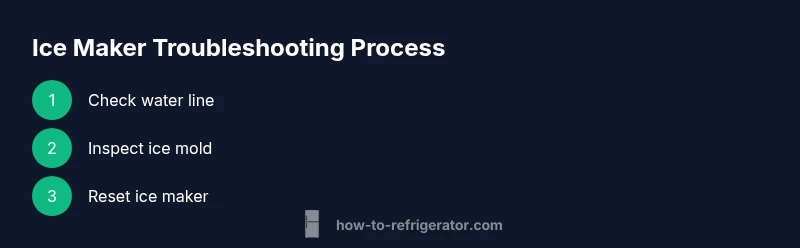
Adopt a structured flow: start with the water supply and filter, then inspect the ice mold and ejector arm, and finally check the ice maker module if the issue persists. After each step, re-test by initiating a cycle to observe changes. If you identify a specific faulty part (for example, a blocked filter or a stuck ejector), decide whether you can replace it yourself or if professional service is a better option given your model and warranty coverage. Keeping a simple log helps you avoid repeating steps and clarifies what remains to be done.
Replacement parts vs. repair: when is it worth it?
If the ice maker still fails after cleaning and inspection, a defective ice maker module or motor is often the cause. Compare the cost of a replacement module or entire ice maker assembly against the labor rate for professional service. For newer LG models, a module replacement may restore full functionality at a reasonable price, while older units might benefit more from a complete replacement due to wear and compatibility. Always confirm compatibility with your specific LG model before purchasing parts, and check warranty status to determine coverage and possible replacement options.
Maintenance to prevent future failures
Routine maintenance can prevent future ice maker headaches. Replace the water filter every 6–12 months or as recommended by LG, inspect the water line for kinks or leaks, and clean the ice mold and ejector area monthly to prevent buildup. Run a test cycle after maintenance to confirm proper operation. Keeping a small maintenance calendar helps you stay proactive, catch issues early, and extend the life of your ice maker. The How To Refrigerator Team emphasizes regular upkeep as a core part of a long-lasting appliance strategy.
Tools & Materials
- Screwdriver set (Phillips and flathead)(Used to remove access panels on the ice maker housing)
- Multimeter (optional)(Check continuity if you suspect electrical faults)
- Towels or small basin(Catch water spills during tests and disassembly)
- Soft cloth and mild cleaner(Clean ice mold and sensors without scratching surfaces)
- Replacement ice maker kit or module (if needed)(Only buy if diagnostics indicate a faulty module or motor)
- Gloves(Protect hands from sharp edges and cold surfaces)
Steps
Estimated time: 25-35 minutes
- 1
Power down and access the ice maker
Unplug the fridge or switch off the circuit breaker supplying the unit. Open the freezer and locate the ice maker housing. Remove the outer cover or access panel to reveal the ice maker assembly and wiring.
Tip: Mark or photograph screw locations before removal to simplify reassembly. - 2
Inspect the ice maker arm and ejector
Check for a jammed ejector arm or a partially stuck ice mold ejector. Gently move the arm through its full range of motion and look for obstructions or frost buildup that could impede operation.
Tip: Do not force components; use non-marring tools to clear debris. - 3
Check water line and filter health
Trace the incoming water line for kinks or leaks. If a water filter is present, remove and inspect it for clogging or discoloration. A clogged filter can limit water flow to the ice maker.
Tip: Even seemingly new filters can be restricted—replace if in doubt. - 4
Reset the ice maker
With power restored, perform a reset by either pressing the reset button inside the housing or by cycling power off for about 30 seconds, then back on. Listen for the normal cycling sounds indicating reset success.
Tip: Some LG models require model-specific steps; consult the manual if available. - 5
Test cycle and observe results
Initiate an ice-making cycle and wait 15–20 minutes to see if cubes form consistently. If no ice is produced, recheck steps or consider part replacement.
Tip: Keep a simple log of steps and outcomes to guide future repairs. - 6
Decide on replacement if needed
If repeated resets and cleaning do not restore function, the module or motor may be defective. Compare the cost of a replacement part or module against professional service costs.
Tip: Retain warranty information and receipts in case of coverage.
FAQ
Why isn't my LG ice maker producing ice?
Ice production can fail due to blocked water supply, clogged filter, or a jammed ejector. Start by inspecting the water line and filter, then check the ice mold and motor.
If no ice is coming out, check the water line and filter, then inspect the ice mold and motor.
How do I reset an LG ice maker?
Most LG ice makers reset by turning the unit off for about 30 seconds, then turning it back on. Some models use a reset button inside the housing.
Turn the ice maker off for 30 seconds, then back on to reset.
What causes ice to taste off or have odors?
Odors usually come from stale water or mold in the ice mold. Clean the ice maker and replace the water filter if needed.
Odors come from stale water or mold in the ice mold; clean and replace the filter.
Can I fix LG ice maker without a professional?
Many issues can be addressed with cleaning, resetting, or replacing a clogged filter. More complex problems may require a module or motor replacement by a professional.
Some fixes you can do yourself, but complex problems may need a pro.
Should I replace the water filter to fix ice maker issues?
Replacing an aging water filter can restore water flow to the ice maker and often resolves ice production problems.
A worn water filter can restrict water flow and affect ice production.
Is it safe to unplug the fridge while diagnosing?
Yes—unplugging removes electrical risk. If you have dual controls, switch off the circuit breaker instead.
Yes, unplug the fridge to work safely, or switch off the breaker.
Watch Video
Top Takeaways
- Check water supply first to diagnose ice issues
- Reset after cleaning or jam clearing
- Replace parts only when direct tests indicate failure
- Maintain water filters to prevent future problems