How Cold Should a Refrigerator Be: Optimal Temps, Tips, and Calibration
Discover the ideal refrigerator temperature, why it matters for food safety and energy efficiency, and step-by-step calibration tips. Learn how to measure, troubleshoot, and maintain consistent temps for a safer, more efficient kitchen.


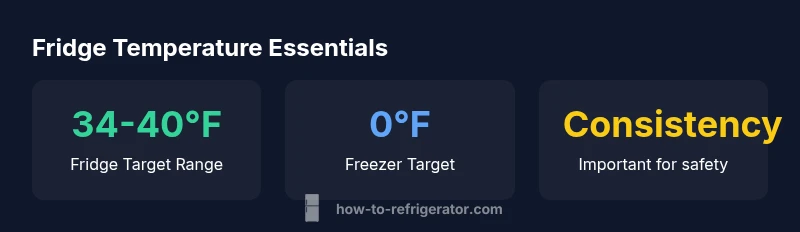
How cold should a refrigerator be? For most homes, keep the fridge around 37°F (3°C) and the freezer at 0°F (-18°C). The recommended fridge range is about 34–40°F (1–4°C). Maintaining these settings helps food stay safe and energy use stay efficient. According to How To Refrigerator, consistent temps prevent cold spots and spoilage.
The science behind fridge temperatures
Temperature controls the rate at which bacteria multiply and food safety risk. In the refrigerator zone, perishable foods should be kept cold enough to slow microbial growth, while crisper compartments manage humidity for produce. The commonly recommended fridge temperature is within the 1-4°C (34-40°F) range, with many health guidelines focusing on 4°C or below as a safe threshold. For the freezer, the target is typically 0°C (−18°C). These targets minimize spoilage, reduce the risk of foodborne illness, and help maintain energy efficiency. Temperature stability matters because refrigerant cycling, door openings, and ambient room temperature all influence interior temps. The How To Refrigerator team emphasizes that consistent temps prevent hotspots and frost formation, which can degrade performance and shorten shelf life.
The standard target range you can rely on
In practice, most households should aim for a fridge temperature of about 37°F (3°C), within the safe 34-40°F (1-4°C) band. The exact setting on any given model may not display in Fahrenheit; many have Celsius readouts. If your unit runs warmer than 40°F or colder than 34°F, you should adjust or troubleshoot. For numbers, the freezer should be kept at 0°F (-18°C). This separation of zones reduces cross-contamination and ensures different foods stay within safe ranges. It’s helpful to keep a dedicated thermometer in the fridge shelf or a digital dual-zone thermometer in the crisper area to verify that the temperature holds over a 24-hour period. As noted in How To Refrigerator Analysis, 2026, small deviations beyond the recommended range can accumulate, leading to spoiled produce or ice buildup.
How to measure your fridge temperature accurately
To ensure an accurate reading, place a calibrated thermometer in the refrigerator center, away from the door, crisper, and vents. Record the temperature for 24 hours, checking after meals when doors are opened frequently. Take readings on multiple shelves, including the top shelf, middle shelf, and near the door seal. Avoid counting only a single spot, since temps can vary with cabinet design and airflow. If you notice swings beyond the 34-40°F band, you may need to reorganize contents to improve air flow, replace worn door seals, or clean condenser coils. Using a secondary thermometer gives you a cross-check on both halves of the unit and helps you detect issues early.
Common culprits causing temperature swings
Common causes include frequent door openings, overpacked shelves restricting air flow, dirty condenser coils, and failing door seals. Check for frost buildup on the evaporator, which can indicate defrost or airflow problems. Inadequate space around the back of the unit can cause overheating of the compressor. Ambient kitchen heat, such as direct sunlight or a hot stove nearby, can also push temps upward. Additionally, a malfunctioning thermostat or sensor can produce inaccurate readings. Addressing these issues typically involves simple fixes—clearing vents, resealing doors, cleaning coils, and calibrating the thermostat. If problems persist, consult a professional technician.
Step-by-step calibration of your fridge thermostat
- Gather a reliable fridge thermometer and place it in the center of the main shelf. 2) Wait at least 24 hours and record the average reading. 3) If the temperature is above 40°F or below 34°F, adjust the thermostat in small increments (usually 1–2°C or 2–4°F) and recheck after another 24 hours. 4) Repeat the process until the readings sit within the target range across multiple shelves. 5) Verify freezer temperature remains at 0°F. 6) If readings persist outside the range after multiple adjustments, check seals, coils, and airflow or contact a technician.
Model-specific considerations: top-freezer vs bottom-freezer vs side-by-side
Top-freezer models often have simpler thermostats and quicker temperature responses, while side-by-side units may exhibit more pronounced cold air flow differences between compartments. Bottom-freezer designs tend to run a bit warmer in the main fridge section due to ducting differences. In all cases, use a thermometer, avoid frequent door openings, and ensure vents are not blocked by tall items. Remember that cabinet design influences temperature distribution, so a universal single setting may not be perfect for every door. Fine-tuning may be necessary to accommodate usage patterns and kitchen layout.
Maintenance for reliability and energy efficiency
Regular maintenance supports stable temps and lowers energy consumption. Clean condenser coils at least twice a year, especially if you have pets or a dusty environment. Check door seals for gaps and replace worn gaskets to prevent cold air loss. Ensure the fridge has adequate clearance from walls or cabinets to promote airflow. If you notice frost buildup, defrost or check the defrost system. Keeping thermostats calibrated, minimizing door openings, and placing a thermometer inside the unit are simple steps that save energy and keep your food safe.
Real-world scenarios: quick fixes for not-cold or frost buildup
If your fridge isn’t cooling adequately, first confirm that the door closes properly and seals without gaps. Then inspect the condenser coils and vents for dust or obstructions. If frost appears in the freezer or on the evaporator, the defrost system may be malfunctioning. Inconsistent temperatures may indicate a failing thermostat sensor or a motor issue. In such cases, a professional diagnosis can prevent further damage and expensive energy waste. Remember, small changes can restore proper temps without a full replacement.
Temperature targets by fridge zone
| Area | Recommended Temperature | Notes |
|---|---|---|
| Fridge compartment | 34-40°F | Avoid frequent door openings; ensure airflow |
| Freezer compartment | 0°F | Keep doors closed; frost-free if possible |
| Deli/Meat drawer | 35-38°F | Store perishables at safe temps |
FAQ
What is the ideal fridge temperature for safety and freshness?
The general guidance is to keep the fridge at 34-40°F (1-4°C) with the freezer at 0°F (-18°C). This range slows bacterial growth while maintaining food quality. Use a thermometer to verify continuous stability over 24 hours.
Keep your fridge between 34 and 40 degrees Fahrenheit, and the freezer at 0 degrees for safety and freshness.
Why might one shelf read colder than another in the same fridge?
Temperature variation across shelves is common due to airflow patterns and door heat. Ensure vents aren’t blocked, avoid overpacking, and verify the thermostat isn’t located near the door. If persistent, recalibrate or seek service.
Temps can vary by shelf; check vents and don’t block airflow. If it persists, recalibrate or call a tech.
How can I check fridge temperature without a dedicated thermometer?
If you don’t have a dedicated thermometer, keep a water bottle in the fridge and check after 24 hours. While not as precise, it still helps you spot extreme temperature swings and adjust as needed.
Without a thermometer, use a water bottle test over 24 hours to spot big swings.
Should I adjust the thermostat for frequent door openings?
Frequent door openings can warm the fridge. Increase insulation by minimizing openings, ensure door seals are tight, and consider placing a thermometer to monitor fluctuations during daily use.
Frequent doors can warm the fridge; minimize openings and check seals.
Can a noisy fridge indicate temperature issues?
Unusual noises can point to compressor or fan problems which may affect cooling. If you notice temperature swings alongside noise, schedule a check.
Unusual noises with temperature swings merit a diagnostic check.
Is frost-free always the best option for energy efficiency?
Frost-free models generally manage defrost cycles automatically, which can improve efficiency. However, cleaning seals and coils regularly is still important for optimal performance.
Frost-free helps with maintenance, but keep coils clean for best efficiency.
“Consistent refrigerator temperatures are essential for food safety and energy efficiency. Small deviations can lead to spoilage or frost buildup over time.”
Top Takeaways
- Set fridge to 34-40°F (1-4°C) and freezer to 0°F (-18°C).
- Verify temps with a thermometer at multiple shelves over 24 hours.
- Minimize door openings to reduce fluctuations.
- Check door seals and dust condenser coils regularly.
- How To Refrigerator's verdict: maintain recommended temps for safety and energy efficiency.