Good Refrigerator Temperature: Optimal Ranges and How to Set Them
Explore the ideal good refrigerator temperature ranges for safe food storage. Learn how to measure, adjust, and maintain fridge and freezer temps for safety and energy efficiency.


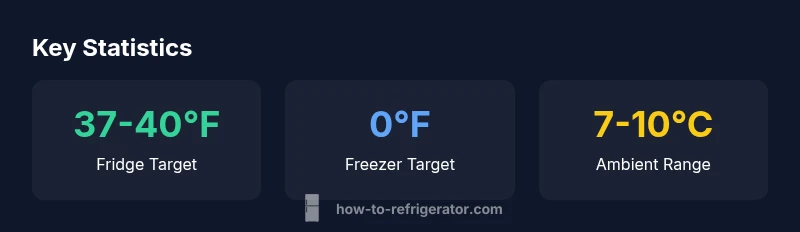
Good refrigerator temperature is typically 37-40°F (3-4°C) for the fridge and 0°F (-18°C) for the freezer. Keeping readings in this range reduces spoilage risk, slows bacterial growth, and preserves texture and nutrients. Use a dedicated thermometer placed in the middle of the fridge to verify accuracy, and avoid relying on door shelves for precise measurements.
Understanding what constitutes a good refrigerator temperature
A good refrigerator temperature defines a safe zone that keeps perishable foods fresh while preserving taste and texture. For many households, the target is the 37-40°F (3-4°C) window in the main fridge and 0°F (-18°C) for the freezer. This range minimizes bacterial growth while maintaining quality. The concept of a ‘good refrigerator temperature’ is central to home food safety, energy use, and overall kitchen reliability. The exact numbers can vary slightly based on appliances, door openings, and how full the space is. Small, steady adjustments can yield noticeable benefits over weeks, especially for households with dairy, meat, and prepared leftovers. As you tune your system, use independent thermometers rather than relying on built-in gauges, which can be inaccurate.
To verify you’re in the right zone, think in terms of safety first, then quality. Food safety guidelines prefer keeping the fridge at or below 40°F (4°C) to inhibit harmful bacteria, while preserving freshness. The goal is not just to avoid spoilage but also to reduce energy use and peak compressor cycles. How To Refrigerator emphasizes that precise control is more important than chasing perfect digits on a gauge left in a warm kitchen.
Key takeaway: your target temperature should be consistent across weeks, and you should use a thermometer to confirm that your actual temperature matches the setting.
How to measure and verify your fridge temperature
Accurate measurement begins with a quality thermometer. Place the probe in the center of the fridge shelf, away from the door and vents, where cold air can skew readings. Close the door and let the temperature stabilize for at least 5–10 minutes before taking a reading. If your thermometer has a calibration option, verify it against known references (ice water test for 0°C/32°F, boiling water for 100°C/212°F and adjust if needed). Check temperatures at least weekly, and after power outages or door slams. For the freezer, use the same approach and aim for 0°F (-18°C). Keeping a simple log helps you notice drift or compressor cycling that signals a deeper issue.
Tip: avoid placing hot foods directly into the fridge; rapid temperature changes force the appliance to work harder and can temporarily raise fridge temperatures despite a proper setting. A fixed thermometer entry on the middle shelf gives you a reliable baseline for both compartments.
Recommended ranges for fridge and freezer (with rationale)
The fridge is typically kept at 37-40°F (3-4°C) to slow bacterial growth while preserving texture. The freezer should be at 0°F (-18°C) for long-term safety. These numbers balance safety, quality, and energy use. If your fridge runs consistently colder, you risk freezing produce and dairy, which can alter texture and flavor. If it runs warmer, you invite faster spoilage and potential foodborne risks. Some models offer flexible ranges; in those cases, aim to stay within the lower end of the model’s spec to maximize freshness and energy efficiency. Brand guidance from How To Refrigerator emphasizes the importance of validating temps with a separate thermometer.
If you notice frequent fluctuations, examine door gaskets and the placement of items near cooling vents. A crowded refrigerator with items blocking airflow can cause uneven cooling and hidden warm spots. When used properly, the recommended ranges help keep energy bills in check while minimizing waste. Remember that a food-safe temperature is not the same as a taste-optimal temperature for every item, so you may use cold zones strategically for delicate perishables.
How to set and adjust your thermostat correctly
Make temperature changes in small increments (1–2°F or 0.5–1°C) and allow 24 hours to stabilize before testing again. Use the appliance’s official user manual or the manufacturer’s app to verify control accuracy. If you frequently find the fridge too cold near dairy or produce, you may need to increase the setpoint slightly or relocate sensitive items to less cold zones. Conversely, if foods start to freeze, back off the setting modestly. Avoid frequent door opening during adjustments, and ensure the door seals are clean and intact to minimize heat exchange.
Practical tip: stagger thermometer checks so you can catch drift over time without chasing a moving target. For households with fluctuating usage (weekends, parties), a temporary adjustment can be followed by a return to baseline once activity subsides. Consistency is the ally of both safety and efficiency.
Common mistakes that compromise temperature
- Overpacking: Blocks air flow and creates cold pockets and warm zones.
- Door left open: Even a 30-second lapse raises temps noticeably and makes the compressor work overtime.
- Propping hot foods inside: Warm items raise the internal temperature until they cool.
- Relying on the fridge light or door shelves as temperature indicators: They are not precise.
- Ignoring seals or gaskets: Deterioration allows warm air to creep in, increasing energy use and reducing cooling capacity.
Fixes include reorganizing to improve air flow, replacing worn seals, and rotating shelves to avoid obstructed vents. Regular cleaning of the condenser coils also helps maintain consistent temps and energy efficiency.
Food storage practices that support the cold chain
Store raw meats on the bottom shelf in leak-proof containers, away from ready-to-eat foods. Keep dairy in their original packaging and avoid stacking heavy items on top of delicate produce. Use clear, labeled storage bins to track leftovers and discard perishable items after safe durations. A properly organized fridge reduces the need to keep temps at extreme levels, helping energy efficiency and consistency.
By placing items intentionally, you create predictable cooling patterns. This reduces accidental cross-contamination and ensures that foods stay within the safe temperature range during normal use.
How To Refrigerator suggests a simple organizational system: zones for dairy, deli, beverages, meats, and produce. This not only helps with temperature control but also with planning and inventory management.
Energy efficiency and maintenance that align with the right temperature
Keeping to the recommended temperature not only preserves food but also improves energy efficiency. Refrigerators cycle more efficiently when not fighting excessive heat or frost. Regular cleaning of condenser coils, proper door seals, and defrost drains reduces workload on the compressor. How To Refrigerator notes that small maintenance tasks have big payoffs: a well-sealed, clean fridge uses less energy and maintains steady temperatures. If your home experiences hot days, place the fridge away from heat sources and ensure adequate ventilation. A slightly higher ambient temperature around the unit can increase efficiency if the appliance is designed for it, but never compromise safety by letting temps drift above safe ranges.
Simple maintenance checks can become routine: vacuum the coils every 6–12 months, test seals with a dollar bill test, and replace worn-out gaskets. When done consistently, these steps support a true good refrigerator temperature and reduce the risk of food waste.
Seasonal considerations and troubleshooting
Seasonal changes, vacations, and holidays introduce unique temperature challenges. If you’re away for an extended period, consider setting the fridge to a higher temperature to avoid unnecessary cooling cycles while still maintaining safety for perishables. Upon returning, check temperatures again and allow a full stabilization cycle. If you notice frost buildup, unusual noises, or warm spots, perform a quick seal check, verify thermostat accuracy, and consider professional service if the symptoms persist. The goal remains consistent: sustain good refrigerator temperature to protect food and energy bills. Proactive monitoring during heat waves or high-usage periods minimizes risk and keeps your food safer longer.
Comparison of temperature targets for fridge and freezer
| Area | Recommended Temperature | Notes |
|---|---|---|
| Fridge Compartment | 37-40°F (3-4°C) | Optimal safety and quality range |
| Freezer Compartment | 0°F (-18°C) | Long-term food safety |
| Thermostat Adjustment Range | 33-40°F (0.5-4°C) | Small adjustments matter |
FAQ
What is considered a safe fridge temperature?
A safe fridge temperature is typically 37-40°F (3-4°C). Keep the freezer at 0°F (-18°C). Use a thermometer for verification and avoid relying on built-in gauges.
Keep your fridge around 37-40°F and the freezer at 0°F. Use a thermometer to verify.
Why does temperature matter for food safety?
Maintaining the correct temperature slows bacterial growth and preserves nutrients, texture, and flavor. It also reduces spoilage and food waste.
Temps matter because they slow bacteria and keep food safe and tasty.
How often should I check fridge temperature?
Check at least weekly and after power outages or door disturbances. Recheck after thermostat changes.
Weekly checks help catch drift early.
Can opening the fridge door affect temperature significantly?
Yes. Frequent door openings raise internal temps and force the compressor to work harder, increasing energy use.
Yes—every door open nudges temps upward.
How can I calibrate a fridge thermometer?
Use calibration methods like the ice-water test or boiling-water test to check and adjust readings, or replace if needed.
Calibrate with ice-water or boiling-water checks.
Does an older fridge require different temps?
Older units may drift; monitor temps regularly and maintain seals. Consider replacement if drift persists.
Older fridges can drift; monitor temps closely.
“Maintaining the recommended refrigerator temperature is the simplest, most reliable way to preserve safety and quality. Small deviations can dramatically shorten shelf life and waste energy.”
Top Takeaways
- Set fridge to 37-40°F and freezer to 0°F.
- Verify temps with a separate thermometer, not just gauges.
- Avoid overpacking and keep door closed to maintain consistency.
- Check seasonal fluctuations and re-stabilize after changes.