Optimal Refrigerator Temperature: What It Should Be in 2026
Discover the exact refrigerator temperatures for safe food storage, how to measure them accurately, and practical steps to maintain energy-efficient cooling in your kitchen in 2026.


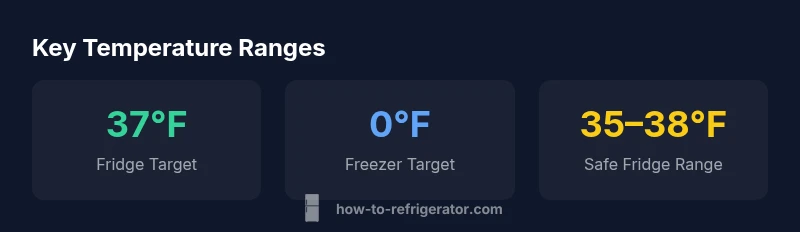
For optimal food safety and energy efficiency, set the refrigerator to about 37°F (3°C) and the freezer to 0°F (-18°C). In practice, a safe range is roughly 35–38°F (1.7–3.3°C) for the fridge and 0–5°F (-18 to -15°C) for the freezer. Use a thermometer and avoid frequent door openings.
Understanding why temperature matters
If you ask 'temperature should a refrigerator be', you're not alone. Temperature is the most basic control that influences safety, quality of foods, and energy use. When the fridge operates at the correct temperature, pathogenic bacteria growth is slowed, dairy stays fresh longer, and leftovers survive more days. Conversely, if temperature drifts, you risk spoilage and wasted energy as the compressor runs longer to compensate. The How To Refrigerator team notes that maintaining stable temps reduces door condensation and uneven cooling, which can shorten appliance life. In practice, you’ll want to think of temperature as a balance: you want your fresh foods at safe chilling levels, your frozen items ready for long-term storage, and you want to avoid overtaxing the system. The key is measurement, consistency, and a little routine maintenance. According to How To Refrigerator, precise control is achievable with a simple thermometer and mindful usage.
Recommended temperature ranges by compartment
Temperature control is not a guesswork exercise; it’s about setting targets that match how you use your fridge and freezer. The fridge should sit around 37°F (3°C) for safety and taste, with a practical safe band roughly 35–38°F (1.7–3.3°C). The freezer is typically kept at 0°F (-18°C) to maintain texture and prevent ice crystals. Keep in mind that different models may vary slightly, and some compartments may drift due to door seals, ambient temperature, or large loads. Regular monitoring ensures you stay within the intended bands. If your unit runs constantly or feels warm at the shelves, reassess with a dedicated thermometer placed on several shelves and near the door.
How to measure and monitor accurately
Begin with an inexpensive thermometer and place it in the center of the refrigerator section, away from the door seal and cooling vents. After a full 24 hours, check the reading on multiple shelves to ensure uniformity. If readings vary more than a few degrees, inspect door gaskets, airflow pathways, and potential blockages near vents. For best results, place one thermometer in the main food zone and another in the crisper drawer. For freezers, use the same approach but verify the dial isn't providing misleading readings. If your unit has a digital display, rely on the external thermometer for a second, independent check.
Common factors that disrupt temperature
Several everyday habits can disrupt stable temperatures. Frequent door openings, large loads that block air pathways, or placing hot foods directly into the fridge cause transient temperature rises. Dirty condenser coils reduce cooling efficiency, while misaligned doors allow warm air in. Household ambient temperatures and poor ventilation around the appliance also contribute. To minimize drift, avoid placing heat sources nearby, schedule regular cleaning, and ensure the fridge is level with doors closing properly.
Energy efficiency and cost implications
Maintaining the correct temperatures is not only about food safety but also about energy efficiency. When temperatures drift high or low, the compressor works harder, wasting electricity and shortening the appliance’s life. Keeping a steady 37°F in the fridge and 0°F in the freezer aligns with common energy‑efficiency guidance and helps reduce seasonal energy use. Use features like automatic defrost or eco modes if your model supports them, but verify actual temperatures with a thermometer after making adjustments. Simple habits—like minimizing door openings, organizing shelves for air flow, and avoiding overloading—can have meaningful energy savings over time.
Troubleshooting quick fixes
If you notice persistent temperature drift, start with a basic checklist: verify the temperature setting dial is correct, inspect the door gasket for cracks, and ensure vents aren’t blocked. Clean the condenser coils (some units require a vacuum or brush), confirm the unit sits level, and check for frost buildup in the freezer that might indicate a defrost issue. If the problem persists after these steps, consider scheduling a service appointment. Persistent temperature instability could indicate sensor or compressor issues that require professional attention.
Practical maintenance checklist to keep temps stable
- Clean condenser coils every 6–12 months
- Inspect door seals and replace if cracked or loose
- Keep vents unobstructed and avoid overfilling
- Place thermometers in multiple zones for accuracy
- Level the appliance and verify door alignment
- Schedule regular service checks if temperatures drift consistently
- Note any unusual noises or frost patterns as early warning signals
Scenario-based temperature planning for busy households
Busy households benefit from predictable schedules. If you often forget to check temps, set a fixed routine: check fridge temp every evening and freezer twice a week. For households with kids or pets, place ready-to-eat items in the front of shelves to minimize door openings. If you rely on leftovers, separate portions into sealed containers to help maintain stable temperatures. The aim is to build a simple system that minimizes fluctuations while preserving food safety.
How to communicate with service professionals and when to replace
If you experience repeated temperature instability after cleaning and basic checks, document the symptoms with dates and readings. Share these notes with a technician and ask about sensor calibration, thermostat replacement, or compressor health. If a refrigerator is older than 10–15 years and frequently requires service, compare long-term costs with replacement options that offer improved energy efficiency and reliability. How To Refrigerator recommends weighing reliability, energy use, and potential repair costs when making a replacement decision.
Comparison of fridge and freezer temperature targets
| Aspect | Fridge Temperature | Freezer Temperature |
|---|---|---|
| Recommended range | 35–38°F (1.7–3.3°C) | 0°F (-18°C) |
| Ideal steady-state | 37°F (3°C) | 0°F (-18°C) |
| Door-open impact | Rises then stabilizes; monitor | Minimal impact, monitor |
| Thermometer use | Yes; place on multiple shelves | Yes; place on multiple shelves |
FAQ
What is the ideal temperature for a standard refrigerator?
The commonly recommended setting is around 37°F (3°C). You can safely operate within 35–38°F (1.7–3.3°C). Use a thermometer to confirm.
Aim for about 37 degrees Fahrenheit inside the fridge, and keep it between 35 and 38 with a thermometer handy.
Is it okay to set my fridge to 40°F (4°C)?
Short-term 40°F is acceptable, but it’s not ideal for long-term safety. Best to stay within the 35–38°F range whenever possible.
Forty degrees is okay briefly, but try to stay closer to 37 degrees for safety.
How can I tell if my fridge is too cold?
If items start to freeze, or you notice frost on shelves or walls, your fridge may be too cold. Check with a thermometer at multiple shelves.
If things are freezing or you see frost, your fridge is likely too cold.
Does energy-saving mode affect temperature accuracy?
Eco modes can cause minor temperature fluctuations. Verify temps with a thermometer after changing modes or settings.
Eco modes can drift temps a bit; check with a thermometer after changing.
What maintenance helps maintain temperature?
Keep condenser coils clean, ensure door seals are intact, and avoid overfilling for proper airflow and stable temperatures.
Clean the coils, seal doors, and don’t overfill for steady temps.
“Stable, correct temperatures are the foundation of safe food storage and reliable appliance performance.”
Top Takeaways
- Set fridge near 37°F and freezer at 0°F for safety.
- Monitor temps with a thermometer across zones.
- Avoid door-opening as a habit; it destabilizes temps.
- Regular maintenance supports energy efficiency.