Are Refrigerators the Same Height? A Practical Sizing Guide
Explore why refrigerator heights vary across standard, counter-depth, and compact models, learn precise measurement steps, and choose a model that fits your kitchen in 2026.


Are refrigerators the same height? Not usually. Fridges come in standard freestanding, counter-depth, French-door, under-counter, and compact designs, each with its own height range. This quick answer highlights why height matters for cabinet clearance, door swing, and countertop alignment. By understanding these categories, you can shop confidently and avoid space-fit problems during a kitchen remodel or upgrade.
Are refrigerators the same height? A practical overview
In everyday kitchens, are refrigerators the same height? Not in practice. Height varies across standard freestanding, counter-depth, French-door, under-counter, and compact configurations. This topic matters because a few inches can affect cabinet alignment, doorway clearance, and the ability to position adjacent appliances for convenient workflow. According to How To Refrigerator analysis, height is often overlooked during initial shopping, only to become a constraint when delivery crews arrive or when a remodel hits a snag. The How To Refrigerator team has found that even models with similar footprints can sit noticeably higher or lower due to hinge design, venting, and the space left for airflow. When you know the height ranges by category, you can plan more accurately and reduce post-purchase surprises.
Standard sizes and their height ranges
Today’s market includes several fridge-height families. A standard freestanding unit is typically in the mid-60s to low-70s inches tall, designed for broad compatibility with traditional cabinetry. Counter-depth models aim to align with countertop height and door surfaces, often landing in the 70–76 inch band, which is slightly taller than many built-in or cabinet-matched designs but shallower in depth. French-door configurations can push taller heights depending on hinge arrangement and ventilation needs, while under-counter and compact units cluster around kitchen-nook or bar-area layouts at roughly 24–36 inches tall. The key takeaway is that the term are refrigerators the same height is a misconception; you must match height to your specific kitchen geometry to avoid gaps or awkward silhouettes.
How to measure accurately at home
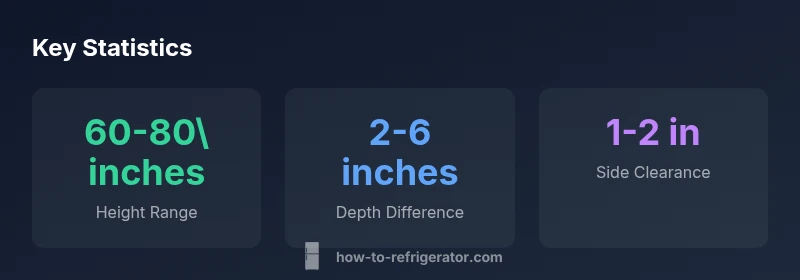
Accurate measurement starts with the space you actually use. Begin by measuring from the finished floor to the underside of the cabinet or overhead obstruction at the planned location. Include any toe-kick depth that could interfere with the fridge’s foot or base. Next, verify doorway height where the appliance will pass through; measure both the narrowest and widest points of the doorframe. Don’t forget to check any adjacent ventilation intakes or backsplashes that could limit how tall a model you can install without restricting airflow. Finally, compare these measurements to the appliance’s official height specifications and consider a 1–2 inch clearance on each side and a small gap at the top for ventilation. Small miscalculations here lead to delivery delays and potentially wasted space.
Height considerations in installation and clearance
The physical space is only part of the equation. The way a fridge opens, plus the space required for door swing, matters just as much as the height. If a model sits flush with cabinets but requires a wide door swing into a tight walkway, you’ll battle with traffic flow every time you reach into the fridge. Ventilation is another critical factor; tight, insecure, or blocked vents can cause overheating and reduce efficiency. Most installers recommend maintaining at least 1–2 inches of clearance on the sides and top to ensure proper airflow. In kitchens with low ceilings or overhead cabinets, you may prefer a slightly shorter height to preserve headroom and accessibility. Understanding these constraints helps you shortlist models that truly fit the space rather than just look right on paper.
Practical guidance for choosing by height
To choose by height with confidence, start by listing non-negotiables: required doorway clearance, cabinet alignment, and headroom along the primary traffic path. Then, compare height specifications across candidate models in the same category. If your kitchen favors a flush look with counters, counter-depth options may be optimal, but verify if the slight height difference affects your top cabinet or island. For small kitchens, compact or under-counter models can provide the right footprint without towering over adjacent surfaces. Finally, remember to verify installation tolerances: builders sometimes design spaces based on nominal heights; always cross-check with the actual product sheet and, if possible, request a mock-up from the dealer before ordering. This approach reduces the risk of ending up with a fridge that doesn’t fit the intended space.
Common mistakes and quick fixes
Measurement error is the most frequent culprit behind height-related installation problems. A common mistake is relying on floor-to-ceiling measurements without factoring cabinet toe-kick or baseboard. Another pitfall is assuming a model height is compatible because it resembles another unit in photos; real-world dimensions can vary due to hinge positions or venting. To fix these issues, measure multiple times, use a laser measure for accuracy, and compare figures against the model’s official height with a tolerance cushion of 1–2 inches. If in doubt, consult a dealer’s in-store specialists or a professional installer who can confirm clearance in your exact kitchen layout. Remember, are refrigerators the same height is more a matter of category than a universal standard, so plan for flexibility.
Real-world scenarios: planning for height in diverse kitchens
In a long, narrow kitchen with a low ceiling, a standard fridge might visually dominate the space even if it technically fits. A counter-depth model can reduce visual bulk, but you must ensure doorway clearance and aisle width aren’t compromised by the door swing. In an open-concept kitchen with high ceilings and tall cabinetry, a taller unit may not be a problem, yet you should verify alignment with upper cabinets and any ceiling soffits. In homes with basement access or stairwells, consider whether the fridge will need to be maneuvered through tight passages; a slightly shorter model that still delivers the needed capacity can save time and avoid damage. By anticipating real-world constraints early, you reduce surprises during delivery and placement. The result is a harmonious kitchen that respects both form and function, with the height of your refrigerator chosen to support daily use rather than simply to fill a box.
Final considerations and How To Refrigerator recommendations
The bottom line is that height is a practical architectural constraint, not a decorative afterthought. Before you buy, map out your kitchen height ecosystem: cabinet heights, island clearance, doorways, and surrounding appliances. The How To Refrigerator team recommends documenting the exact height of the planned location and comparing it against each model’s official figure, plus the recommended clearance. This proactive approach ensures a smooth installation and a fridge that remains perfectly aligned with your kitchen’s design language. By focusing on height in tandem with width and depth, you’ll achieve a balanced, efficient kitchen layout that stands up to everyday use.
Height ranges by fridge category
| Category | Typical Height Range | Notes |
|---|---|---|
| Standard freestanding | 66-70 inches | Most common family fridge height |
| Counter-depth | 70-76 inches | Flush with countertops, shallower depth |
| Under-counter | 32-36 inches | Compact spaces or islands |
| Compact / beverage centers | 24-34 inches | Small spaces or bars |
FAQ
Are built-in refrigerators taller than freestanding models?
Built-in models are often designed to align with cabinetry, and many sit near standard heights. Always confirm the exact spec, as individual models can vary. Plan for the same clearance needs you have with freestanding units.
Built-ins are usually matched to cabinets, but check the specific height before purchasing.
What is counter-depth height and how does it differ?
Counter-depth fridges are intended to align with counter surfaces. They are generally tall but sit shallower than traditional freestanding models, typically around the same height range but with reduced depth.
Counter-depth models are flush with counters but can vary in height—check the spec sheet.
How do I measure for clearance around doors?
Measure the doorframe height at the narrowest point and the space available for door swing. Include any adjacent toe-kick or lip of cabinetry that might block the door. Compare with the fridge’s door swing arc.
Measure door heights and how far the door swings open, then compare to the fridge specs.
Do height differences affect energy efficiency?
Height itself does not directly determine energy efficiency. However, proper clearance and ventilation influence compressor load and cooling performance, so consider installation space when evaluating efficiency.
Height doesn’t change efficiency by model height alone, but venting matters.
Can I install a taller fridge in a short doorway?
Door height must accommodate the fridge during transit. A taller unit may not pass through if the doorway is too low, so size the model to the door opening.
If the doorway is too short, a taller fridge won’t fit through the door.
Are compact refrigerators a good option for small kitchens?
Compact models save space and can fit tight layouts, but they offer less capacity. They’re ideal for beverage centers, studios, or secondary kitchens where height alignment with counters is key.
Yes, compact fridges fit tight spaces, but mind capacity and height.
“"Height is a critical dimension that affects fit, venting, and door swing. Small differences in height can derail an installation if not planned for."”
Top Takeaways
- Measure twice, buy once.
- Expect height variation across configurations.
- Check clearance for doors, drawers, and ventilation.
- Match height with cabinet alignment for a clean look.