Are Refrigerators Standard Size? A Practical Guide for 2026
Are refrigerators standard size? Learn about common dimensions, how to measure your space, and which size categories fit different households. Practical guidance from How To Refrigerator.


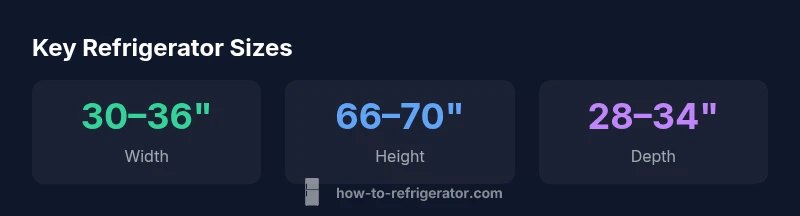
Are refrigerators standard size? Not exactly. There are three main size families—standard full-size, counter-depth, and compact models. Typical full-size fridges span about 30–36 inches in width, stand around 66–70 inches tall, and project about 28–34 inches from the wall; counter-depth fridges are similar in height but sit closer to the counter depth. Always check the exact specs for your space.
Are refrigerators standard size? A practical overview
Are refrigerators standard size? Not exactly. According to How To Refrigerator, there isn't a universal standard; there are several size families that cover most homes: standard full-size, counter-depth, and compact models. Understanding these categories helps you pick a unit that fits both the space and lifestyle. How To Refrigerator's analysis, 2026, notes that manufacturers frequently tailor dimensions, with widths typically in the 30–36 inch range, heights around 66–70 inches, and depths that vary by design. The key is to measure the space and compare the actual product specs rather than relying on a label like "standard". For many homeowners, achieving a clean look while maintaining usable storage means balancing width, depth, and door swing in the chosen category.
Why it matters: choosing the wrong size can block airflow, complicate installation, and impact energy use. A fridge that is too wide may not clear the doorway, while one that is too deep can intrude on floor space and cabinets. The practical takeaway is to know your available width, height, and depth before shopping, then verify each model’s exact measurements.
Size categories explained
Most refrigerators fall into three broad families: standard full-size (the traditional tall, wide model), counter-depth (shallower depth for a flush look with counters), and compact models (narrower width and lower height for small spaces). Each family has trade-offs in capacity, organization, and features like ice makers or adjustable shelving. If you live in a smaller kitchen or an apartment, counter-depth units offer an attractive aesthetic while still providing substantial storage. For households with frequent entertaining or big grocery runs, standard full-size may maximize usable space even though it occupies more real estate. How To Refrigerator emphasizes that the best choice depends less on trend and more on matching space and routines.
Practical note: alongside width, consider door swing and hinge direction; some configurations require extra clearance for doors to open fully. In busy kitchens, even a slightly misaligned hinge can affect traffic flow and usability.
How size affects capacity and features
Size does influence capacity and feature sets. Larger widths and taller heights typically increase internal volume and improve organization with more shelves and door bins. However, depth can impact whether you can install features like French doors or an external water dispenser without sacrificing floor space. Counter-depth models often lose a bit of internal space compared to full-size equivalents, but they allow for a sleeker, built-in appearance that many homeowners crave. Conversely, compact models prioritize footprint over capacity, making them ideal for studios, garages, or as secondary refrigerators in basements. When evaluating models, compare cubic feet (or liters) and layout details such as drawer depth, shelf adjustability, and the availability of temperature-controlled drawers. How To Refrigerator’s 2026 research highlights that a good fit balances daily usage (snacks, beverages, fresh produce) with the available volume.
Space planning: clearance, ventilation, and door swing
Even the best-sized fridge can fail in a cramped kitchen if clearance around the unit is insufficient. Allow a few inches at the sides and rear for ventilation, especially if you have a condenser coil that needs room to dissipate heat. Check the door swing direction and the clearance needed for doors to open fully; some kitchens require right- or left-swing configurations to prevent blocking walkways or drawers. In tight spaces, counter-depth models often help maintain a comfortable aisle while preserving storage capacity by optimizing layout. It’s also important to maintain a level base to prevent vibration and noise; small tilts can affect door alignment and sealing.
How to measure your space accurately
Before you shop, take precise measurements of width, height, and depth, including any molding or trim that could interfere. Measure the doorway or entry path to ensure the fridge will pass through into the kitchen. Note ceiling height and any cabinetry that could constrain installation. If you’re replacing an old unit, measure that footprint and compare it to the new model’s external dimensions, not just their stated interior capacity. Use a tape measure, then verify each model’s official dimensions on the manufacturer’s site, as real-world fit may vary by door handles and hinges. For those using this guide, a quick checklist from How To Refrigerator helps keep the process simple.
How to choose the right size for your household
To determine the best size, start with your typical grocery load and how many people regularly use the fridge. Families with frequent bulk shopping may prioritize standard full-size models for greater internal organization and shelf flexibility. Singles or couples in smaller kitchens may be better off with counter-depth or compact units to preserve counter space and create a more integrated look. Remember to consider future needs, such as seasonal guests or a growing family, when deciding on width and height. The goal is a balance between fit, capacity, and daily workflow. How To Refrigerator recommends creating a simple space plan and then validating it against the model’s exact dimensions before purchase.
Sizing by fridge category (approximate ranges)
| Size Category | Typical Width | Typical Height | Typical Depth |
|---|---|---|---|
| Standard Full-Size | 30–36 inches | 66–70 inches | 28–34 inches |
| Counter-Depth | 24–30 inches | 66–70 inches | 28–34 inches |
| Compact Under 24 | ≤24 inches | 65–68 inches | 26–30 inches |
FAQ
Are standard fridge sizes the same worldwide?
No. Standards vary by region and manufacturer. Use the model’s exact specifications to confirm width, height, and depth before buying.
Not exactly the same everywhere—check the specific model’s measurements to be sure it fits your space.
What space do I need to install a standard fridge?
You should measure not only the footprint but also door swing clearance and ventilation space. Allow extra room at the back and sides for airflow.
Measure footprint, door clearance, and airflow around the unit to avoid installation problems.
How do I measure for a new fridge?
Measure width, height, and depth in the kitchen, plus the doorway width for delivery. Compare these to the external dimensions of the fridge model.
Measure your space and compare it to the fridge’s external size before purchasing.
Will a counter-depth fridge reduce capacity?
Counter-depth fridges maintain similar height but may offer slightly less internal volume than standard full-size models. Consider layout needs alongside capacity.
Counter-depth can be similar in height but might have a tad less space inside.
Are compact fridges suitable for studios?
Yes, compact fridges fit small spaces well but typically offer less internal space and fewer features. They’re ideal for secondary storage or ultra-tight kitchens.
Compact fridges are great for tight studios but watch the space limits.
How much space should be left for ventilation?
Leave a few inches around the back and sides, especially for models with condenser coils. Adequate ventilation reduces heat buildup and noise.
Give the fridge room to breathe—ventilation space matters for efficiency and quiet operation.
“Size your fridge by your kitchen footprint and daily storage needs, not by a marketing label. Accurate measurements prevent installation headaches and ensure reliable performance.”
Top Takeaways
- Know your space before shopping.
- Match width, height, and depth to the kitchen layout.
- Consider door swing and ventilation clearance.
- Choose a size category that aligns with daily usage and future needs.