Refrigerator Depth: How Deep Should Your Fridge Be in 2026
A practical guide to understanding refrigerator depth, standard vs counter-depth, and how to measure for fit, airflow, and kitchen layout.


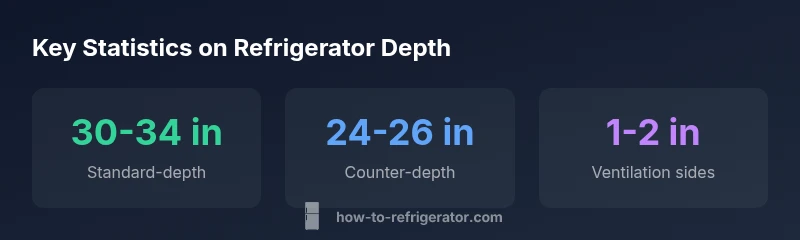
The typical refrigerator depth spans about 30 to 34 inches for standard models, while counter-depth units sit closer to 24 to 26 inches. This depth affects installation clearances, door swing space, and kitchen flow, so measure your cabinetry and consider toe-kick clearance before buying. In small kitchens, opt for counter-depth to preserve sightlines; in deeper layouts, standard depth often provides more interior capacity while requiring careful fit planning.
Understanding refrigerator depth and why it matters
The depth of a refrigerator is more than a measurement on a spec sheet; it determines how the appliance sits in your kitchen, the space you need for doors to fully swing, and how airflow circulates behind the cabinet. For homeowners, understanding refrigerator depth helps prevent fit problems during purchase and ensures you don’t block vents or create awkward door closure. In this guide, we analyze depth in practical terms, with kitchen layouts, toe-kick clearance, and cabinet integration in mind. According to How To Refrigerator, planning around depth is a foundational step in a successful fridge replacement or upgrade.
How to measure depth accurately
Accurate depth measurement starts with a plan. Begin by pulling the fridge a few inches away from the wall to access the back and toe-kick area. Use a tape measure to record: (1) the total depth from the wall to the front of the doors (including handles if they protrude), (2) depth with doors fully open to anticipate swing clearance, and (3) the door hinge clearance needed for any adjacent cabinetry. Note that handles and protruding hardware can add several tenths of an inch to the total depth. Finally, compare these measurements to your cabinet depths and the available floor space. This careful approach reduces surprises during installation and ensures proper ventilation space behind the unit.
How depth interacts with kitchen design and flow
Depth is not the only factor; how your fridge fits with countertops, islands, and walkways matters. A deeper unit can create a visual heaviness in a small kitchen and may force you to reroute circulation paths. Conversely, a shallower, counter-depth fridge keeps sightlines open and preserves a comfortable kitchen work triangle. When evaluating depth, consider how much of the unit will protrude into aisles and whether you can still access pantry items without blocking traffic. This balance between depth and flow is central to a successful kitchen renovation.
Depth ranges and how they affect storage
Depth ranges categorize fridges into two primary families: standard depth and counter depth. Standard-depth units generally compromise few inches on depth to maximize interior volume, but require deeper cabinetry and more wall space. Counter-depth models sit flush with cabinetry for a streamlined look, often at the expense of pantry capacity. Real-world storage depends on shelving configurations, such as adjustable shelves and door bins. When shopping, tally your typical groceries and compare how deep configurations influence reach and stacking. Remember that the same external depth can yield different usable space based on interior layout.
Installation considerations: toe-kick, doors, and ventilation
Depth accents installation in tangible ways. Toe-kick height can add a few inches to the overall footprint, while door swing dimensions determine how close the fridge can sit to adjacent cabinetry. Always account for ventilation requirements behind and around the unit; most manufacturers specify a minimum clearance to avoid overheating. If your kitchen has limited wall depth, leaning toward counter-depth may save space, but verify that you can still open doors fully and reach shelves without crowding neighboring appliances.
Measuring for energy efficiency and airflow
Energy efficiency is linked to airflow. A fridge that sits too close to walls or is too deep for its model can struggle to pull in fresh air or dissipate heat, which reduces efficiency. Aim for manufacturer-recommended clearance and avoid cramming the appliance into a tight nook. Good airflow reduces compressor work, helps stabilize temperatures, and reduces energy costs over time. When in doubt, consult the model’s ventilation guidelines and add a margin of safety beyond the minimum.
A practical checklist for selecting depth
To pick the right depth, use this quick checklist:
- Measure cabinet depth, doorway widths, and walking paths.
- Decide between standard-depth and counter-depth based on space and preference.
- Check door swing clearance with adjacent cabinets and appliances.
- Confirm ventilation clearances behind and around the fridge.
- Compare interior layouts and shelf adjustability to your grocery routine.
- Consider future kitchen updates or renovations that may alter space availability.
Common depth mistakes and how to avoid them
Common mistakes include neglecting door swing space, ignoring toe-kick height, and overlooking ventilation needs. To avoid these issues, measure twice, then measure again with doors fully opened. Always allow extra space for seasonal changes in door seals and handles, and verify your measurements by simulating a typical grocery load inside the fridge to ensure reachability and comfort.
Comparison of standard-depth vs counter-depth refrigerators
| Feature | Standard-depth range (inches) | Counter-depth range (inches) |
|---|---|---|
| Depth | 30-34 | 24-26 |
| Door swing clearance | Varies by layout | Varies by layout |
| Ventilation clearance | Typically 1-2 inches sides; 1 inch top | Typically 1-2 inches sides; 1 inch top |
FAQ
What is the typical refrigerator depth?
Most standard-depth fridges are about 30–34 inches deep, while counter-depth models run around 24–26 inches. Exact specs vary by model and configuration, so always check the actual depth with handles included.
Most fridges sit around 30 to 34 inches deep; counter-depth models are closer to 24 to 26 inches. Check the exact depth including handles before buying.
How do I measure depth correctly?
Pull the fridge out from the wall enough to access the back and toe-kick. Measure from the back wall to the front of the doors (including handles), then check door swing clearance with cabinets nearby.
Pull the fridge out a bit and measure depth from wall to door front, including handles, then ensure you have clearance for door swing.
Does depth affect energy efficiency?
Depth alone doesn’t dictate energy efficiency. Proper ventilation, airflow, and the efficiency of the compressor and seals matter more. Ensure adequate clearance per the model’s guidelines.
Depth doesn’t directly drive energy use; ventilation and airflow do. Keep clearances as recommended.
Can I install a deep fridge in a small kitchen?
Yes, but it may crowd adjacent spaces. In tight spaces, a counter-depth model can preserve sightlines and accessibility while still offering good storage.
A deep fridge can fit, but counter-depth might be safer for small kitchens.
What should I consider for door swing and handles with depth?
Deeper models project more into the room when doors open. Check clearance for adjacent cabinets and pathways, and consider recessed or shorter handles if space is tight.
Think about how far the door swings and whether handles stick out.
What ventilation clearance is recommended?
Most manufacturers suggest at least 1 inch of clearance on the sides and top, with more behind the unit to allow airflow. Always follow the model’s spec for best performance.
Give the fridge some space—usually 1 inch sides/top and more behind.
“Depth is a design constraint that shapes daily use; get it right and installation feels seamless and the kitchen flows naturally.”
Top Takeaways
- Measure depth with doors closed and open to account for swing.
- Choose depth based on space—standard for capacity, counter-depth for flow.
- Ensure ventilation clearances match manufacturer guidelines.
- Consider toe-kick height and door handles when planning depth.
- Depth choice affects aesthetics and usability as much as storage.