How Deep Are Refrigerators? A Practical Guide for Homeowners
Discover typical refrigerator depths, compare standard vs counter-depth models, and learn precise measuring steps to ensure a perfect kitchen fit in 2026.


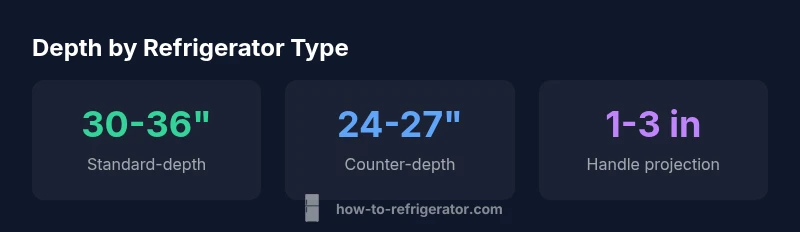
The typical depth of a standard refrigerator is about 30 to 36 inches deep from back to front, not including handles. Counter-depth models run roughly 24 to 27 inches. When planning, measure from the wall to the front of the doors and add space for ventilation and door swing.
Understanding Refrigerator Depth: Why It Matters
According to How To Refrigerator, depth is a fundamental fit factor that affects how a fridge integrates with your kitchen layout. The term refers to how far the appliance sits from the back wall to the outer edge of the doors, not counting the decorative handles. Depth influences three practical things: cabinet alignment, aisle width, and airflow. If a refrigerator is too deep for a given space, it can protrude into the walkway, make adjacent drawers hard to reach, and compromise ventilation. In addition, wall recesses, built-in panels, and toe-kick space all hinge on accurate depth. When homeowners ask, "how deep are refrigerators?"—the answer often hinges on the model type. In our analysis, two primary families emerge: standard-depth and counter-depth. Standard-depth units typically fill the expected kitchen footprint, while counter-depth variants sit closer to countertop height and width. For many homes, choosing between these options comes down to space planning and how the depth interacts with cabinetry, doors, and the island layout. The How To Refrigerator team found that practical depth planning saves installation headaches and prevents after-purchase surprises.
To keep this objective, remember that depth alone isn’t the only consideration—ventilation space, door swing, and adjacent appliance clearances all contribute to real-world usability. When you search for the answer to "how deep are refrigerator" in your kitchen, prioritize those surrounding factors as much as the depth number itself. And yes, depth figures vary by model, door style, and handle design, so always verify exact specs from the manufacturer before making a purchase.
How to Read Appliance Specs and Depth Labels
Most refrigerator specs list depth in several ways: “depth,” “depth (body),” and sometimes “fulldepth” or “door depth.” Always confirm whether the listed figure is measured with doors closed and without handles, since some brands include handle projection in the final depth. When comparing models, multiply caution with any claimed depth advantage. For instance, a counter-depth model might show a depth of 27 inches, yet while the cabinet body sits shallower, a robust handle or protruding hinge could push the overall footprint closer to 30 inches. If you’re narrowing choices, compile a quick side-by-side with three columns: depth, door swing clearance, and recommended ventilation. A straightforward rule of thumb is to treat depth as a starting point, then verify the total footprint in your kitchen drawing and on-site measurements.
Reading specs also helps you plan for installation challenges such as recessed cabinetry, water lines, and electrical outlets. In the end, the exact depth you need will depend on how your space is configured and whether you prefer a flush look or a roomier interior. For homeowners asking, "how deep are refrigerator units in typical kitchens?" the answer usually lies in balancing depth against usable interior space and the surrounding cabinetry.
Standard-depth vs Counter-depth: Pros and Cons
Depth choices are not merely cosmetic; they affect capacity, accessibility, and kitchen flow. Standard-depth refrigerators (roughly 30–36 inches) offer more interior space and easier access to shelves and crisper bins. They’re often the preferred choice for busy families that load groceries heavily and want deep shelves. Counter-depth models (roughly 24–27 inches) present a sleek, built-in appearance and can improve kitchen ergonomics by aligning with countertops, reducing the risk of bumping into edges. However, counter-depth units typically provide less usable interior space and may require careful organization to maximize storage.
Another aspect to consider is ventilation. Both types require airflow around the unit, but counter-depth installations may demand precise cabinet ventilation to prevent overheating in tight spaces. If you have a narrow doorway or a corner with heavy traffic, depth could influence how easily you maneuver around the fridge. When taste and practicality collide, many homeowners choose a hybrid approach—standard-depth for primary storage and a secondary, narrower unit for beverages or overflow. This approach helps keep you aligned with both form and function while staying true to the guidance from How To Refrigerator’s 2026 analysis.
How to Measure Your Kitchen Space Precisely
Measuring depth accurately starts with three dimensions: the space on the back wall, the cabinet face front, and the door swing clearance. Begin by pulling the refrigerator away from the wall to reveal the full recessed depth. Use a tape measure to document the distance from the back wall to the front edge of the door frame when closed. Then add the height of any toe-kick trim and the depth of the hinges. Don’t forget to account for the area needed for comfortable door swing: you want at least a few inches of clearance for the doors to open fully without hitting adjacent cabinets or islands. If your layout includes a built-in panel, factor in panel thickness and any alignment tolerances. Finally, measure floor-to-ceiling clearance if you plan to install a fridge with an over-the-door ice dispenser or a tall water line. By compiling these measurements, you’ll ensure the final choice matches your kitchen’s geometry and reduces the risk of a misfit.
To summarize the practical steps: 1) measure back-to-wall depth, 2) add hinge/door swing allowance, 3) include toe-kick and panel thickness, 4) verify ventilation space, and 5) compare the total to the model’s official depth. With these checks, you’ll answer the core homeowner concern: how deep are refrigerators in your space, and will they fit without interference?
Planning for Door Swing, Handles, and Ventilation
Beyond the cabinet footprint, you must account for door swing and handle projection. Door swing can require additional clearance in narrow kitchens or tight corners. A door that swings into a narrow aisle may require more space than the depth alone would suggest. Handle projection further increases actual depth by varying amounts depending on style and model. If you’re unsure about handles, measure with the doors fully opened to their maximum angle and simulate how you’ll access shelves when someone else is nearby. Ventilation is often overlooked but critical for efficiency and longevity. Most freestanding refrigerators need space around the back and sides to dissipate heat. A common rule is to leave at least 1–2 inches of clearance on the sides and back, though some stainless models with high-performance compressors may benefit from extra breathing room.
When planning, sketch a simple floor plan showing cabinetry, island, and appliance gaps. Compare this plan against your chosen model’s installation guide, and consider temporary placement to verify clearance before committing to a purchase. If you’re balancing style with function, you’ll often find that a slightly deeper model offers more internal volume, while a shallower option helps you preserve walkway space and maintain a clean, flush kitchen look. This balance is at the heart of practical depth planning for today’s homes.
Bottom line: know your space, verify the model’s true depth, and confirm ventilation and door swing in real-life use.
Installation Scenarios: Built-In, Under-Counter, and Island Installations
Your kitchen’s configuration will heavily influence your chosen fridge depth. Built-in or panel-ready models are designed to sit flush with cabinetry, often requiring precise depth alignment. In these cases, you may need to match the cabinet depth (often around 24 inches) and check for any trim pieces that could add to the overall front profile. Under-counter or compact models drive depth considerations in narrow spaces, with many units offering deep shelves but slimmer footprints. Island placements require free space around the sides and front, especially if you want to slide legs or use a secondary seating area nearby.
For many households, the ideal setup is a standard-depth refrigerator in one wall and a counter-depth unit for a front-facing alcove or breakfast bar area. This configuration keeps the kitchen visually balanced while providing ample storage. Always confirm the installation clearances in the model’s manual and cross-check with your kitchen’s electrical, water lines, and ventilation provisions. With careful planning, you’ll achieve a seamless integration that aligns with your design goals and functional needs.
Finally, plan for service access. A fridge placed too tightly against a wall can complicate maintenance and filter changes. By selecting a depth that allows service access and ensuring space for door removal if needed, you minimize future headaches and keep your kitchen running smoothly.
Choosing the Right Depth for Your Home and Budget
Depth choice often comes down to two questions: how much space do you have and how much interior storage do you need? If you cook and shop frequently, a standard-depth model offers higher capacity and easier accessibility. If you’re constrained by width or prefer a seamless, built-in look, a counter-depth fridge can be a strong aesthetic and space-saving option. Budget considerations matter too: counter-depth units can be more expensive per cubic foot due to their design and compact geometry. When budgeting, compare the cost per cubic foot of usable space rather than just sticker prices. Also factor in potential installation costs, ventilation add-ons, and any cabinetry modifications.
To avoid buyer’s remorse, create a space blueprint and list model specs side-by-side with your measurements. Favor models with verified depth measurements from the manufacturer, and for high-traffic kitchens, prioritize ventilation and easy door access. The bottom line is to choose a depth that harmonizes with your kitchen’s geometry, your daily workflow, and your budget while maintaining a comfortable clearance margin for future maintenance and upgrades.
Common Mistakes and Quick Fixes When Assessing Depth
A frequent mistake is assuming depth alone determines fit. The real-world footprint also depends on door swing and the extra space taken by handles, hinges, and venting. Another pitfall is neglecting toe-kick depth and cabinet alignment, which can create misalignment with nearby drawers or dishwashers. A practical fix is to measure both the installed depth (with doors closed) and the total depth including handles, then compare to your floor plan. If you’re uncertain, mock-up the fridge location with cardboard cutouts or painter’s tape to simulate door arcs and walking space. Finally, always plan for ventilation: leaving 1–2 inches of clearance on the sides and back is a simple, effective way to maintain efficiency and prolong the unit’s life. By avoiding these common mistakes, you’ll ensure the final selection truly fits your kitchen and daily routines.
Depth scenarios and considerations
| Scenario | Depth (inches) | Notes |
|---|---|---|
| Standard-depth refrigerators | 30-36 | Excludes handles; aligns with cabinetry |
| Counter-depth refrigerators | 24-27 | Shallower footprint; door clearance matters |
| Door swing space | 2-4 | Ensure clearance for doors during operation |
FAQ
What is the typical depth of a standard-depth refrigerator?
Most standard-depth fridges measure about 30–36 inches deep from back to front, not including handles. Height and width vary by model, so always check official specs for exact depth.
Most standard-depth fridges are about 30 to 36 inches deep, not counting handles.
Are counter-depth refrigerators truly shallower than standard-depth models?
Yes. Counter-depth models typically measure 24–27 inches deep, offering a flush look with counters but often with less interior space. Verify internal layout to ensure it meets storage needs.
Yes, counter-depth fridges are usually 24 to 27 inches deep and sit closer to the counter height.
How should I measure depth, including handles?
Measure from the back wall to the outermost edge of the doors, then add the projection from handles. Always compare with the model’s official depth spec to avoid surprises.
Measure from wall to the front of the doors, then add handle depth.
Do built-in or integrated fridges have different depths?
Built-ins usually require cabinetry-matched depth, often around 24–28 inches, depending on panels and trim. Check the installation guide and space allowances before purchase.
Built-in fridges must fit your cabinetry; check the model's installation depth.
What ventilation clearance should I leave around the fridge?
Leave space on the sides and back to allow heat dissipation. A typical guideline is 1–2 inches, but always follow the manufacturer’s recommendations.
Leave a little space on the sides and back—about an inch or two—so the fridge breathes.
“Depth is a foundational dimension that shapes how well a fridge will fit and perform in a kitchen. Always verify actual depth with the entire footprint, not just the cabinet body.”
Top Takeaways
- Define space with precise measurements before shopping
- Choose depth that balances capacity and kitchen flow
- Account for door swing and handle projection
- Allow ventilation space for efficiency and longevity
- Verify model depth against cabinet depth and toe-kick space