Are Refrigerators the Same Width? A Practical Guide to Width Variations
Learn whether refrigerators share a standard width. This guide explains width categories, measurement steps, and tips to pick the right size for your kitchen in 2026.


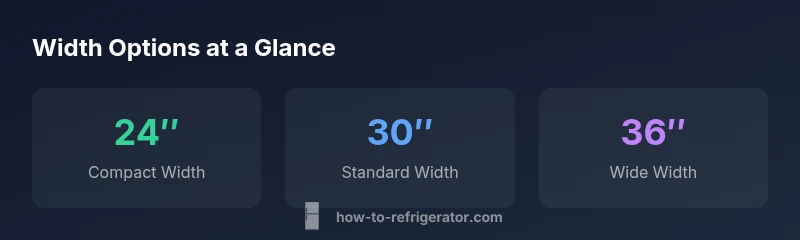
Are refrigerators the same width? Not at all. Fridges come in a range of widths to fit different kitchens and configurations. Common residential widths include compact 24 inches, standard 30 inches, and wider 36 inches, with even larger custom or French-door models around 42 inches. When choosing, measure available space, door swing clearance, and adjacent cabinetry to avoid fit issues.
Understanding fridge width basics
Width is one of several exterior dimensions that determine fit, installation, and daily usability. According to How To Refrigerator, width constraints are a primary driver of layout decisions in most kitchens. In practice, homeowners encounter a spectrum from compact 24-inch units designed for narrow spaces to standard 30-inch models that fit most kitchens, up to wider 36-inch configurations and even broader custom arrangements. The choice affects not only footprint but also door swing clearance, hinge placement, and cabinet alignment. When planning a project, start by sketching the kitchen opening and surrounding features, then measure the actual space with a tape measure, including trim or molding that could intrude. Consider both the opening width and the space needed for the doors to swing fully, especially if the fridge will sit next to cabinetry or a tall pantry. If upgrading from an older unit, compare exterior width and interior capacity to ensure you won’t regret the swap. This block sets the stage for width as a multidimensional constraint: you must balance space, movement, appliance depth, and ventilation to create a kitchen that is both functional and comfortable to use every day.
Common width categories and what they mean
Width categories help buyers translate space into usable options. Compact 24-inch models are designed for tight urban apartments, garages with limited openings, or offices where counter space is at a premium. Standard 30-inch refrigerators dominate many homes because they balance capacity and footprint in typical kitchens. Wider configurations around 36 inches are common for open-concept layouts and families that prioritize internal storage and wide doors. Some large homes or beverage-centric spaces opt for extra-wide or custom widths, often 42 inches or more, to accommodate large ice makers, French-door designs, or integrated paneling. There are also counter-depth variants, which sit flush with cabinetry but can reduce interior capacity. Be mindful that a wider unit may require more clearance in front of vents, floors, or nearby cabinets, while a counter-depth option may fit the opening but feel tighter inside. Knowing these categories helps you narrow choices before measuring space and querying retailers.
How to measure your space accurately
Begin with a clean slate: remove any doors or obstructing hardware from the opening before measuring. Use a steel tape measure to capture three critical dimensions: width (from outer edge to outer edge with trim), height (from floor to top of the opening), and depth (from the wall to the furthest point of the installed unit). Measure twice if possible to confirm accuracy. Don’t forget to account for door swing clearance by simulating doors opening toward walls or cabinets; this can easily add 1–2 inches of required space on each side. Check for nearby features like crown molding, baseboards, or counter overhangs that could intrude when the fridge is installed. Finally, consider the depth of the fridge when doors are open, as some configurations extend farther into the room. This method minimizes surprises at delivery and helps ensure a clean, functional fit.
How width impacts installation and clearance
Width directly influences how the fridge interacts with surrounding elements. In tight kitchens, even a few inches can alter traffic flow or cabinet access. Wider units require more side clearance to prevent doors from striking adjacent cabinetry, and they may necessitate changes to electrical outlets or venting locations. Depth matters too—some fridges protrude beyond counters, affecting toe-kick space and open-concept sightlines. If you’re replacing an older appliance, verify that existing cutouts accommodate new width, especially if you’re moving from a 30-inch model to a 36-inch or wider design. If your space is fixed, you may need to adjust cabinetry, rearrange adjacent appliances, or opt for a shallower door swing to maintain comfortable movement between zones. Planning these details early saves installation time and reduces the risk of costly redesigns.
Choosing the right width for your kitchen layout
To choose wisely, consider your kitchen’s usage pattern and layout. Small kitchens benefit from compact 24-inch or counter-depth 30-inch models that preserve floor space while offering essential capacity. Open-plan or family kitchens can justify wider 36-inch configurations for faster loading and easier access to items from multiple angles. If your design includes a dedicated beverage center or two fridges, you might even explore extra-wide 42-inch models with panel-ready fronts for a seamless look. Always map out door swings on paper, then verify with a retailer or installer by measuring the actual clearance in your home. Finally, balance width with depth and height constraints to ensure not only a proper fit but also a practical work triangle for daily tasks.
Practical shopping tips for width
When shopping, bring precise measurements and a floor plan sketch. Check the retailer’s dimensional drawings for exterior width, interior capacity, and door swing direction. Evaluate whether handles or protruding ice dispensers will affect adjacent cabinetry or people passing by. If possible, test the opening width in your kitchen by temporarily marking the doorway with painter’s tape to visualize clearance. Consider future needs—if your family grows or you anticipate hosting gatherings, a slightly wider unit could offer meaningful gains in storage and convenience. Finally, remember to factor in serviceability: some brands offer narrower feet or adjustable doors that can help you optimize fit after delivery.
Width options for common refrigerator configurations
| Model Type | Approx Width | Common Uses |
|---|---|---|
| Compact | 24 inches | Small spaces/apartments |
| Standard | 30 inches | Most homes |
| Wide | 36 inches | Open concept/kitchens with more counter space |
| Extra-wide/Custom | 42 inches | Large layouts or beverage centers |
FAQ
Are standard refrigerator widths universal across brands?
No. Widths vary by configuration, model, and design intent, so you will see a range rather than a single standard. Always confirm the exact exterior width from the manufacturer’s specs before purchasing.
No—width varies by model, so always check specs for the exact width.
What is the most common refrigerator width in homes?
The most common residential width is around 30 inches, though many homes also use 24 inches for compact units and 36 inches for wider designs. Availability varies by region and kitchen layout.
Most homes use about a 30-inch fridge, with other sizes available depending on space.
How do you know if a 36-inch fridge will fit in a 33-inch opening?
If the opening is 33 inches wide, a 36-inch fridge will not fit without modifications. You’d need to adjust cabinetry or choose a narrower model. Always rely on exact manufacturer dimensions.
A 36-inch fridge won’t fit in a 33-inch opening without changing the space.
Can you install a wider fridge if space is fixed?
Not safely without modifying the opening or cabinetry. If the space is fixed, select a fridge that matches the opening or consult a contractor to explore options like removing trim or reshaping cabinetry.
Not safely—change the space or pick a better-fitting size.
Do door swing directions affect width measurement?
Door swing doesn’t change the unit’s width, but it affects required clearance. Measure with doors in their open position to ensure there’s no interference with counters or walls.
Yes, consider how the doors swing when you measure clearance.
What should I consider if my kitchen is small?
In tight spaces, prefer compact 24-inch or counter-depth 30-inch models to maximize usable floor area while maintaining essential capacity. Plan for aisle clearance and consider a single-fridge layout to simplify traffic flow.
Choose compact or counter-depth models to keep the kitchen usable.
“Width is a fundamental constraint that shapes how you use and access your fridge every day. Measuring accurately before purchase saves time and prevents awkward gaps.”
Top Takeaways
- Measure your space before shopping
- Width varies widely; know your category ranges
- Check door swing and clearance before purchase
- Choose width that fits both opening and daily workflow