What Refrigerator Temperature Is Safe: A Homeowner Guide
Learn the safe refrigerator temperature, why it matters for food safety, and practical steps homeowners can take to test and maintain their fridge at the correct temperature.


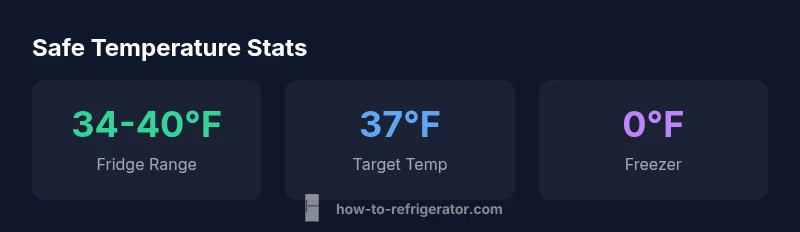
Safe fridge temperatures are typically 34-40°F (1-4°C), with a common target around 37°F (3°C); freezers should sit at 0°F (-18°C). Maintaining these ranges minimizes bacterial growth and preserves quality. Use a dedicated fridge thermometer and avoid large fluctuations caused by frequent door openings. For your setup, aim for the mid-range and verify regularly.
Why Temperature Safety Matters
Maintaining safe refrigerator temperatures is a foundational food-safety practice. Safe temperatures slow bacterial growth and preserve texture, aroma, and nutrition. A fridge that runs too warm invites spoilage; one that runs too cold wastes energy and can freeze items unnecessarily. The How To Refrigerator team emphasizes that safe ranges are not a myth—they are a practical standard homeowners can enforce with a simple thermometer and routine checks. In daily life, small fluctuations from door openings or busy kitchens matter less than prolonged drift away from the safe zone. By understanding the science behind temperature control, you can prevent waste, save money, and keep family meals safe. Consistency is the key; adjust your settings gradually and verify with a thermometer at least once per week.
What Temperature Is Safe? Core Ranges
The core question is: what refrigerator temperature is safe? The general guideline is fridge temperatures between 34°F and 40°F (1°C to 4°C). Going above 40°F for more than a few hours can allow fast-growing bacteria to multiply in perishable foods. For the freezer, 0°F (-18°C) is commonly recommended for long-term storage. These ranges align with standard food-safety guidelines and have broad applicability across models and brands, including popular consumer appliances. If your fridge shows a different dial reading, verify with an independent thermometer placed in the main compartment; temperatures on display panels may lag behind real life air temperature. Aim for a target around 37°F (3°C) for practical safety and energy efficiency.
Measuring Temperature: Tools and Setup
To accurately gauge fridge temperature, you need a dedicated thermometer placed in the main body of the refrigerator—not on the door. Place the sensor in the center of the fridge, away from the back wall and vents, to avoid warm drafts from cooling coils. Record readings at multiple times across 24 hours, especially after groceries, meals, or when the door has been opened repeatedly. Keep a simple log and note any deviations above or below the safe range. Calibrate your thermometer according to the device instructions, and validate its accuracy with a second thermometer occasionally. This practice helps you detect drift caused by door usage, overloaded shelves, or poor door seals.
Understanding Temperature Fluctuations and Food Safety
Temperature readings can fluctuate due to several factors: door openings, warm room temperature, or a recently added item that starts out warmer. The key difference is how long the food remains in the danger zone (roughly 40°F/4°C and above). Short, occasional deviations are common and often harmless, but persistent drift beyond the safe range increases the risk of spoilage and foodborne illness. Rather than chasing absolute precision every minute, focus on maintaining consistent temperatures within the safe range over 24 hours a day. If you notice regular spikes, investigate possible causes like a faulty gasket, overpacked shelves, or an improperly sealed ice maker.
Zone-by-zone Temperature: The Real Fridge Map
Not all parts of a fridge stay equally cold. Lower shelves near the back typically stay cooler, while the door and upper shelves can experience warmer air. Perishables such as dairy, eggs, and raw meats should live on the middle shelves where temperature is most stable, while ready-to-eat foods can occupy the upper shelves. The crisper draws humidity and is best for produce but still needs monitoring because airflow dynamics can shift with frequent use. If you notice uneven temperatures, consider rearranging items and using a thermometer to verify that each zone remains within the safe range.
Practical Scenarios: Frequent Door Openings, Busy Kitchens
In kitchens with heavy traffic, door openings can cause regular temperature fluctuations. To mitigate this, organize frequently used items together and limit door openings during peak times. If your household tends to leave the door open when multitasking, take steps such as labeling shelves, using the colder zones for frequently used staples, and implementing a quick-check routine for each meal prep. After a busy evening, re-check the overall temperature with a thermometer to ensure no lingering heat pockets formed during the rush.
When to Calibrate or Replace Thermostats
Thermostats and sensors can drift slowly over time, especially in older models. If temperature readings regularly sit outside the safe range despite correct user settings, it may be time to calibrate or replace the sensor. Signs of a failing thermostat include inconsistent readings across the fridge, frequent alarm triggers, or a compressor that runs continuously. Before replacing, perform a careful diagnostic: seal checks, coil cleanliness, and door gasket inspection. If in doubt, consult a certified technician to verify whether the issue is mechanical or firmware-related and to ensure safe cooling.
Step-by-step Home Testing Plan
- Place a fridge thermometer in the main section, away from walls and vents. 2) Record temperatures at morning, afternoon, and night for 7 days. 3) Compare results to 34-40°F (1-4°C). 4) If you see drift, adjust the door seals or relocate items to improve airflow. 5) Clean the condenser coils and verify the defrost drain is clear. 6) If temperatures persist outside the safe range, schedule professional service.
Common Mistakes to Avoid
Avoid relying solely on the display panel temperature; these readouts can lag behind actual air temperature. Do not overload the fridge, block vents, or place hot foods inside. Frequent door opening, poor door seals, and messy shelves can create cold and warm pockets. Lastly, neglecting routine cleaning and coil maintenance can reduce cooling efficiency and cause temperature drift over time.
Quick Start Checklist for Homeowners
- Install a dedicated fridge thermometer in the main compartment
- Record readings across 24 hours and adjust toward 37°F (3°C)
- Inspect door seals, tidy shelves, and improve airflow
- Clean condenser coils and clear defrost drip pathways
- Re-test temperatures after changes and maintain logs for 2–4 weeks
Temperature guidelines for common fridge scenarios
| Scenario | Recommended Temperature | Notes |
|---|---|---|
| General fridge storage | 34-40°F (1-4°C) | Keep below 40°F to deter spoilage |
| Best practice target | 37°F (3°C) | Mid-range for safety and energy balance |
| Freezer compartment | 0°F (-18°C) | Long-term preservation |
| Door storage impact | Higher temps near door | Plan around frequent use |
| Vacation/empty house | Maintain steady temperature | Minimize door openings and energy use |
FAQ
What is a safe fridge temperature?
A safe fridge temperature is generally 34-40°F (1-4°C). A target around 37°F (3°C) balances safety and energy use. Use a dedicated thermometer to verify stability over time.
A safe fridge temperature is usually between 34 and 40 degrees Fahrenheit; aim for about 37 and check with a thermometer for stability.
How can I check my fridge temperature accurately?
Place a fridge thermometer in the main compartment away from the door. Record readings at multiple times over a 24-hour period to account for fluctuations, then adjust as needed.
Put a fridge thermometer in the main area and log readings over 24 hours to see if you stay in the safe range.
Does opening the fridge door affect temperature?
Yes. Frequent or prolonged door openings raise the internal temperature temporarily. Plan for quick access and organize items to minimize door openings.
Opening the door too often can warm the fridge briefly; try to limit openings and keep items handy.
What if my thermostat seems faulty?
If readings are inconsistent or the fridge cycles abnormally, check seals and coils first. If issues persist, a professional service may be needed to replace sensors or repair the thermostat.
If temps drift a lot or the fridge runs constantly, check seals and coils and consider professional service.
Can cold spots occur inside the fridge?
Yes. Zone placement matters: rear shelves are typically cooler, while the door is warmer. Use a thermometer to map hot and cold zones and reposition items accordingly.
Yes—some spots are warmer or cooler; map them with a thermometer and move items accordingly.
What should I do if my fridge can't maintain safe temps?
First check door seals and airflow, then inspect coils and defrost drain. If temperatures stay outside the safe range, contact a professional for a diagnosis.
If temps stay off, check seals, coils, and defrost drain, then call a pro if it doesn't improve.
“Maintaining a stable, safe temperature is the simplest way to preserve freshness and prevent foodborne illness.”
Top Takeaways
- Set fridge to mid-range 37°F (3°C) for safety
- Use a thermometer and log readings
- Avoid frequent door openings to minimize fluctuations
- Check temperatures after large loads
- Inspect doors, seals, and coils if drift persists