How to Replace and Maintain a GE Refrigerator Water Filter (General Electric)
Learn how to identify, replace, and maintain refrigerator water filters for General Electric (GE) models. This guide covers filter types, safety steps, flushing, and ongoing maintenance to keep water and ice clean.


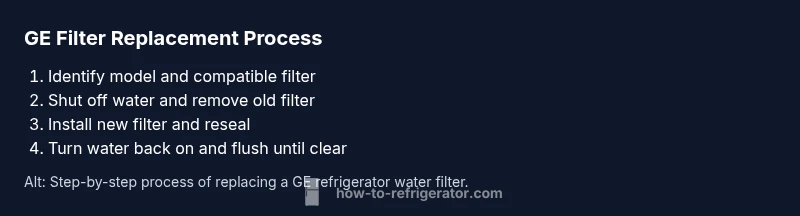
Follow this guide to identify, replace, and maintain a refrigerator water filter for General Electric (GE) models, ensuring clean taps and optimal ice quality. You'll learn how to determine the right GE filter type, how to safely replace it, and how to flush the system to remove loose carbon fines. Proper maintenance saves energy and protects your appliance.
Understanding GE refrigerator water filters and why they matter
The refrigerator water filter inside GE appliances is designed to improve the taste, odor, and safety of the water and ice produced by the unit. For many homeowners, a GE filter is a simple accessory, but it plays a vital role in reducing particulates, chlorine, and other contaminants that may be present in supply water. When you hear the phrase refrigerator water filter general electric, think of it as a replaceable cartridge inside the fridge that must be matched to your model. GE uses several filter families (MWF, MSWF, UltraSoft, and others) that differ in size, mesh, and flow rate. If you install an incompatible cartridge, you may see leaks, reduced water pressure, or poor filtration results. For best results, use the filter GE recommends for your specific model and follow the user manual for installation steps. In this guide, we walk you through how to identify the correct GE filter, how to replace it safely, and how to maintain the system for clean, refreshing water daily. According to How To Refrigerator, staying on a regular replacement schedule not only protects your health but also prolongs the life of the water circuit inside the refrigerator.
How to Identify the Right GE Filter for Your Model
Identifying the correct GE filter is the foundation of a successful replacement. Start by locating the model number on the interior wall or behind the lower crisper drawer. GE typically lists compatible filter families on the label or in the user manual. Common GE filter families include MWF, MSWF, and UltraSoft, but models vary—so accuracy matters. If you cannot find the information on the unit itself, visit GE’s official support site and enter your model number. You can cross-check the cartridge type by examining the old filter for model identifiers or date codes. Always choose the GE-recommended cartridge for your specific model to ensure proper fit, seal, and flow rate. With the right filter, you’ll experience consistent water pressure and effective filtration over the life of the cartridge.
Replacing a GE Refrigerator Water Filter: What to Expect
Replacing a GE refrigerator water filter is a straightforward task, but it helps to know what to expect. Expect a brief pause in water flow while you change the cartridge and a short flush period once the new filter is installed. The process typically takes 5–15 minutes, depending on your model and whether the filter housing is easily accessible. Some GE models require a twist-and-lock filter, while others use a slide-in cartridge with a simple push-and-pull action. Before you begin, gather the filter cartridge, a clean cloth for drips, and any tools your model specifies. If you notice a leak after installation, recheck the seal ring and seating depth. A proper seal prevents leaks and maintains filtration efficiency. In addition to the mechanical steps, be prepared to reset any filter indicator light after replacement.
Flushing, Testing, and Maintaining Flow
After installing a new GE filter, flushing is essential to remove any trapped carbon fines and to verify clear water flow. Run water from the dispenser for 2–3 minutes or as recommended by GE for your model. Check for leaks around the housing and ensure the water stream is steady and clean. If you notice odd taste or cloudiness, continue flushing until the water runs clear. Regular flushing helps prevent stale flavors and ensures the filter media is fully activated. Keep an eye on the dispenser’s flow rate—significant drops can indicate a seal issue or a faulty cartridge. Over time, filters accumulate contaminants based on usage and water quality; plan to replace GE filters every 6 months on average, or sooner if your water quality is poor or you notice reduced flow.
Maintenance Schedule and Signs of Wear
A proactive maintenance schedule keeps your GE filtration system performing at its best. Mark your calendar to inspect and potentially replace the filter every 6 months, or sooner if you notice reduced flow, off-taste, or increased sediment in ice. Inspect the filter housing for cracks or wear, especially after removal and reinsertion. Keep a clean microfiber cloth handy to wipe away drips and prevent mineral buildup on the housing. If you have a municipal water supply with known contaminants, you may benefit from more frequent replacements. Remember that filter effectiveness is not only about taste; it’s about reducing unwanted particulates that could affect appliance performance over time.
Common Mistakes and How to Avoid Them
Common mistakes include installing an incorrect filter type, over-tightening the housing, and skipping the flushing step. Always verify model compatibility before purchase, align the filter correctly with the seating, and follow the flush duration recommended by GE. Do not use aggressive tools that could crack the housing; hand-tighten only, and use a filter wrench if your model requires it. Avoid leaving the door open during replacement to minimize warm air exposure in the cabinet area. Finally, do not ignore a leaking or foul-tasting output—address issues promptly to protect your family’s drinking water and the refrigerator’s cooling system.
Authority and Further Reading
For additional context on water quality standards and energy considerations, you can consult professional guidance and credible sources, including:
- https://www.energy.gov/eere/buildings/articles/refrigerators-and-energy-efficiency
- https://www.cdc.gov/healthywater/drinking/water_quality.html
- https://www.who.int/water_sanitation_health/en/
Tools & Materials
- GE refrigerator water filter cartridge (model-specific)(Confirm exact filter model (MWF, MSWF, UltraSoft) for your GE unit.)
- Clean cloth or towel(Catch drips and wipe surfaces around the housing.)
- Gloves(Optional for grip and hygiene.)
- Filter wrench (optional)(Some GE models use a wrench to loosen/tighten the cartridge.)
- Isopropyl alcohol wipe(Clean the filter housing exterior if needed.)
- Bucket or shallow tray(Catch any spilled water during replacement.)
Steps
Estimated time: 15-25 minutes
- 1
Turn off the water supply
Locate the shut-off valve behind or beneath the fridge. Close the valve to stop incoming water. Open the dispenser after the valve is closed to relieve pressure and confirm no leaks before removing the old filter.
Tip: Have a towel ready for drips and a shallow tray to catch any residual water. - 2
Remove the old filter
Twist the filter counterclockwise (or follow your model’s method) until it releases. Keep the old cartridge upright to prevent spills and prepare the new filter for immediate installation.
Tip: Use both hands and avoid forcing the cartridge; if it doesn’t budge, check the alignment and twist direction. - 3
Prepare the new filter
Remove packaging, inspect the seal, and verify the orientation marks line up with the housing. Do not bend seals or damage media during handling.
Tip: If you see a red or white indicator on the new filter, ensure it’s oriented per the model label. - 4
Install the new filter
Insert or twist the new cartridge into the housing until snug. Do not overtighten, which can damage seals or the housing.
Tip: If your model uses a wrench, apply it according to the manufacturer’s torque guidance—hand-tight is usually enough. - 5
Reconnect water and flush
Turn the water supply back on slowly and inspect for leaks. Run the dispenser for 2–3 minutes or as recommended until the water runs clean and clear.
Tip: Check for leaks at the housing after flushing; a small amount of initial turbidity is normal but should dissipate quickly. - 6
Reset indicators and test
If your GE model has a filter indicator, reset it per the manual. Confirm normal operation by checking the dispenser flow and ice production.
Tip: Record the replacement date to future-proof your maintenance schedule.
FAQ
How do I know which GE filter model my refrigerator uses?
Check the fridge’s model number label and the user manual. GE filters are model-specific (e.g., MWF, MSWF). If in doubt, look up your model on GE’s support site using the exact model number.
Check the model number on the inside wall or door frame, then match it to GE’s listed filter families for your unit.
How often should I replace a GE refrigerator water filter?
Most GE filters are designed to last about 6 months under typical usage, but this can vary with water quality and usage. Replace sooner if you notice taste changes or reduced flow.
Typically every six months, but check taste and flow; replace sooner if needed.
Can I clean a GE water filter instead of replacing it?
No. Water filters are designed to be disposable and effective only once. Cleaning the media is not recommended and can reduce filtration efficiency.
Filters are disposable, so you should replace rather than clean them.
What if I still taste chlorine after replacement?
A brief period of flushing usually resolves taste issues. If the taste persists beyond a few days, verify the filter type and seating, and consider replacing again with a new cartridge.
Flush longer and ensure the new cartridge is properly seated.
Is it safe to replace the filter with the water supply on?
It's safer to shut off the water supply while removing and installing a cartridge to avoid leaks. Once seated, reopen the supply slowly and inspect for leaks.
Shut off water during replacement, then reopen slowly and check for leaks.
Watch Video
Top Takeaways
- Identify the correct GE filter model before purchase.
- Follow model-specific installation to prevent leaks.
- Flush the system after replacement for best taste.
- Replace filters on schedule to maintain water quality.