GE Refrigerator Filter: Find, Install, and Maintain
Learn how to choose the right filter for GE refrigerators, replace it safely, flush the system, and maintain peak performance with practical steps from How To Refrigerator.


Goal: Learn how to correctly identify, replace, and maintain the appropriate filter for GE refrigerators. This guide covers GE water filters and air filters, model compatibility checks, safe removal, proper installation, and maintenance steps to keep ice and water clean. Follow the steps to ensure optimal filtration and appliance longevity.
Understanding filter types for GE refrigerators
GE refrigerators use two main filter categories: water filters and, in some models, air or odor filters. When people say filter for GE refrigerator, they usually mean the water filter that treats incoming water for ice and drinking water. At the same time, air filters help manage odors in certain series. According to How To Refrigerator, the first move is to identify which filter type sits in your unit before purchasing a replacement. To locate it, check the user manual or the model sticker, typically near the interior ceiling or behind a grille or panel. Once you know the filter type, you can narrow down the compatible GE replacement options and avoid mismatches that can affect filtration quality. Remember that even within GE's lineup, there are multiple cartridge styles, each designed to fit specific model generations. If you can't confirm in the manual, use GE's official model lookup or How To Refrigerator's compatibility guide to map your serial number to a filter type. This initial step lays the groundwork for reliable water and air filtration in your GE refrigerator and avoids waste from incorrect purchases.
How to identify the correct GE filter for your model
The next step is to verify exact compatibility. GE commonly uses a handful of filter families, so you should locate your fridge’s model number and compare it to the filter lineup. How To Refrigerator analysis shows that compatibility can vary by series and production year, so guessing is risky. Start by inspecting the existing filter cartridge to note its type and markings. Then cross-check the model number against the GE support site or the How To Refrigerator model-matching guide. If you find a match, confirm the label on the new cartridge and ensure it matches the slot dimensions. Finally, when in doubt, ask customer support or a professional to verify before buying. Taking these precautions helps ensure you get a proper fit the first time, reducing future leaks and filtration problems.
Replacing the filter: safety, tools, and preparation
Before you touch the filter housing, prepare your workspace and assemble the essential items you’ll need. Gather the GE replacement water filter cartridge, a soft cloth, paper towels, and a small basin for catching drips; optional tools include a filter removal wrench. Clear the area, place towels to catch accidental spills, and ensure your hands are dry. If your model includes a dedicated water shutoff valve, consider briefly turning it off to minimize drips during the swap. Safety is the priority, so avoid forcing any parts or using tools that aren’t designed for the task. This preparation helps prevent accidental damage and keeps the kitchen clean as you work through the replacement.
Step-by-step overview (non-instructional): what to expect during replacement
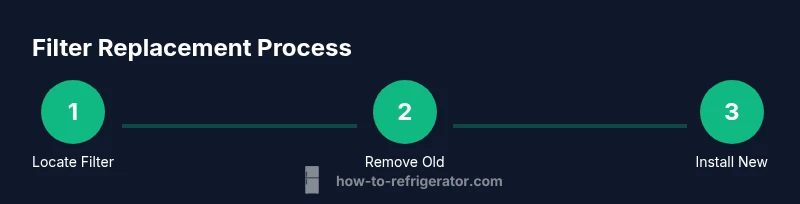
You’ll locate the filter housing, remove the old cartridge, install the new cartridge, and flush the system to purge air and any loose carbon. You’ll also want to reset the refrigerator’s filter indicator if your model supports it. The sequence below aligns with the actual step-by-step process to minimize mistakes: identify the housing, prepare the area, remove the old filter, insert the new cartridge, run water to purge air, and confirm there are no leaks. This overview helps you mentally prepare before diving into the hands-on steps.
Flushing, testing, and maintenance tips
After installation, flushing the new filter is essential to prime the cartridge and ensure clean water flows from the dispenser. Run water through the filter until it clears and the taste is stable—this helps remove any loose carbon particles. Check for leaks around the filter housing and the connection points. Keep maintenance simple by replacing the filter at the interval recommended by the manufacturer or when the dispenser indicator signals a change is needed. Keeping notes on replacement dates and model numbers simplifies future service and ensures continued water quality. As part of ongoing care, clean the exterior and the grille area regularly to prevent dust and grime from affecting performance.
Common issues and troubleshooting
If you notice leaks after replacement, first verify that the filter is fully seated and the O-ring is correctly positioned. If the leak persists, shut off the water supply, remove and re-seat the filter, and inspect for cracks in the housing. Using a non GE filter or a poorly seated cartridge can compromise filtration and potentially damage the assembly, so always ensure compatibility. For persistent problems, consult the GE support site or How To Refrigerator's compatibility guide, and consider scheduling professional service if needed.
References and sources
- EPA WaterSense: https://www.epa.gov/watersense
- CDC Healthy Water: https://www.cdc.gov/healthywater/drinking/index.html
- Consumer Reports: https://www.consumerreports.org
References provide general guidance on water filtration principles and best practices for maintaining clean drinking water in household appliances.
Tools & Materials
- GE replacement water filter cartridge(Verify compatibility with your GE refrigerator model before purchase.)
- Soft cloth(For wiping housing and spills.)
- Paper towels(Dry areas and catch drips during replacement.)
- Small basin or towel-lined tray(Catches drips during replacement.)
- Gloves (optional)(Keeps hands dry and clean.)
- Filter removal tool (optional)(Use a rubber grip tool if the filter is tight.)
Steps
Estimated time: 15-25 minutes
- 1
Find the filter location
Identify the filter housing on your GE refrigerator. Common spots are the grille at the front bottom or inside the fridge near the top rear. Ensure the area is dry and accessible before proceeding.
Tip: Have a towel ready to catch any drips. - 2
Prepare the area
Clear the surrounding space and lay down towels or a shallow tray to manage water leakage during removal and replacement.
Tip: Shut off the water supply if your model includes a dedicated valve. - 3
Remove the old filter
Turn the old cartridge counterclockwise to unlock, then pull straight out once released. Be prepared for a small amount of water to escape.
Tip: If resistance is high, pause and check if you need a filter removal tool. - 4
Inspect the housing and O-ring
Check the filter housing and O-ring for wear or cracks. Clean the housing with a damp cloth if needed and ensure the O-ring sits evenly.
Tip: Do not reuse a damaged O-ring; replace if necessary. - 5
Install the new filter
Insert the new GE filter cartridge and rotate clockwise until it clicks or locks into place. Align any arrows or labeling to ensure proper orientation.
Tip: Avoid cross-threading by keeping the cartridge aligned with the housing grooves. - 6
Flush and check for leaks
Run water through the dispenser to purge air and debris until the water runs clear and free of odor. Inspect the connection points for leaks.
Tip: Continue flushing until you feel confident there are no drips. - 7
Reset indicators (if applicable)
If your GE model has a filter indicator, reset it according to the user manual or How To Refrigerator guidance.
Tip: Keep a note of the replacement date for future maintenance.
FAQ
How do I know which GE filter fits my fridge?
Check the model number and slot type on your GE refrigerator, then compare with GE's compatibility guide or How To Refrigerator’s model-matching resources to confirm the correct cartridge.
Check your model number, compare with the GE compatibility guide, and use How To Refrigerator’s matching resources to confirm the right filter.
How long should I flush the new GE filter?
Flush the new cartridge until the water runs clear and tastes normal, ensuring there are no air bubbles or off flavors.
Flush until the water runs clear and tastes normal, then proceed.
Can I use a non GE filter in a GE fridge?
Use only GE approved or GE-compatible filters; third-party options may not seal properly and could affect performance or warranty.
Only use GE approved filters; third party options may cause leaks or performance issues.
What if the water leaks after replacement?
Shut off the water supply, re-seat the filter, check the O-ring, and inspect for housing cracks. If leaks persist, seek professional help.
Shut off water, re-seat the filter, check the O-ring, and call a professional if leaks continue.
How often should I replace the GE filter?
Follow the refrigerator’s indicator or manual guidance; replacement timing varies by usage and water quality, not just a fixed calendar.
Follow the indicator or manual; replacement timing varies with use and water quality.
Is there a difference between water filters and air filters in GE models?
Yes. Water filters treat drinking water and ice, while air filters address odors. Use the correct type for your model.
Water filters and air filters serve different purposes; replace the correct type for your model.
Watch Video
Top Takeaways
- Identify the correct GE filter type first.
- Use OEM GE filters for best fit and performance.
- Flush the new filter to purge air and debris.
- Reset the indicator after installation when available.