What Should Refrigerator Freezer Temperature Be? A Practical 2026 Guide
Discover the recommended temperatures for your refrigerator and freezer, how to calibrate thermometers, and practical tips to keep food safe and energy efficient.


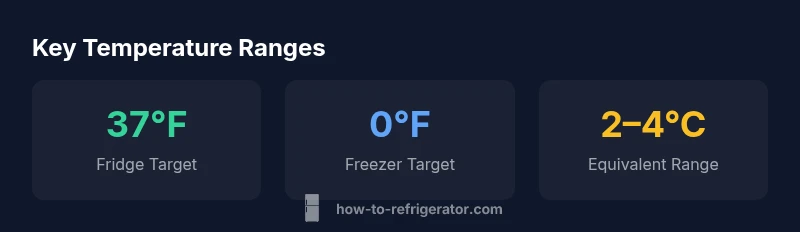
The recommended setting is 37°F (3°C) for the refrigerator and 0°F (-18°C) for the freezer. These temperatures keep perishable foods safe and help minimize energy use. If you can't maintain exact numbers, aim for the fridge in the mid-3x°F range and the freezer at 0°F. Check with a thermometer regularly.
Temperature Basics: Why the numbers matter
Understanding temperature targets isn't just about safety—it's about minimizing waste and energy use. When you're trying to answer what should refrigerator freezer temperature be, you're aligning food safety with practical home living. According to How To Refrigerator, maintaining a refrigerator around 37°F (3°C) and a freezer at 0°F (-18°C) provides a strong safety buffer for most perishable items while keeping ice crystals at bay. Real-world temps vary due to door openings, occupancy (how full the fridge is), and room temperature, but staying near these targets reduces spoilage and lowers energy usage. If temperatures drift, the risk of bacterial growth increases, especially in dairy, meat, and ready-to-eat foods. For homes with variable schedules, investing in a good fridge thermometer and a reliable freezer thermometer helps you track the precise numbers you should aim for.
Recommended Temperature Ranges (F) and (C)
The baseline targets are a practical rule of thumb: keep the refrigerator at 34-38°F (1-3°C) and the freezer at 0°F (-18°C). In Celsius terms, that translates roughly to 1-3°C for the fridge and -18°C for the freezer. Many modern models come with built-in thermometers that can be slightly off; using separate, calibrated thermometers in the center of both compartments is wise. If you’re adjusting due to seasonal temperature shifts or frequent door openings, aim to keep the fridge as close as possible to 37°F (3°C) and the freezer at 0°F (-18°C). Consistency matters more than perfection: small fluctuations are common, but prolonged deviations can compromise safety and texture of foods.
- Refrigerated foods: target around 37°F (3°C); avoid readings above 40°F (4°C) for more than a few hours.
- Frozen foods: keep at 0°F (-18°C); temperatures above that increase the risk of freezer burn and texture changes.
How to Measure and Verify Temperatures
To accurately answer what should refrigerator freezer temperature be, you must measure deliberately. Place a quality fridge thermometer in the center of the fridge and a separate freezer thermometer in the middle of the freezer. Do not place probes directly on or near the door gasket, vents, or the bottom where airflow may be blocked. Allow at least 24 hours for a stable reading before adjusting. If readings drift, re-check after 24 hours, and consider a thermostat calibration if your model allows. Record readings weekly or monthly to identify trends. If you recently changed door seals, rearranged items, or experienced a power outage, recheck temps to confirm stability. When calibrating, you can often adjust the thermostat by small increments and re-test after another 24 hours.
- Place thermometers away from the door and back vents.
- Record readings to spot drift over time.
- After outages, re-test within 24 hours of restoration.
What to Do When Temperatures Drift
Drift can occur for several reasons: a weak door seal, frequent door opening, a full or sparse refrigerator affecting air circulation, or a power outage. Start by inspecting door seals: a simple dollar-bill test can reveal gaps—if the bill pulls out with light resistance, the seal may be compromised. Clean seals and ensure doors shut fully with a firm, closed click. If the fridge still runs hot, check the condenser coils for dust buildup; cleaning coils improves cooling efficiency and temperature stability. Re-check temperatures after 24 hours. If a model’s thermostat is defective, consult a professional or the manufacturer’s guidance. During heat waves, it’s normal for the fridge to work harder; you may need to adjust placement or reduce door openings during peak heat.
Practical Tips for Energy Efficiency
Stable temperatures aren’t just a safety issue—they affect energy bills. Keep door seals clean and intact, minimize door openings, and avoid overloading shelves that block air flow. Proper airflow means items should not block vents or protrude into the back. Organize the fridge so that warm air can circulate around foods, with raw meat in the bottom shelf to prevent cross-contamination. Use your freezer efficiently by organizing bags and boxes to avoid energy waste from rummaging. When possible, keep the fridge away from heat sources like ovens or direct sunlight. A well-maintained temperature control system reduces energy consumption and extends the life of your appliance.
Troubleshooting Common Scenarios
- After a power outage, assume the worst until you verify: check both compartments with thermometers and reset to the recommended targets.
- If you notice frost buildup in the freezer, defrost when needed and inspect door seals and the defrost cycle.
- If foods are freezing in the fridge, slightly raise the temperature and confirm readings after 24 hours.
- If the ice maker stops, test the freezer temperature and ice-maker line; ensure there’s no ice jam and that the water valve is open.
Conclusion and Next Steps
Maintaining the correct refrigerator and freezer temperatures is foundational to safety, quality, and efficiency. Start with the baseline targets of 37°F (3°C) for the fridge and 0°F (-18°C) for the freezer, then verify with independent thermometers and adjust as needed. Regular checks help catch drift before food safety is compromised and energy use spikes. The goal is consistent, safe temperatures that your household can sustain without constant rewrites of the settings.
Temperature targets for fridge and freezer with practical notes
| Aspect | Recommended Temp (F / C) | Notes |
|---|---|---|
| Refrigerator | 37°F (3°C) / 4°C | Keep foods safe; avoid readings above 40°F (4°C) for long |
| Freezer | 0°F (-18°C) | Prevent freezer burn; maintain ice quality |
FAQ
What happens if the fridge is too warm?
Warm fridge temps can accelerate bacterial growth and spoil perishable foods. Use a thermometer to verify, adjust the thermostat, and check door seals and air flow.
If your fridge runs warm, food safety is at risk. Check the thermostat, seals, and airflow, then adjust and recheck after a day.
Can I use the freezer as a secondary fridge?
No. Freezers are designed to hold frozen goods. Using it as a fridge can cause temperature fluctuations and damage in both compartments.
The freezer isn’t a substitute for the fridge; it’s intended for frozen items and maintaining a strict 0°F.
How often should I check temps after power outages?
Check both compartments with thermometers within 24 hours of power restoration and re-adjust to target temps as needed.
After a power outage, recheck temps within a day and reset settings if needed.
Do temperature guidelines vary by model?
Most models follow the same safety ranges, but you should verify with your user manual for any model-specific guidance.
Check your model’s manual for any model-specific temperature notes.
What tools do I need to measure temps?
A quality fridge thermometer and a separate freezer thermometer are best. Place them in the center of each compartment away from vents.
Use separate digital thermometers in each compartment for accuracy.
“Accurate temperature control is the first line of defense against spoiled food and wasted energy.”
Top Takeaways
- Set fridge to 37°F (3°C) and freezer to 0°F (-18°C).
- Use separate thermometers for accurate readings.
- Avoid frequent door openings to reduce drift.
- Calibrate after outages or door seal issues.
- Stable temps improve safety and energy efficiency.