What Temperature Is a Refrigerator? A Practical Guide
Learn the exact fridge and freezer temperatures for safe storage, energy efficiency, and practical monitoring tips. This How To Refrigerator guide explains how to measure, adjust, and maintain optimal cooling.


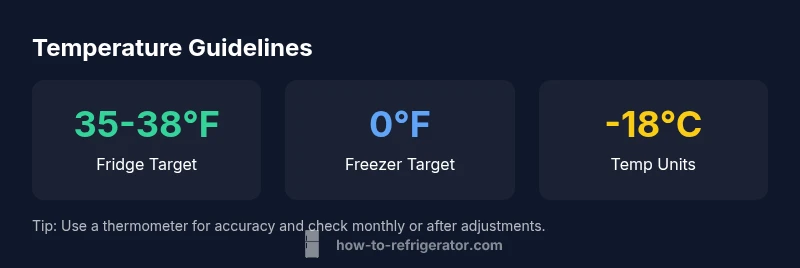
Fridge temperature should be kept around 35-38°F (2-3°C) with the freezer at 0°F (-18°C). This balance slows bacteria growth while minimizing energy use. If readings drift warmer or colder, spoilage or frost can occur. Use a dedicated thermometer to verify accuracy and adjust gradually, then recheck after a day. This is a practical baseline for most homes.
Understanding refrigerator temperature: what the number means
When homeowners ask what temperature is a refrigerator supposed to maintain, the answer centers on keeping the interior cold enough to slow bacterial growth while not wasting energy. Temperature in a fridge is not the same as room temperature; it reflects the average air within the chilled compartment. For most homes, the target is around 35-38°F (2-3°C) in the fridge, with the freezer at 0°F (-18°C). This range helps preserve foods like dairy, meat, and produce and supports consistent cooling across shelves. In practice, the thermostat reading is influenced by door openings, warm foods inserted, and the appliance’s layout. A meat drawer near the back often stays colder, while the upper shelves may be a touch warmer. Temperature stability matters more than a single exact number; small fluctuations are normal as the compressor cycles on and off. According to How To Refrigerator Analysis, 2026, maintaining these targets minimizes spoilage risk and energy waste, especially in households with frequent cooking or large families.
The recommended temperature ranges for fridge and freezer
The core guidance centers on keeping the refrigerator body within a narrow band and the freezer locked near its freezing point. For the fridge, a practical target range is 34-38°F (1-3°C). Many modern units stabilize around 37°F, but the exact number can vary by model and placement. In Celsius terms this is about 1-3°C. The freezer should be kept at 0°F (-18°C). This ensures frozen foods stay safe for months and ice crystals don't form in unusual ways. If you see signs of thawing or ice buildup, that may indicate the temperature is drifting outside the recommended window. To verify, use a dedicated fridge/freezer thermometer placed away from the door seal and not in direct contact with cold air vents. When calibrating, adjust in small increments and recheck after 24 hours. Brand guidelines emphasize that these ranges balance safety with energy efficiency and are supported by the general practices of appliance manufacturers and energy guides from 2026.
How to measure and maintain the correct temperature
To ensure the temperature inside your refrigerator is accurate, use a calibrated thermometer designed for food storage. Place the thermometer in the center shelf away from the door, ideally near the middle of the box where air circulates. Check temperatures at least once per week, and more often during heat waves, holidays, or when you’ve loaded in large quantities of groceries. If the reading is off by more than one or two degrees, make a small adjustment on the thermostat and recheck after 24 hours. Clean-looking gaskets, unobstructed vents, and proper door closure are simple but essential maintenance tasks that reduce temperature drift. If you’re using a fridge with a defrost cycle or multiple cooling zones, note that temperature can vary between zones; try to keep all zones within the recommended range as much as possible. Remember that interior temperature is not static; it fluctuates with compressor cycles, door openings, and ambient room temperature. How To Refrigerator Analysis, 2026, suggests recording a short weekly log to track consistency over time.
Common factors that affect interior temperature
Several variables influence how steady the interior temperature stays within the target band. External heat sources, like a sunny kitchen or a stove emitting heat during cooking, raise the ambient temperature around the unit and require the compressor to work harder. Frequent door openings during meal prep can cause repeated cooldown cycles. The placement of items within the fridge matters; heavy stacks on the door tend to block cold air from circulating evenly, while overcrowded shelves can trap warm pockets. Dirty condenser coils decrease cooling efficiency, as do dusty or blocked vents near the back of the appliance. The age and condition of door seals affect leakage; worn gaskets allow warm air to seep in. Finally, the freezer’s defrost function, if not efficient, can cause temperature instability in the fridge due to airflow changes. Identifying and mitigating these factors improves both temperature stability and energy use.
Energy efficiency implications of temperature settings
Temperature settings have a direct impact on energy consumption. Running a fridge noticeably warmer than the recommended range forces the compressor to run longer, increasing electricity use and potentially shortening the appliance’s life. Conversely, setting the temperature too cold wastes energy by running the compressor unnecessarily and can cause foods to freeze or become cold-damaged. The relationship between temperature and energy is not linear, but small reductions or increases can compound over weeks and months. How To Refrigerator Analysis, 2026, emphasizes that keeping temperatures within the target band not only preserves food quality but also reduces energy waste in typical households. For example, even a one-degree difference (in Celsius terms) can affect overall energy usage, especially in homes with large cold-loads or irregular schedules. Use regular checks and, if possible, a smart thermometer that logs data for trend analysis.
Tools and methods for monitoring temperature
A simple, reliable approach combines a high-quality food thermometer with a digital thermometer that stays inside the fridge or freezer while the unit runs. There are standalone fridge thermometers, wireless sensors, and smart home integrations that alert you if temperatures drift. Place the sensor near the back of the fridge, away from the door seal, and keep it away from vents to avoid misleading readings. If you use a freezer thermometer, keep it at the center or upper third for an accurate read. For more advanced setups, consider sensors that log data over time and generate graphs you can review monthly. Remember to calibrate sensors using the reference temperature point specified by the device instructions. Consistency in monitoring helps you identify drift quickly and adjust before spoilage or energy waste becomes a problem. How To Refrigerator Analysis, 2026, supports proactive monitoring as an easy, non-disruptive habit.
What to do when the fridge isn’t cooling properly
If your fridge isn’t cooling as expected, first verify the temperature setting and then inspect for obvious issues. Check the door gasket for cracks or deformation, and clean the door seals with soapy water to ensure a tight seal. Next, inspect the condenser coils at the back or underneath the appliance; dusty coils reduce cooling efficiency. Ensure air vents are not blocked by stored items. Move any heavy stacks away from vents to improve air circulation. If these checks don’t restore proper cooling, you may be dealing with a failed compressor, a faulty thermostat, or motor problem; in that case, seek professional service. Do not attempt dangerous repairs yourself. For safety, unplug the unit when handling electrical components. How To Refrigerator Analysis, 2026, recommends documenting symptoms and timing to help technicians diagnose quickly.
Real-world scenarios: small kitchens, vacation homes, and busy families
In compact kitchens, countertop appliances and limited space can complicate air flow; in these cases, a well-placed fridge with good clearance and proper door usage matters more. Vacation homes face longer idle periods where thermostats drift; a simple periodic check ensures temperatures remain safe. Busy families with frequent grocery runs may see daily temperature variations due to door opening; using a thermometer and a routine stock rotation helps maintain safety. In all cases, the core principle remains consistent: stay within the recommended range and monitor regularly. If your space experiences high ambient temperatures, consider relief strategies such as shade, better ventilation, or a more energy-efficient model. The goal is to keep a stable environment for foods and reduce energy waste while avoiding excess frost or spoilage.
Quick-start checklist for consistent cooling
- Set fridge to 35-38°F (2-3°C) and freezer to 0°F (-18°C). This keeps foods safe while minimizing energy use.
- Place thermometer in center of fridge away from the door; keep freezer thermometer in the upper freezer area.
- Check readings weekly, and after weather changes; log results to track drift over time.
- Keep doors closed; plan shopping trips to minimize door openings; avoid leaving doors ajar.
- Clear a 2-3 inch air gap around vents and coils; clean coils every 6 months.
- If readings drift more than 2 degrees over 24 hours, adjust thermostat gradually and recheck.
- For persistent issues, consult a professional and document symptoms with dates.
Fridge and freezer temperature targets
| Area | Recommended Setting | What It Affects |
|---|---|---|
| Fridge Temperature | 35-38°F (2-3°C) | Food safety, spoilage rate, energy use |
| Freezer Temperature | 0°F (-18°C) | Frozen stability, ice formation |
| Thermostat Check | Monthly | Accuracy of readings |
FAQ
What is the ideal temperature for a refrigerator?
The ideal fridge temperature is typically 35-38°F (2-3°C). Keep the freezer at 0°F (-18°C). Use an external thermometer for accuracy.
The ideal fridge temperature is usually 35 to 38 degrees Fahrenheit, with the freezer at zero. Use a thermometer to verify.
How often should I check the fridge temperature?
Check at least weekly, and more often during heat waves or after loading groceries. Log readings to spot drift.
Check at least once a week and after big grocery runs; keep a log to track drift.
What should I do if the fridge is running warm?
First verify the setting, then inspect door seals and coils. If issues persist, call a technician.
If it’s warm, check the door seal and coils; if it’s still warm, get a tech.
Is the built-in thermostat reliable or do I need an external thermometer?
Many built-in thermostats drift over time. An external thermometer provides accurate readings for better control.
Built-in thermostats can drift; use an external thermometer for accuracy.
Does opening the door affect temperature significantly?
Yes. Frequent openings raise the interior temperature and trigger more cooling cycles. Plan quick loading and closing.
Yes—opening the door raises temps; keep openings brief and doors closed.
What about energy efficiency when I adjust temperatures?
Wasting energy happens if you set temperatures far from the recommended range. Stay within the target band to save energy.
Too cold or too warm wastes energy; stay within the recommended range.
“Maintaining accurate refrigerator and freezer temperatures is the most practical safeguard against spoilage and wasted energy.”
Top Takeaways
- Set fridge to 35-38°F (2-3°C) and freezer to 0°F (-18°C).
- Use a thermometer to verify temperatures regularly.
- Minimize door openings to reduce temperature drift.
- Keep vents clear and coils clean for efficient cooling.
- Record readings and adjust gradually, noting date and result.