What Refrigerator Temperature Is the Best: A 2026 Guide
Discover the best fridge temperature for safety, freshness, and energy efficiency. This data-driven guide covers ideal ranges, testing methods, and practical zone management for homeowners.


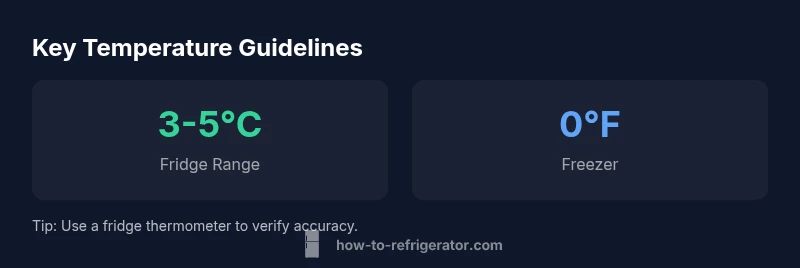
For most households, the best refrigerator temperature falls in the range of 3-5°C (37-41°F). Within this band, 3°C (37°F) is often ideal for safety and food quality, slowing bacterial growth while preserving texture. If your fridge has multiple compartments, set the main cavity near 3-4°C and reserve a slightly warmer zone for drinks, while keeping the freezer at 0°F (-18°C).
What refrigerator temperature is the best
Choosing the right fridge temperature is essential for safety, shelf life, and energy use. The question 'what refrigerator temperature is the best' doesn't have a single universal answer, because it depends on what you store and how your fridge is organized; however, there is a widely accepted target: the main compartment should stay around 3°C (37°F). According to How To Refrigerator, this target aligns with food safety guidelines and practical kitchen operation. In this range, most perishable items stay fresh longer without risking freezer burn on foods that aren’t meant to be frozen. Maintaining a stable temperature also avoids frequent cycling, which wastes energy and can cause temperature fluctuation that compromises quality. By prioritizing a consistent 3°C, you set a baseline that works for a typical family’s weekly groceries, leftovers, and dairy.
The science behind cold: safety vs quality
Temperature is the governing factor for food safety and quality. Colder temperatures slow bacterial growth and preserve texture, while warmer settings can speed spoilage and encourage moisture loss. The recommended fridge zone range of 3-5°C (37-41°F) offers a practical compromise between safety margins and energy use. For dairy products, eggs, and ready-to-eat meats, staying near 3-4°C minimizes risk without freezing them. Produce benefits from a slightly higher humidity environment, but most guides agree that the main compartment should stay around 3°C while keeping crisper drawers at a comparable range. The balance reduces waste by keeping items safe and appetizing longer, which is particularly valuable for households with small children or elderly residents.
How to set temperatures by zone
Modern refrigerators offer multiple zones that can be tuned to different temperatures. In general, the main cavity should target about 3-4°C (37-39°F). The dairy shelf and ready-to-eat products can stay near 3-4°C as a safe compromise. The crisper drawers may be kept a touch warmer or cooler depending on your produce; many users find 4-5°C (39-41°F) works well for leafy greens and berries in the crisper. The freezer should remain at 0°F (-18°C). If you notice frost build-up or condensation, it may indicate too-frequent door openings, an over-dense air flow, or a gasket issue, which can distort temperatures across zones.
Practical testing methods
The best way to confirm your temperatures are correct is to test with a reliable fridge thermometer placed in several spots: near the door, in the center, and in the crisper. After adjusting settings, allow 24 hours for the temperature to stabilize before re-checking. Record readings and adjust by small increments (1°C or 2°F at a time) to avoid shocking the system. If you position the thermometer in the crisper or near the back wall, you’ll get a more representative reading of how items actually experience cold air. Regular testing, especially after a power outage or door-wedge change, helps maintain the best balance for food safety and energy efficiency.
Common mistakes that waste energy or spoil food
Several common habits undermine a stable fridge temperature. Avoid overcooling by setting the thermostat too low; every 1°C lower can dramatically increase energy use without delivering noticeable safety benefits. Minimize door openings, store hot foods only after they cool, and keep the back of the fridge clean to prevent airflow obstruction. Avoid placing raw meats above ready-to-eat foods and don’t crowd shelves, which restricts air circulation. If shelves or seals are damaged, temperature distribution becomes uneven, and some items may freeze or spoil prematurely. Regular maintenance, including gasket checks and coil cleaning, supports consistent temperatures across zones. By respecting the 3-5°C guideline and keeping the door closed, you protect food quality and lower costs over time.
How to maintain temperature without overcooling
A steady temperature is easier to sustain when the fridge is well maintained. Ensure door seals are intact and properly aligned; replace worn gaskets if you notice condensation when the door is closed. Keep the condenser coils clean to maintain airflow, and avoid blocking vents with groceries. If your refrigerator supports adaptive defrost, use it as intended; manual defrost should be done if frost accumulates beyond a thin layer. Position frequently used items at the front for quick access to minimize temperature swings caused by door openings. These practices help safeguard the recommended 3-5°C range and reduce energy waste from unnecessary cooling cycles.
What to do if your temperature seems off
If readings drift away from the target range, start with simple checks: validate that the door seals are snug, relocate the thermometer to multiple spots to confirm, and verify that the thermostat knob hasn’t shifted during cleaning. If temperatures remain outside the ideal range, consult the manual for recommended calibration or service steps, since a thermostat or airflow issue could require professional inspection. Summers with high ambient temperatures may demand a slightly higher setting to compensate for heat load, while in cooler climates, keep your baseline at 3°C and monitor fluctuations. By addressing common causes and re-testing, you can restore a stable environment that preserves safety and quality across foods.
Quick-reference checklist for home cooks
- Set main cavity to about 3-4°C (37-39°F).
- Freeze at 0°F (-18°C).
- Use a fridge thermometer in multiple spots.
- Re-check after 24 hours any adjustment.
- Maintain door seals and clean coils for efficient performance.
- Avoid overcrowding shelves to ensure air flow.
- Keep raw meats below ready-to-eat foods to minimize cross-contamination.
- If in doubt, consult the appliance manual or a specialist.
Recommended temperature guidelines for typical home refrigerators
| Aspect | Recommended range | Notes |
|---|---|---|
| Fridge main cavity | 3-4°C (37-39°F) | Ideal compromise for most foods |
| Fridge doors/compartments | 3-5°C (37-41°F) | Avoid colder shelves to reduce condensation |
| Freezer | 0°F (-18°C) | Best for long-term storage and freezing quality |
| Dairy storage | 3-4°C (37-39°F) | Keep near center for stability and safety |
FAQ
What is the best refrigerator temperature for safety and freshness?
The best fridge temperature is typically around 3°C (37°F). This range slows bacterial growth and preserves texture. Personalize by zone with the main cavity around 3-4°C and keep the freezer at 0°F (-18°C).
Aim for about 3°C in the main compartment to balance safety and freshness.
Is 5°C too high for a refrigerator?
5°C is within the acceptable range for many foods, but some items may spoil slightly faster. If your family buys perishable items in bulk, consider nudging toward 3-4°C for extra safety.
5°C is acceptable, but 3-4°C is safer for perishables.
Does the freezer need to be at 0°F for safety?
Yes, 0°F (-18°C) is the standard target for freezing foods safely and maintaining quality over time.
Keep the freezer at 0°F to freeze foods properly.
How often should I recheck the temperature after adjustments?
Recheck after 24 hours to confirm the temperature has stabilized in the new setting. If readings vary, re-test and adjust again in small steps.
Wait a day, then recheck to confirm stability.
What could cause a fridge to run too cold or too warm?
Issues like faulty door seals, worn gaskets, a dirty condenser, or a malfunctioning thermostat can cause temperature fluctuations. Inspect seals and airflow, and service if needed.
Check the door seals and thermostat if temps are off.
Can ambient temperature affect fridge temperature?
Yes. High ambient temperatures raise the load on the fridge, potentially shifting internal temps. Adjust settings modestly and ensure good airflow around the appliance.
Yes, hot rooms can push temps up; adjust a bit and ensure space around the fridge.
“Choosing and maintaining the correct fridge temperature isn't just about safety—it preserves texture and nutrients while saving energy.”
Top Takeaways
- Set the main fridge at about 3°C (37°F).
- Keep the freezer at 0°F (-18°C).
- Use a thermometer to verify accuracy.
- Adjust in small steps and re-test after 24 hours.
- Avoid overcooling and ensure door seals are intact.