What Refrigerator Temperature Should Be: A Homeowner's Guide
Learn the safe, energy-efficient fridge and freezer temperatures, how to measure them accurately, and practical steps to maintain stability for food safety and savings.


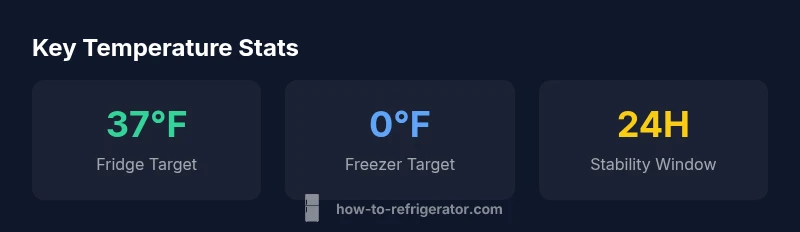
What refrigerator temperature should be? For most homes, target about 37°F (3°C) in the fresh-food compartment and 0°F (-18°C) in the freezer. The dairy shelf and crisper can tolerate slightly warmer zones. Use a calibrated thermometer to verify, and avoid frequent changes. If readings drift, adjust gradually.
Understanding what refrigerator temperature should be
Determining the correct refrigerator temperature is not just about comfort or convenience; it’s a critical factor in food safety, shelf life, and energy use. The question what refrigerator temperature should be is best answered with a specific range rather than a single dial setting. For most households, the fresh-food compartment should hover around 37°F (3°C) while the freezer stays at 0°F (-18°C). These targets balance the need to slow bacterial growth with the goal of preserving texture, color, and flavor. According to How To Refrigerator, stabilization matters: use a calibrated thermometer to confirm these values rather than relying on the dial alone, since factory dials can drift over time. The phrase what refrigerator temperature should be becomes actionable when you pair a target range with routine verification. Best results come from measuring in the middle of the shelf away from doors and vents and keeping the unit closed during checks to avoid transient fluctuations.
Why temperature matters for safety and freshness
Food safety guidelines hinge on keeping perishable items out of the “danger zone” where bacteria multiply quickly. A fridge that’s too warm invites spoilage and foodborne illness; a freezer that’s too cold wastes energy and can freeze foods unevenly. Maintaining the right temperature also preserves texture and flavor by slowing moisture loss and chemical reactions that break down quality. How To Refrigerator emphasizes that even small deviations—just a few degrees—can accumulate into noticeable losses over days and weeks. Consumers who routinely monitor temperatures reduce waste and avoid costly spoilage, especially in households with meat, dairy, or prepared foods.
Recommended temperature ranges for fridge and freezer
- Fresh-food compartment: 35-38°F (2-3°C), with 37°F (3°C) being a solid target for most kitchens.
- Dairy shelf and produce drawers: typically within the fridge’s general range, though dairy should stay on shelves where temperatures remain stable.
- Freezer: 0°F (-18°C) to maintain texture and prevent ice crystal formation.
- If your model includes multiple zones, aim different sub-ranges close to the above values while avoiding the extremes of each zone. These targets help optimize safety, food quality, and energy use.
How to measure accurately and consistently
Begin by placing a thermometer in the center of the primary food zone, not on or near the door gaskets, which can see warmer air with each opening. Check temperatures for at least 24 hours to account for daily fluctuations and door cycles. Record the readings and compare against the labeled target ranges. If your thermometer reads outside the recommended window, there’s a good chance your fridge is miscalibrated or the door isn’t sealing properly. For best results, measure at the same time each day, ideally after a period of steady operation (e.g., overnight). If readings drift, use small incremental adjustments and recheck after 24 hours.
How to adjust temperature safely and effectively
- Make tiny adjustments: shift by 1–2 degrees at a time and give the appliance time to respond.
- Avoid large swings, as repeated changes stress the cooling system and affect shelf conditions.
- Check door seals for wear or gaps—these are common sources of temperature drift.
- Keep the back of the fridge clear to ensure proper airflow around the condenser coils.
- After adjusting, re-test with a thermometer in the same spot to confirm stability.
Common fridge zones and what to expect
Different compartments inside the fridge respond slightly differently. The dairy shelf may stay cooler than other areas, while the crisper can be marginally warmer to preserve humidity for produce. Meat and seafood drawers often sit directly in line with the main cold air, so they can tolerate the standard fridge temperature while remaining at safe margins. Understanding these nuances helps you place items in their ideal spots and avoid overloading shelves, which can impede air circulation. Consistency across zones is more important than chasing a perfect single-number thermostat.
Special considerations: meds, baby formula, and other sensitive items
Some items require stricter control. Certain medications and baby formula guidelines may specify precise storage temperatures, and microbrew or specialty foods may maintain quality only within narrower bands. When in doubt, follow the storage instructions on the packaging and verify with a thermometer. Don’t assume that all items share the same tolerance for temperature swings; keep a small, dedicated space for sensitive products if your fridge runs warm or cool in different areas.
Energy efficiency and cost implications of fridge temperature
Temperature stability is a key lever for energy efficiency. Running the compressor more often due to a consistently warm fridge raises electricity usage and accelerates wear on components. Conversely, keeping temperatures too cold doesn’t meaningfully improve food safety and wastes energy. The takeaway is to maintain the recommended window and resist the urge to push the dial toward the coldest setting as a shortcut. Simple habits—pre-cooling beverages, organizing items to keep air moving, and minimizing door openings—also help reduce energy costs over time.
Quick-start checklist: set-and-forget steps for new and existing fridges
- Set fridge to 37°F (3°C) and freezer to 0°F (-18°C).
- Place a thermometer in the center of the fridge and another in the freezer.
- Check the readings after 24 hours and adjust by 1–2-degree increments if needed.
- Inspect door seals and clear any obstructions around vents and coils.
- Keep hot foods out of the fridge for cooling outside before storage to avoid spikes.
Temperature guidelines by fridge compartments
| Compartment | Recommended Temperature | Notes |
|---|---|---|
| Fresh Food Compartment | 35-38°F | Best general range for most foods |
| Dairy Shelf | 34-37°F | Keep dairy consistently cool on a stable shelf |
| Freezer | 0°F | Store frozen foods safely long-term |
FAQ
What is the safe refrigerator temperature?
Experts generally recommend a fridge temperature around 37°F (3°C) with the freezer at 0°F (-18°C). Verify with a thermometer and avoid relying on the dial alone.
Aim for about 37°F in the fridge and 0°F in the freezer, and double-check with a thermometer.
How often should I check the temperature?
Check the temperature at least monthly and after any power outage or door replacement. Keep a simple log to monitor drift over time.
Check it at least once a month, and after outages; keep a quick log to track changes.
Does temperature vary by shelf or zone?
Yes. The temperature can differ slightly between shelves and zones due to airflow and door openings. Place sensitive items on more stable shelves.
Some spots stay a bit warmer or cooler; plan where you store perishables accordingly.
What should I do if the temperature readings drift?
Re-check with a second thermometer, inspect seals, and adjust gradually by 1–2 degrees. If drift persists, consider a service check.
Double-check with another thermometer, fix seals, and tweak by small amounts.
Can a refrigerator be too cold?
Yes. Very cold temperatures can freeze items and waste energy. Stay within the recommended range and avoid cranking the dial.
Yes, too cold is possible; keep within the recommended range.
“Maintaining the correct refrigerator temperature is essential for food safety and energy efficiency. Even small deviations can impact safety and spoilage rates.”
Top Takeaways
- Set fridge to 35-38°F and freezer to 0°F.
- Verify with a thermometer, not the dial.
- Avoid frequent door openings to maintain stability.
- Do not place hot foods directly in fridge.
- Regularly scan seals and airflow for consistent cooling.