How Long Will a Refrigerator Stay Cold Without Power?
Discover how long a refrigerator stays cold during a power outage, factors that influence cooling duration, and practical steps to protect food safety.


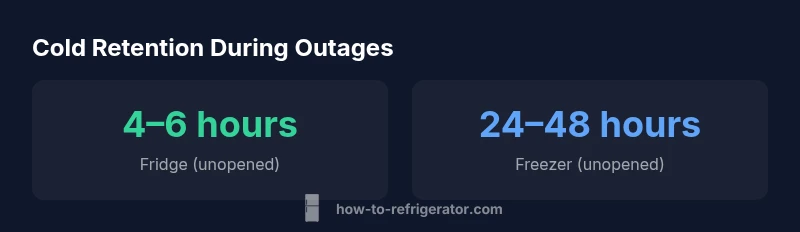
A typical refrigerator stays cold for several hours after a power outage if you keep the doors closed; exact times depend on fullness, ambient temperature, and model insulation. How To Refrigerator's analysis shows that you can expect roughly 4–6 hours for an unopened fridge, with longer durations for a full freezer and shorter times in hot kitchens. This quick answer helps you decide whether to move perishables to a cooler or freezer during outages.
What happens to fridge temperature when power is out
Power outages pause the cold chain inside your refrigerator, but temperatures don’t rise to room temperature instantly. The interior remains colder than the outside world for some time, giving you a window to decide how to manage perishables. According to How To Refrigerator, understanding how long will refrigerator stay cold without power depends on several factors, including how full the unit is, its location, and how often the door is opened. A typical home refrigerator will maintain a safe interior temperature (at or below 40°F) for several hours after power loss if the door remains closed. Your mileage will vary depending on the model’s insulation, the presence of a separate freezer, and whether your kitchen is hot or cool. In practical terms, this means you should treat the outage as a time-limited storage problem, not a complete food safety endorsement. While the exact duration is not fixed, you can take steps to maximize the time your food stays safe, and plan for longer outages with alternative cooling solutions.
The How To Refrigerator team emphasizes that the cooling window can be extended by minimizing heat gain and keeping the fridge packed with items that act as thermal mass. Small changes—like checking that door seals aren’t cracked and placing the appliance away from heat sources—can add meaningful minutes to hours of cold retention.
Key factors that influence cooling duration without power
Several variables determine how long your fridge stays cold after the power goes out. The easiest way to remember: more cold mass, fewer door openings, and a cooler room all help keep temperatures down longer. The How To Refrigerator team highlights fullness as a primary factor: a full fridge traps cold air more effectively than an empty one because the extra frozen or chilled contents act as thermal mass. Door position matters: every opening introduces warm room air that accelerates temperature rise. The type and design of the refrigerator also play a role: top-freezer models often have different insulation dynamics than French-door units, and compact or apartment-sized fridges may warm more quickly if placed in a warm kitchen. Ambient temperature is another big driver; kitchens in warmer climates lose cooling capacity faster than those in cooler areas. Finally, the age and condition of seals and insulation influence performance: worn gaskets or gaps create leaks that speed up warming. Understanding these factors helps homeowners prioritize actions during outages.
Knowing these variables lets you tailor your response: if your freezer is full, you’ll have more leeway to keep perishables safe without power, whereas an empty fridge in a hot kitchen will warm quickly.
Realistic time ranges for unpowered cooling
During an outage, your refrigerator’s ability to stay cold depends on what is inside, as well as where it’s located. In general, an unopened fridge will preserve a safe interior for about four to six hours. If the fridge is especially full, the dense mass of food and ice inside acts as a thermal battery, increasing the window toward six to eight hours in cooler rooms, but this is model and environment dependent. Freezers behave differently: a full freezer can hold a safe temperature for roughly 24–48 hours; even a half-full freezer can extend this window beyond 12 hours provided you don’t open the door. A 2/3-full fridge tends to stay colder longer than an empty one because of the extra thermal mass. If the ambient temperature is high (70–80°F/21–27°C or warmer), you will see a faster temperature rise, cutting available time by roughly a factor of 0.5 to 0.75. If you’re in a very cool kitchen or use the unit’s energy-saving features before the outage, these durations can extend modestly—though you should still assume shorter times for planning. The goal is to create a clear plan for protecting perishables during the outage.
Practical planning helps: estimate how long a typical outage may last and prepare accordingly with cooling options.
Practical steps to maximize cold retention during an outage
To buy time during a power outage, follow these practical steps:
- Keep doors closed to conserve cold air.
- Group items together to reduce air movement and heat gain when you must open the door.
- If your fridge is already full, don’t cram it beyond manufacturer recommendations; dense contents help retention.
- Use ice packs or dry ice to supplement cooling where safe and available.
- If you have a working freezer, consider moving perishables there if the temperature is still stable.
- Prepare a portable cooler with ice or dry ice for extra storage space.
- Monitor temperatures with a fridge thermometer; aim to keep interior at or below 40°F (4°C) if possible.
These steps can significantly extend safe storage time during outages and are easy to implement with basic household supplies.
Food safety considerations after outage
Food safety hinges on internal temperatures. If the power is out for an extended period, foods that have thawed or warmed above 40°F (4°C) for more than two hours should be discarded to avoid foodborne illness. Perishable items such as meat, dairy, eggs, and prepared foods are most at risk. If you can, use a thermometer to check the exact temperature. When in doubt, err on the side of caution and separate questionable items from those that are still at safe temperatures. If you anticipate a long outage, consider transferring items to a cooler with ice or dry ice and plan to cook or freeze them once power returns. Keeping a small stock of ready-to-use foods that don’t require refrigeration can also help during longer outages.
Special considerations for different fridge configurations
Fridges vary in design: top-freezer, bottom-freezer, side-by-side, French-door, and compact models all behave differently in power outages. Generally, full or well-insulated units retain cold longer than older models with worn seals. Built-in or counter-depth units may have different ventilation and isothermal characteristics. For apartments and small kitchens, the compact fridge can warm quickly if placed in direct sun or near heat sources. If your home has a dedicated freezer chest, your options expand because chest freezers can maintain lower temperatures for longer periods without power. Regardless of configuration, the core strategies remain: minimize door openings, keep the unit out of heat, and maximize thermal mass within safety limits.
Planning for outages: pre-outage prep and during outage tips
Proactive planning reduces risk during outages. Build a small outage kit that includes: a fridge thermometer, extra ice packs, a few bottles of water, and a compact portable cooler. Before storms or forecasted outages, freeze water in reusable bottles to act as ice mass. Label items in your fridge and freezer so you can quickly separate foods that should be discarded if temperatures rise. During an outage, avoid starving the appliance of power entirely by ensuring at least one door remains closed and by delaying nonessential trips to the kitchen. After the outage, if you suspect any items have exceeded safe temperatures, use the thawed-then-cooked method where appropriate or discard.
What to do after power returns: checking temperatures and safety
When power returns, restart the fridge and monitor temperatures as the internal temperature settles back toward safe levels. Do not refreeze partially thawed foods; cook or discard them according to food safety guidelines. Check seals and door gaskets for wear and replace if needed to improve future performance. Reorganize contents to optimize airflow and ensure that temperature sensors are not obstructed. Finally, review your outage plan and adjust based on experience. If you regularly experience outages, consider investing in a backup power source or more robust cooling options.
Estimated duration without power for common fridge/freezer scenarios
| Scenario | Estimated Time Without Power | Key Factors |
|---|---|---|
| Unopened fridge | 4–6 hours | Door kept closed; moderate ambient temp |
| Full freezer (unopened) | 24–48 hours | Dense insulation; minimal door openings |
| Partial fullness (2/3 full) | 12–24 hours | More air volume; more rapid warming with door openings |
| Hot ambient temperature | 2–4 hours | Higher heat transfer; faster warming |
FAQ
How long can my fridge stay cold without power?
It depends on fullness, door openings, and ambient temperature. Typical ranges are 4–6 hours for an unopened fridge, with longer times for full freezers and shorter in hot rooms.
It depends on how full the fridge is and the room temperature, but plan for a few hours to be safe.
Will opening the door shorten cooling time?
Yes. Each door opening introduces warm air that accelerates temperature rise. Minimize openings during an outage.
Yes—keep the door shut as much as you can.
What can I do to extend cooling time during an outage?
Keep doors closed, group items, use ice packs or dry ice if available, and consider a portable cooler for extra storage.
Close the doors, group items, and use ice packs if you have them.
What should I do with perishable foods after a power outage?
If the temperature stays above 40°F for more than two hours, discard perishable items. When in doubt, err on the safe side.
If in doubt, discard foods that have warmed above safe temps.
Should I use a generator or dry ice for long outages?
If you have access to a generator, follow safety guidelines. Dry ice can help for short outages when used carefully.
Use a generator safely, or dry ice if appropriate.
“Smart planning and keeping doors shut are your best defenses during a power outage—the fridge can buy you valuable time for safe food storage.”
Top Takeaways
- Keep doors closed to conserve cold air.
- A full freezer retains cold longer than an empty one.
- Limit door openings during outages to reduce heat gain.
- Use ice packs or dry ice to extend safe storage.
- Discard perishable foods if they rise above 40°F for more than two hours.