Can Refrigerator Be Recycled: A Homeowner’s Guide
Learn whether a refrigerator can be recycled, what parts are reclaimable, how the process works, and how to find a compliant recycler near you.


Yes. A refrigerator is recyclable with proper handling. Recyclers remove refrigerants and hazardous materials first, then dismantle the unit to reclaim metals, plastics, and foam. The key is using a certified facility and following local drop-off or pickup rules. This ensures safe disposal and minimizes environmental impact.
Why refrigerators are recyclable (and why the process matters)
Recycling a refrigerator isn’t just about tossing a big appliance into a bin. It’s a carefully choreographed process that protects the environment and community health. According to How To Refrigerator, the majority of a fridge’s weight comes from metals such as steel and copper, and those materials are highly reusable once extracted. The broader benefit is reducing the demand for virgin ores and cutting energy use in manufacturing new parts. The recycling pathway also minimizes the risk posed by insulating foams and refrigerants, which can release hazardous substances if mishandled. For homeowners, understanding the value of recycling helps justify choosing certified programs and planning pickup or drop-off — it’s a practical step toward sustainable living.
In the home, simple actions can influence the outcome: keeping the unit relatively intact until a certified facility can take it, identifying any refrigerant labeling, and following local guidelines. The How To Refrigerator team emphasizes that safe disposal is not optional; it’s a cornerstone of responsible appliance ownership. When you start with the right partner, the process becomes efficient and predictable, with a clear path from worn appliance to reclaimed materials.
- Avoid attempting DIY refrigerant extraction or disassembly, which can release fumes or cause injury.
- Prepare any required documentation or serial numbers to speed up the intake process.
- Treat the unit as recyclable material, not as trash, to maximize resource recovery.
The recycling process: from appliance to reclaimed materials
The lifecycle of a refrigerator begins with intake at a licensed processing facility. First, refrigerants and oils are removed by trained technicians to prevent emissions and environmental harm. Once the hazardous substances are secured, the shell is disassembled into core components: metal frames and liners, copper tubing, aluminum coils, insulated foam, and various plastics. Metals are typically melted down for reuse, while plastics and glass are sorted for recycling streams. Foam insulation is often baled and sent to specialized recyclers that can process polyols and blowing agents, reducing the environmental footprint of the original appliance.
A crucial step, frequently overlooked, is the proper handling of compressors and other pressurized parts. These components can contain oil and refrigerants that require capture and safe disposal. The entire operation aligns with local, state, or national regulations, which is why the certified recycler route is essential. When homeowners choose a compliant facility, the process benefits from economies of scale and adherence to best practices in environmental stewardship.
From there, recovered materials enter broader recycling streams: metals go to metal mills, plastics to resin facilities, and glass to cullet producers. The end result is a set of reusable inputs for new products, closing the loop on consumer electronics and appliances. This system reduces raw material extraction, lowers greenhouse gas emissions, and supports a circular economy approach to everyday household items.
What parts are recyclable and what isn’t
Most refrigerators offer high recyclability for major components—steel, copper, aluminum, glass, and certain plastics. The refrigerant circuit and insulation foam, however, require specialized treatment due to potential environmental and health risks. Copper coils, steel frames, and aluminum fins typically find reuse in metal foundries or plastic recycling streams after separation. Rigid foam insulation can be reclaimed or repurposed if the facility has the correct equipment to manage blowing agents and additives. Plastics used in interior components are sorted by resin codes to maximize recovery.
Not everything inside a fridge is equally recyclable. Some older foams used legacy blowing agents may require handling by facilities with advanced containment capabilities. Electronics, circuit boards, and electrical components should be diverted to e-waste streams rather than traditional recycling. The key takeaway is to rely on a recycler that communicates clearly about which parts they reclaim and which are sent for energy recovery or disposal. The goal is to minimize landfill waste while maximizing material recovery.
When in doubt, ask the recycler for a materials split or a processing report. This transparency helps homeowners understand the environmental impact of their specific unit and ensures compliance with environmental programs.
What affects recyclability: model, age, and local facilities
Not all refrigerators are created equal from a recycling standpoint. The construction era, materials used, and the presence of certain components influence how easily a unit can be processed. Newer models often incorporate more recyclable plastics and easier-to-separate assemblies, while older models may rely on foams or components that require more specialized handling. Local facilities also play a significant role. Some municipalities have year-round, certified appliance recyclers with established transport and intake procedures, while others may offer periodic take-back events or limited drop-off options.
Another factor is product labeling. Clear labeling of refrigerants, insulation materials, and internal components helps facilities route the unit through the appropriate streams. The How To Refrigerator team highlights that consumer awareness—paired with robust local infrastructure—substantially improves recycling outcomes. If your area lacks certified recyclers, consider reaching out to regional programs or manufacturers who offer take-back options. A coordinated approach reduces delays and keeps waste out of landfills.
Awareness of regulations also matters. Many jurisdictions require safe refrigerant removal and proper disposal of oil and refrigerant-bearing parts. Compliance ensures not only environmental protection but also public health safety. Homeowners benefit from understanding both the physical aspects of the unit and the policy landscape that governs its end-of-life treatment.
How to prepare your fridge for recycling
Preparation can streamline the recycling process and reduce the risk of leaks or damage during handling. Start by unplugging the appliance and removing the power supply. If permitted, disconnect the door latch and remove doors to prevent injuries during transport; some recyclers will take care of this step for you. Check for any removable components like shelves, crisper drawers, and trays and move them to recycling channels when possible. Clear any packaging or debris to make the unit easier to handle at the intake site.
Documenting the model and serial number can help your recycler forecast the workflow and potential recycling streams. If your fridge contains a water filter or ice maker, remove and recycle those parts separately according to local guidelines. Finally, confirm the appointment with the recycler and ask whether they provide a verified processing report after the intake. The cleaner you present the unit, the smoother the service and the more materials the facility can reclaim.
Incorporating seasonal scheduling or bulk recycling events can also reduce transportation emissions by consolidating multiple pickups in a single round. Planning ahead ensures you maximize material recovery while minimizing hassle.
How to find a compliant recycler near you
Finding a compliant recycler starts with local research. Look for facilities that hold certifications from recognized environmental bodies and offer transparent recycling reports. Many regions provide official online directories that list licensed appliance recyclers, including contact information and intake procedures. You can also check with manufacturers regarding take-back programs, which may partner with authorized recyclers to simplify the end-of-life process.
When contacting a recycler, ask specific questions: Do you remove refrigerants on-site? Do you issue a processing certificate? What materials are reclaimed, and what goes to energy recovery? How do you handle e-waste streams for control boards and other electronics? These questions help ensure the facility follows standard practices and that you receive appropriate documentation for disposal records. By choosing a reputable recycler, homeowners support safe handling and maximize the recovery of recyclable materials.
Costs, programs, and potential incentives
One common concern is cost. In many places, basic fridge recycling is free or included as part of a municipal program, especially when the unit is picked up as part of a larger waste collection plan. Some programs may charge a nominal fee for refrigerant removal or special handling, but the financial impact is typically offset by the value recovered from metals and plastics. In some regions, there are incentives or rebates designed to encourage recycling older, less energy-efficient appliances. It’s worth checking with your local waste management authority or the recycler’s customer service to understand any available options.
Be mindful of timing: some programs offer seasonal promotions or bulk pickup events that can reduce costs further. If you plan to purchase a new appliance, many retailers provide bundled recycling services or partner with certified recyclers to simplify the swap. Record the transaction details and request a recycling receipt for your records and potential tax or incentive documentation.
By coordinating with a legitimate recycler and taking advantage of any available incentives, homeowners can reduce disposal costs while ensuring the appliance’s materials are diverted from landfills and redirected toward productive reuse.
Environmental benefits and best practices for disposal
Proper recycling of refrigerators delivers clear environmental benefits, including reduced raw material extraction, lower energy consumption in manufacturing, and decreased greenhouse gas emissions. Responsible disposal also protects indoor air quality by ensuring refrigerants are removed before disposal, preventing emissions from escaping. The How To Refrigerator analyses emphasize how aggregated recycling across thousands of homes forms a meaningful step toward a circular economy. Best practices include partnering with certified recyclers, maintaining transparent documentation, and prioritizing programs that maximize recovery of metals, foams, and plastics.
From a homeowner perspective, the choice of recycler and the accuracy of the intake procedure matter most. If you’re unsure about a facility’s credentials, ask for certifications, processing reports, and references. Advocating for robust local infrastructure helps communities build a resilient recycling system that can handle a wide range of appliance models now and in the future. By adhering to these steps, you contribute to a cleaner environment and a more sustainable home.”
dataTableTableHeader?null
Recycling outcomes by stage
| Aspect | Typical Outcome | Notes |
|---|---|---|
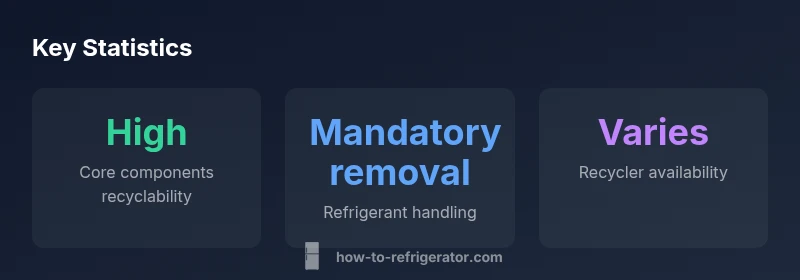
| Recyclability | High | Metals/plastics reclaimed; electronics diverted to e-waste streams |
| Refrigerant removal | Required before disposal | Handled by licensed technicians; essential for safety |
| Processing time | Days to weeks | Facility-dependent; scheduling matters |
FAQ
Can every refrigerator be recycled?
Most refrigerators are recyclable, but some components require specialized facilities. Always check with a certified recycler to confirm what can be reclaimed.
Most fridges can be recycled, but you should verify with your local recycler about what they can reclaim.
What steps are involved in recycling a fridge?
Steps include refrigerant and oil removal, dismantling, and sorting metals, plastics, and foam. Recyclers provide processing reports detailing recovered materials.
The process starts with removing refrigerants, then disassembling and sorting the materials for reuse.
Do recycling programs charge fees?
Fees vary by region and program. Some offer free pickup, while others may charge a small intake or refrigerant-handling fee.
Fees depend on your program, but many places offer free or low-cost recycling.
Is refrigerant removal mandatory?
In most regions, refrigerant removal is required before disposal. A licensed technician or certified recycler should perform this step.
Yes, refrigerant removal is usually required and handled by professionals.
How long does recycling take?
Processing time varies by facility and schedule, typically ranging from a few days to a couple of weeks.
It depends on the facility, but it’s usually a short wait once the intake is scheduled.
What about older models and energy efficiency?
Older models are recyclable, but some components may be harder to separate. The end result is the same: materials are recovered where possible.
Old fridges still recycle well; you just might need a facility with the right equipment.
“Recycling refrigerators reduces waste and recovers valuable materials, but it must be done with proper refrigerant handling and clear documentation.”
Top Takeaways
- Choose a certified fridge recycler to ensure safe handling
- Prepare the unit (unplug, doors, remove shelves) for smoother intake
- Expect a multi-step process that ends with material recovery
- Recyclables are reclaimed metals, plastics, and foam; hazardous waste is removed
- Check local programs for take-back options or incentives