Why Would a Refrigerator Trip a Breaker? Quick Troubleshooting Guide
Discover why a refrigerator trips a breaker and how to safely diagnose, fix, and prevent future trips with practical, step-by-step guidance from How To Refrigerator.


Most refrigerator breaker trips are caused by an overload during startup or a fault in the dedicated circuit. Start with simple checks: verify the outlet, unplug nonessential devices on the same circuit, and inspect the cord for damage. Try the fridge on a different circuit if available. If the breaker still trips, stop and call a professional for repairs.
Why would a refrigerator trip a breaker? A common question homeowners ask is, "why would a refrigerator trip a breaker?" In many cases, the culprit is an overload at startup when the compressor draws a surge of current. The How To Refrigerator team notes that faults in the appliance circuit, such as a damaged cord or a loose connection, are also frequent triggers. Additionally, components like a faulty start relay, a failed defrost heater, or dirty condenser coils can push the circuit over its limit. By understanding these causes, you can approach the problem with a clear plan rather than guessing. According to How To Refrigerator, most trips are solvable with careful checks and minor maintenance rather than a full replacement.
Safety-first mindset: before you touch the fridge
- Always unplug the refrigerator before inspecting any internal components.
- If the outage involves a water line or electrical panel, turn off power at the main breaker and wait for a qualified electrician if you’re unsure.
- Keep children and pets away from the work area. Safety is the priority, even if the fix seems simple.
Quick non-invasive checks you can do now
- Check the outlet by plugging in a different device to confirm the circuit is functioning.
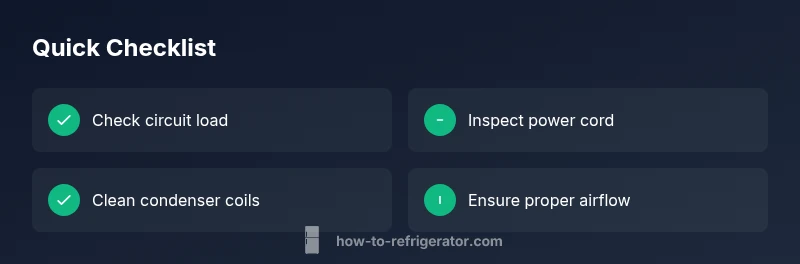
- Inspect the power cord and plug for cuts, abrasions, or scorch marks. Replace if damaged.
- Ensure the fridge has adequate space around the motor compartment for proper cooling and air flow. Overheating can trigger protective trips.
- Listen for unusual buzzing or humming that might indicate a failing compressor or faulty relay. If you hear abnormal sounds, avoid running the unit until it’s inspected.
When to suspect specific components (without tearing the fridge apart)
- If the breaker trips immediately when plugging in, focus on the power cord, outlet, and the start relay circuit.
- If the breaker trips after the compressor starts, the compressor motor or overload protector could be at fault.
- A recurring trip after a defrost cycle points to a defrost heater or defrost timer problem. A professional diagnosis is advised if that pattern appears.
Basic maintenance to prevent future trips
- Clean condenser coils and ensure the back of the fridge has several inches of clearance for airflow.
- Check door seals and gaskets; a leaky seal can cause the compressor to work harder than necessary.
- Vacuum any dust around the motor area and ensure the fridge is level for smooth operation. Regular maintenance reduces the odds of unexpected trips and extends appliance life.
Steps
Estimated time: 45-60 minutes
- 1
Power down and safety check
Unplug the refrigerator and switch off the corresponding circuit at the panel. Confirm there is no visible damage to the cord or plug before handling. This prevents shock and protects you during inspection.
Tip: Use a non-conductive mat or dry surface to work on the outlet area. - 2
Test the circuit neutrality
Plug a known-good device into the same outlet to verify the circuit is functioning without tripping. If the breaker trips when any load is connected, the issue is likely the circuit, not the fridge.
Tip: Move nonessential loads to another outlet temporarily. - 3
Inspect the fridge’s power cord and plug
Examine for cuts, exposed wires, or scorch marks. Replace damaged cords with a compatible cord and outlet. Do not attempt to splice or tape active wiring.
Tip: Use a manufacturer-approved replacement part. - 4
Check condenser coils and airflow
Unplug and access the rear or underneath the fridge to inspect coils for dust and lint. Clean with a soft brush or vacuum. Ensure several inches of clearance around the unit.
Tip: Move the fridge slightly away from the wall to access the coils. - 5
Listen for compressor and relay issues
Plug the fridge back in and listen for a smooth startup. A rapid click, hum, or buzzing may indicate a faulty start relay or compressor problem that requires specialized parts.
Tip: If you hear harsh noises, turn off the unit and schedule service. - 6
Test on a separate circuit
If available, place the fridge on a dedicated circuit to see if the breaker still trips. A persistent trip suggests an internal fridge fault rather than circuit overload.
Tip: Document the breaker rating and circuit load for the technician.
Diagnosis: Refrigerator trips the circuit breaker when powered on
Possible Causes
- highStartup overload on compressor or fan
- highDamaged power cord or outlet
- mediumDefective start relay or overload protector
- mediumDirty condenser coils causing overheating
- lowDefrost heater or defrost timer fault
Fixes
- easyTest on a different circuit and unplug other devices on the same circuit to reduce load
- easyInspect power cord/outlet for damage and replace if found
- mediumReplace faulty start relay/overload protector if identified
- easyClean condenser coils and improve airflow around the unit
- mediumInspect defrost components if the trip pattern aligns with defrost cycles
- hardIf trips persist after basic checks, call a licensed appliance repair technician
FAQ
Why does my fridge trip a circuit breaker every time I plug it in?
There are several possibilities: a startup surge from the compressor, a damaged power cord or outlet, or a fault in the defrost system. Check the basics first, then inspect for damaged wiring. If the breaker continues to trip, a professional diagnosis is needed.
A fridge tripping the breaker often starts with a surge from the compressor or a wiring fault. Start with safe basics, and call a professional if it keeps happening.
Can I reset the breaker and run the fridge on another circuit temporarily?
Yes, if you have access to a different, dedicated circuit and the fridge runs without tripping. This helps determine if the issue is circuit-related or appliance-related. Do not leave the fridge on a circuit that trips repeatedly.
You can try a different circuit to test, but don’t leave it on a circuit that keeps tripping.
Is a dirty condenser coil likely to cause breaker trips?
Dirty condenser coils can cause the compressor to work harder and run hotter, which can trigger protective breakers in some setups. Clean coils and ensure proper airflow as a preventive step.
Yes, dirty coils can overload the system and lead to trips. Keeping them clean helps prevent that.
When should I call a professional?
If the breaker trips on a dedicated fridge circuit after safe basic checks, or if you hear abnormal noises, burning smells, or see scorch marks. A licensed technician can test the start relay, compressor, and wiring safely.
Call a professional if trips persist on a dedicated circuit or you notice signs of damage.
Can a faulty defrost heater cause a breaker trip?
A defective defrost heater or timer can cause intermittent current spikes that trip a breaker. If trips align with defrost cycles, this is a likely suspect and needs diagnosis.
If trips happen during defrost cycles, the defrost components may be at fault.
Watch Video
Top Takeaways
- Identify whether the trip is a startup surge or a persistent circuit fault.
- Inspect the power cord, outlet, and circuit load before touching refrigeration internals.
- Clean coils and ensure proper airflow to reduce overheating risk.
- Move toward professional help if the breaker trips on a dedicated circuit or after basic checks.