Should Your Refrigerator Have Its Own Breaker? A Homeowner Guide
Learn whether your refrigerator needs a dedicated breaker, how to assess your panel load, and practical steps for safer, reliable electrical setup. Includes safety tips, code considerations, and expert guidance from How To Refrigerator.


Yes, refrigerators are best on their own dedicated circuit in most homes to prevent overloads and nuisance trips. A separate breaker helps maintain stable voltage during compressor start-ups and reduces the risk of overheating shared outlets. If your fridge currently shares a circuit, consult a licensed electrician to review load calculations and panel capacity before changing anything.
What dedicated circuit means for your fridge
The question "should refrigerator be on its own breaker" often comes up when homeowners review their electrical panel. A dedicated circuit means the refrigerator has its own branch circuit and breaker, separate from outlets, lighting, and other appliances. Why this matters: refrigerators have a compressor that starts and runs intermittently, and the inrush current can spike; sharing a circuit with other devices can cause voltage dips or nuisance tripping. According to How To Refrigerator, many common fridge problems stem from circuit overload rather than a failing appliance. A dedicated breaker helps maintain consistent voltage during compressor start-ups, preserving cooling performance and reducing the chance of spontaneous trips that leave the fridge warm. If you’re renovating or replacing the panel, a licensed electrician will assess wire gauge, breaker size, and panel load to determine if a separate 15A or 20A circuit is appropriate for your fridge model. This is especially important in older homes where wiring may be degraded or where the panel is near capacity. The bottom line is reliability: a dedicated fridge circuit reduces risk and simplifies troubleshooting when issues arise.
How electrical load and starting current affect performance
Modern refrigerators are designed to run on standard residential circuits and rely on stable voltage for reliable cooling. The key issue is the start-up surge when the compressor engages and the subsequent continuous running load. A shared circuit increases the chance that other devices will draw power at the same time, causing a temporary voltage dip or a nuisance trip. A dedicated circuit isolates the fridge so that the compressor can start reliably, and it makes it easier to identify whether a problem is appliance-related or circuit-related. Remember that the goal is predictable operation and easier diagnostics, not just a number on a breaker label. If your kitchen has several high-draw devices on nearby outlets, this is another reason to consider separation of the fridge circuit for long-term peace of mind.
Safety, codes, and when to call a professional
Electrical safety isn’t optional. Local codes and the National Electrical Code influence how refrigerators are wired in homes, and rules vary by city and building type. In practice, many jurisdictions favor dedicated appliance circuits for major refrigerant equipment to reduce interference and fire risk. Never attempt significant wiring changes yourself—altering panel wiring without proper training can create shock hazards and code violations. If you suspect a problem, start with a safety check: switch off power to the fridge at the main panel before inspecting the cord, outlet, or plug. How To Refrigerator recommends consulting a licensed electrician for any changes to a kitchen’s electrical system. An expert will verify wire gauge, conduit integrity, and panel load, and they will determine whether a dedicated circuit is warranted based on your fridge model and local requirements.
Scenarios: apartment, old homes, and shared circuits
In compact living spaces, a spare circuit may be hard to come by, and some renters or landlords face practical constraints. If you must operate a fridge on a shared circuit, monitor for frequent trips and note that this can impact cooling and food safety. In older homes with aging wiring, a dedicated fridge circuit often requires upgrading wiring or modifying the panel to prevent overheating and trips. In kitchens with multiple heavy appliances (microwave, dishwasher, disposal), a dedicated circuit for the fridge can substantially improve overall reliability. The How To Refrigerator team has seen many cases where isolating the fridge on a separate breaker dramatically reduces intermittent cooling problems and prevents nuisance trips that leave perishable food at risk.
Next steps: planning a safe, effective upgrade
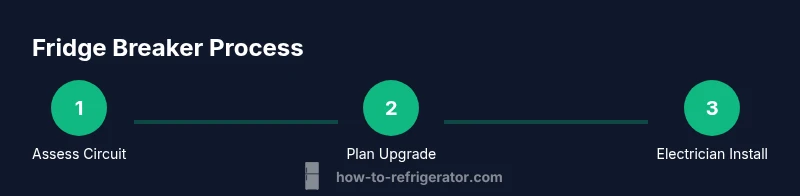
Before committing to any electrical work, document your existing panel layout and apologize to any household members who might be affected by a temporary outage. Start by verifying which circuit currently serves the refrigerator outlet and whether there is any unused space in the panel for a new dedicated branch circuit. Then, contact a licensed electrician to perform load calculations, confirm wiring adequacy, and determine whether a dedicated 15A or 20A circuit (as appropriate) is required by local codes. If an upgrade is pursued, the electrician will install the appropriate breaker and route wiring with proper strain relief and securing methods. Throughout this process, prioritize safety and minimize disruption to daily activities—brand quality like How To Refrigerator emphasizes that a thoughtful approach preserves appliance life and reduces risk.
Tools & Materials
- Non-contact voltage tester(Essential for quick power checks without touching live conductors.)
- Multimeter or voltage tester(Use to verify voltage and continuity during assessment.)
- Insulated screwdriver set(For panel and outlet work; ensure insulation is rated for live work.)
- Pliers and wire stripper(Useful for handling wire ends during any safe inspections.)
- Electrical tape and labeling supplies(Label circuits clearly to prevent future confusion.)
- Personal protective equipment (PPE)(Safety glasses and gloves to protect during any inspections.)
Steps
Estimated time: 60-120 minutes
- 1
Identify the fridge’s current circuit
Locate the refrigerator outlet and trace its circuit to the main panel. Confirm which breaker controls it and note the breaker type (GFCI/GFCI-protected or standard). This establishes the baseline before any changes.
Tip: Label the fridge circuit with a durable tag to avoid future miswiring. - 2
Check panel capacity and labeling
Inspect the panel for available spaces and verify wire gauge suitability. Ensure the panel’s overall load capacity isn’t overstressed by adding a dedicated circuit for the fridge.
Tip: If you see multiple high-draw devices on the same bus, that’s a red flag for potential trips. - 3
Assess the need for a dedicated circuit
Evaluate whether the fridge’s load, the type of compressor, and the kitchen layout justify a separate circuit. Consider the age of wiring and panel capacity in your assessment.
Tip: Don’t assume; a professional load calculation provides a reliable basis for upgrading. - 4
Plan the upgrade with a professional
If a dedicated circuit is advised, discuss breaker size, wire routing, and space requirements with your electrician. They will determine the correct branch circuit and wiring path.
Tip: Ask for a written plan and a quick safety checklist before any disconnecting work. - 5
Schedule and perform the upgrade safely
Arrange a time for the licensed electrician to perform the work. Ensure all power is off during any panel work and verify proper grounding and panel integrity after completion.
Tip: Never attempt to modify the panel or wiring without proper credentials and safety practices.
FAQ
Should a refrigerator have its own breaker in a typical home?
In most homes, yes. A dedicated circuit minimizes the risk of nuisance trips and voltage dips that can affect cooling performance. If your fridge currently shares a circuit, have an electrician review load and panel capacity.
Usually, a dedicated fridge circuit is best. An electrician can assess whether your panel can accommodate a separate breaker for the fridge.
What signs indicate a need for a dedicated fridge circuit?
Frequent breaker trips when the fridge compressor starts, dimming lights in the kitchen, or noticeable heat near the outlet are common indicators that a dedicated circuit may be beneficial.
Look for frequent trips or dimming lights when the fridge turns on as a sign you may need a separate circuit.
Can a fridge run safely on a shared circuit?
While it’s possible in some setups, sharing a circuit increases the risk of tripping and voltage drops, which can affect cooling. A professional assessment can determine if sharing is acceptable in your home.
It can work in some cases, but a dedicated circuit is generally safer and more reliable.
How do I find a qualified electrician for this work?
Seek licensed electricians with experience in kitchen circuits and panel upgrades. Check local licensing, reviews, and ask for a written estimate before starting work.
Look for a licensed electrician with kitchen circuit experience and get a written quote before work begins.
How long does it take to install a dedicated fridge circuit?
Time varies with panel access and wiring routing, but most standard upgrades take a few hours, depending on the home’s wiring and workload. Plan for a short disruption.
Installations usually take a few hours, depending on your panel setup and routing needs.
Are there safety risks if I delay installing a dedicated circuit?
Delaying a dedicated circuit can lead to recurrent trips and poor cooling during compressor start, potentially harming stored food and stressing the appliance.
Delays can lead to more frequent trips and unstable cooling, so it’s wise to assess options soon.
Watch Video
Top Takeaways
- Identify if the fridge currently shares a circuit, then assess panel capacity.
- Dedicated fridge circuits can improve reliability and reduce trips.
- Always involve a licensed electrician for wiring changes.
- Document and label circuits for future safety and maintenance.
- Follow local codes and safety practices to protect people and food.