Will Refrigerator Trip GFCI? A Practical Troubleshooting Guide
Learn why refrigerators trip GFCI outlets and how to diagnose safely. Expert, step-by-step guidance to stop nuisance trips and keep your fridge running.


Yes, a refrigerator can trip a GFCI, especially during compressor startup or if there’s a small leakage current. The GFCI may trip because of inrush, motor leakage, or a ground fault, not just a dead outlet. If trips occur, test the outlet, inspect the cord, and consider moving the fridge to a non-GFCI circuit if code allows. When in doubt, consult a licensed electrician.
Why a Refrigerator Might Trip GFCI
If you’re wondering will refrigerator trip gfci, the short answer is that it can happen under several common scenarios. Refrigerators draw a surge of current when the compressor starts, and even small leakage currents from motors, seals, or defrost elements can be enough to trip a GFCI. The How To Refrigerator team has seen this pattern frequently in homes where a brand-new GFCI outlet sits on a kitchen circuit but the fridge’s startup spike trips it repeatedly. In many cases, the issue isn’t a dangerous fault inside the fridge, but nuisance trips caused by startup surges, aging cords, or moisture around the outlet. Recognizing this pattern helps homeowners act quickly with safe, logical steps rather than guessing or replacing components unnecessarily. This is especially important in 2026 kitchens, where layouts and outlets are common and a trip can feel urgent.
Quick Facts and Context
- GFCI protection is designed to detect imbalance between live and neutral wires and trip instantly to prevent shocks.
- Refrigerators are typically on dedicated circuits, and adding GFCI protection can introduce nuisance trips if the appliance draws higher startup current.
- Safety-first approach: never bypass a GFCI or defeat protection. If a trip occurs repeatedly, address the underlying cause or consult a pro.
Steps
Estimated time: 45-60 minutes
- 1
Power down and unplug
Unplug the refrigerator and switch off the corresponding circuit at the panel if safe to do so. This prevents any chance of shock while you inspect the outlet and cord. Safety tip: keep hands dry and use insulated tools if you need to examine the plug area.
Tip: Always start with safety first; never poke around live electrical components. - 2
Inspect the power cord and plug
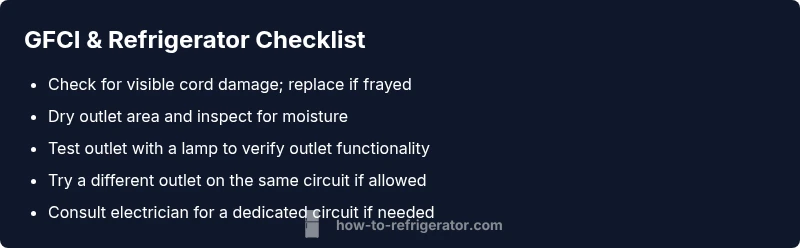
Look for visible damage such as cuts, kinks, or burn marks on the cord. Check the plug prongs for excessive wear or looseness. If damaged, replace the cord or have the appliance serviced before re-connecting to power.
Tip: A damaged cord is a common cause of nuisance trips and should be addressed immediately. - 3
Test the outlet with a known-good device
Plug a lamp or small appliance into the same outlet to confirm whether the outlet itself trips or if the fridge alone triggers the GFCI. If the outlet trips with other devices, the problem is the outlet or circuit, not the fridge.
Tip: If other devices trip, do not use that outlet until it’s inspected by a pro. - 4
Check for moisture or water near the outlet
Inspect the area around the outlet for any signs of water, spills, or humidity. Dry the area completely and reseal as needed. Moisture can cause false tripping and could indicate a bigger issue.
Tip: Even a small amount of moisture can cause a GFCI to trip; keep the area dry and well-ventilated. - 5
Try a different outlet on the same circuit (if allowed by code)
If code allows, move the fridge to another outlet on the same circuit to see if the trip recurs. If the fridge runs normally on a different outlet, the issue may be with the original receptacle or its wiring.
Tip: Do not bypass protections; consult an electrician to rewire if needed. - 6
Consult a professional if the issue persists
Persistent trips after these checks indicate a deeper electrical fault either in the fridge, its cord, or the circuit. A licensed electrician can perform insulation tests, continuity checks, and panel assessments to prevent future trips.
Tip: Document symptoms and the steps you’ve taken to help the electrician diagnose faster.
Diagnosis: Refrigerator trips the GFCI outlet (with or without alarm) during operation or startup.
Possible Causes
- highGround fault or leakage from refrigerator components
- mediumInrush current from compressor starting
- lowMoisture or water around the outlet
- lowDamaged power cord or plug
- mediumFaulty GFCI device or circuit overload on the same circuit
Fixes
- easyUnplug the fridge and reset the GFCI; then plug a known-good appliance into the outlet to see if the GFCI still trips
- easyInspect the fridge power cord for damage or pinch points; replace if frayed or cracked
- easyCheck for moisture around the outlet and dry thoroughly; ensure the outlet is clean and not corroded
- mediumTest the outlet on a different, non-GFCI circuit if code permits; consult an electrician about dedicated circuits
- hardIf the problem persists, have the refrigerator and outlet tested by a licensed electrician
FAQ
Will a GFCI trip always indicate a dangerous fault?
Not always. A GFCI can trip due to normal startup surges or minor leakage currents that are still within safe limits, but repeated trips require inspection to rule out a fault in the fridge, cord, or outlet.
A GFCI trip isn't always dangerous, but repeated trips should be checked by a professional.
Is it normal for a fridge to trip a GFCI during defrost?
Defrost cycles can increase current draw briefly, which may trigger a GFCI if the circuit is near its limit. If it trips consistently during defrost, investigate wiring and moisture around the outlet.
Defrost can spike current and trigger a GFCI if the circuit is stressed.
Can a damaged power cord cause GFCI trips?
Yes. Damaged cords can leak current or create a short, prompting the GFCI to trip. Inspect the cord, replace if damaged, and avoid using the fridge with a frayed cord.
A damaged cord can definitely cause trips; replace it to be safe.
Should I run my fridge on a non-GFCI circuit?
In many jurisdictions, refrigerators can be on a dedicated non-GFCI circuit to avoid nuisance trips. Check your local electrical code and have a licensed electrician install a dedicated circuit if needed.
A dedicated non-GFCI circuit may be appropriate in some cases; consult a pro.
What should I tell an electrician before they arrive?
Describe when the trips occur, what you tested, and whether moisture or water around the outlet was involved. Note the fridge model, cord condition, and any recent changes to the kitchen wiring.
Tell the electrician when the trips occur and what tests you’ve done.
How can I prevent future GFCI trips with my fridge?
Keep the outlet dry, ensure a proper cord, and consider a dedicated circuit if allowed. Regular maintenance and prompt repair of any outlet damage reduce nuisance trips.
Maintenance and proper wiring prevent future trips.
Watch Video
Top Takeaways
- Know that GFCI trips can be caused by fridge startup surges.
- Inspect cords and outlets for damage or moisture before assuming a fridge fault.
- Use a dedicated circuit where code allows to reduce nuisance trips.
- Never bypass GFCI protection; safety comes first.
- Call a pro if trips persist after basic checks.