How to Prevent Refrigerator from Tripping GFCI
Learn practical, code-friendly steps to stop your refrigerator from tripping a GFCI outlet with safe maintenance tips from How To Refrigerator.


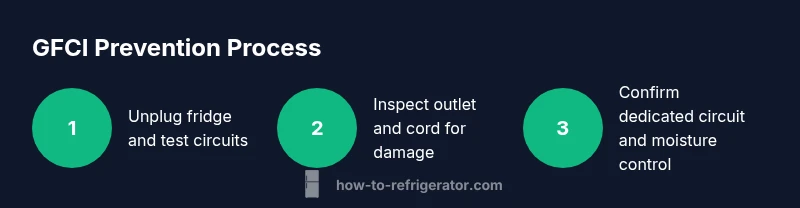
Preventing refrigerator trips on a GFCI begins with a dedicated circuit, a healthy outlet, and a moisture-free plug. Start by ensuring the fridge has its own properly wired outlet on a suitable circuit, inspect the cord for damage, test the GFCI, and eliminate shared loads. If trips persist, consult a licensed electrician.
What a GFCI does and why it matters for refrigerators
A GFCI, or ground fault circuit interrupter, is designed to shut power off if it detects leakage current that could shock someone who touches a live appliance. In kitchens, GFCIs protect occupants from shock when a fridge or its cord comes into contact with water or damp surfaces. For homeowners tackling fridge-trips, the goal is to minimize leakage sources and wire conditions that could trigger false or nuisance trips. According to How To Refrigerator, safety comes first: never bypass protection; instead, create the right conditions around the appliance so the GFCI can operate as designed while keeping your family safe.
Why refrigerators trip GFCIs
A refrigerator may trip a GFCI for several reasons, most of which relate to leakage or fault conditions rather than a fault in the GFCI itself. Common culprits include moisture near the plug or outlet, a damaged or worn power cord, and condensation inside the outlet box. The fridge’s defrost heater and compressor start components can momentarily draw surge currents that, if leakage paths exist, may be interpreted by the GFCI as a fault. Aging seals, cracked insulation, or a loose neutral connection on the circuit can also create leakage that the GFCI detects. Understanding these signals helps you distinguish between a true fault and a temporary nuisance trip.
Inspect the outlet and circuit requirements
Start by confirming the fridge is on a dedicated circuit and that the outlet is correctly wired and grounded. A shared outlet with other heavy loads (dishwasher, microwave, or disposal) on a GFCI-capable circuit increases the likelihood of nuisance trips when the fridge cycles. Use a GFCI tester to verify that the outlet trips cleanly when you press the test button and resets properly when you press reset. If the outlet shows signs of moisture, discoloration, or scorch marks, stop using it and replace the receptacle. Local electrical codes typically require a dedicated circuit for refrigerators in kitchens; when in doubt, consult a licensed electrician.
Common culprits inside the fridge that trigger trips
Even a well-maintained fridge can trip a GFCI if moisture makes its way to wiring connections or the outlet box. Water from leaks, a clogged defrost drain, or condensation around the compressor cord can cause leakage paths. Damaged insulation on the power cord or compromised strain relief behind the cord can also permit moisture intrusion. Inside the fridge, a failing relay or worn start capacitor may cause brief, high-current surges that the GFCI interprets as leakage. Regular interior cleaning, prompt spill management, and keeping the area around the plug dry are practical steps to reduce trips.
Proper appliance grounding and neutral handling
Grounding and neutral conductors must be correctly connected for a GFCI to function safely. A loose ground or a shared neutral on a multi-wire branch circuit can produce misleading leakage signals. If you notice a warm outlet, burning smell, or visible damaged insulation, stop using the outlet and call an electrician. Do not attempt to rewire, bypass, or modify the electrical system yourself; incorrect wiring can create a shocking hazard and may violate code. The How To Refrigerator Team recommends verifying that the fridge is wired to an appropriately grounded, dedicated circuit.
Best practices for placement and power cords
Place the fridge away from sinks and moisture-prone areas to reduce water exposure at the plug. Keep cords straight and avoid tight bends or kinks that damage insulation. Use a proper strain relief where the cord enters the cabinet to prevent wear on the internal conductors. Never slide the fridge against a wall with the cord sticking out or pinched under furniture. If the outlet is shared with other devices, relocate those loads to a separate circuit. A clean, dry setup minimizes nuisance trips and keeps cooling performance steady.
Maintenance routines to prevent trips
Regular maintenance helps prevent nuisance trips. Clean condenser coils annually or as needed to improve efficiency and reduce compressor load. Inspect door gaskets for moisture intrusion and replace worn seals to minimize condensation around the outlet area. Check the defrost drain for clogs and ensure the drain pan is dry. Wipe any moisture from the plug and outlet areas after spills. Keep the area around the outlet free of dust and moisture; consider a weatherproof cover if the outlet is mounted in a garage or outdoor-adjacent space.
Aging components and when to consider replacement
A fridge with an aging compressor, start relay, or faulty defrost timer may draw unusual current patterns that confuse a GFCI. If you upgrade to a newer model or replace major components, do so with a view toward reducing leakage paths and improving insulation. If a trip recurs after a thorough check and maintenance, server-level faults or component degradation could be the cause; this is a signal to consult a qualified electrician or appliance technician who can test insulation resistance and verify component health.
How to test a GFCI-protected outlet safely
Testing involves ensuring the plug is fully inserted, the outlet is reset, and the GFCI protection is functional. Use a dedicated GFCI tester to confirm that the test button trips power and that pressing reset restores power. Then unplug the fridge, reset the circuit, and observe whether the fridge runs normally without tripping. If trips occur during normal operation, document the symptoms, the load on the circuit, and any moisture exposure to share with a pro. Always de-energize equipment before performing inspection or replacement tasks.
When to call a licensed electrician
If you cannot identify a clear leakage path, or if the GFCI trips persist after maintenance, it is wise to involve a licensed electrician. Electrical work carries risk, and improper changes can create greater safety hazards. A pro can verify proper grounding, insulation resistance, and code-compliant wiring. The How To Refrigerator Team emphasizes that safety and code compliance come first, even if it means postponing a DIY fix in favor of professional evaluation.
Prevention checklist you can print
- Ensure the fridge has a dedicated, properly wired circuit.
- Use a GFCI tester to verify outlet protection and rearm after testing.
- Inspect the power cord, plug, and strain relief for damage or moisture.
- Keep the area around the outlet dry and free of spills.
- Regularly clean condenser coils and check door seals for moisture control.
- Avoid running other high-load appliances on the same outlet.
- If trips persist, consult a licensed electrician for wiring checks and component testing.
- Follow local codes and manufacturer guidelines for safe operation.
ENERGY EFFICIENCY considerations and long-term costs
A refrigerator that frequently trips a GFCI may be more energy-inefficient due to start-up surges and extended compressor cycles while trying to compensate for leakage conditions. Proper maintenance reduces energy waste and can lower operating costs over the appliance’s life. From a practical standpoint, ensuring clean coils, tight seals, and dry outlets improves efficiency and prolongs the fridge’s service life. How To Refrigerator analyses highlight that preventive maintenance protects both safety and energy performance over time.
Tools & Materials
- GFCI outlet tester(Verify outlet protection and correct wiring by testing with the built-in function)
- Non-contact voltage tester(Check for live wires safely without disassembly)
- Multimeter(Measure continuity, insulation resistance, and voltage on circuits)
- Screwdriver set (Phillips and flathead)(For removing panel covers and securing outlets)
- Replacement GFCI outlet (if needed)(Use as a serviceable replacement if the current outlet shows heat or damage)
- Electrical tape(For insulating exposed conductors and temporary fixes)
- Flashlight(Illuminates dark electrical boxes or crawl spaces)
Steps
Estimated time: 60-90 minutes
- 1
Unplug the fridge and verify power
Physically unplug the refrigerator and switch off the corresponding circuit at the panel to completely de-energize the appliance. This prevents shock while inspecting the plug, outlet, and cord. Confirm the breaker is off using the multimeter or tester before touching any wiring.
Tip: Always start with de-energizing the circuit to avoid shock. - 2
Inspect the cord and plug for damage
Examine the power cord for cracks, cuts, or melted insulation. Check the plug for bent blades or scorch marks. Look at the strain relief where the cord meets the cabinet; a damaged point can let moisture into the wiring.
Tip: If you see any damage, don’t use the outlet; replace the cord or outlet as needed. - 3
Test the GFCI outlet
With the fridge unplugged, use a GFCI tester to verify that the outlet trips when you press the test button and can be reset afterward. If the tester shows a fault, replace the outlet or consult a professional.
Tip: Record the outlet’s status after testing for future reference. - 4
Check for moisture or water exposure
Inspect the outlet box and surrounding area for any signs of moisture, condensation, or water intrusion. Wipe away any dampness and ensure the cabinet back area is dry before re-energizing.
Tip: Water near electrical components is a common trip trigger; dry it thoroughly. - 5
Confirm dedicated circuit and reduce shared loads
Ensure the fridge is on its own outlet and not sharing a circuit with heavy loads like dishwashers or disposals. If possible, relocate the appliance to a dedicated outlet on a suitable branch circuit.
Tip: Avoid using extension cords or multi-outlet strips for a fridge. - 6
Reconnect and observe
Plug the fridge back in and reset the breaker. Allow the fridge to run its normal cycle while monitoring for trips. If trips recur, document symptoms and consider professional evaluation.
Tip: If trips happen only during specific cycles (defrost or startup), note timing for inspection.
FAQ
Why does my refrigerator trip a GFCI outlet?
Trips usually happen due to leakage current, moisture, damaged cords, or faulty internal components. It’s not the GFCI itself; it's the appliance or its wiring. Regular inspection and proper maintenance reduce the risk.
Fridge trips are usually from leakage, moisture, or worn parts. Regular checks help prevent trips.
Can I plug other appliances into the same GFCI outlet as my fridge?
Sharing outlets with other high-draw devices increases trip risk. A dedicated fridge circuit minimizes nuisance trips and improves safety.
Avoid sharing the outlet with other big loads; dedicate a circuit for the fridge if possible.
Should I replace a GFCI outlet if it trips frequently?
Yes. Frequent trips can indicate a fault or aging components. Have a professional test the circuit and replace the outlet if needed.
If trips are frequent, have a pro test and consider replacing the outlet.
Is it safe to run a fridge without GFCI protection?
Code requirements vary, but in kitchens GFCI protection is typically required. Do not remove protection without checking local codes and safety implications.
Don’t remove GFCI protection without checking local codes and safety rules.
What maintenance reduces GFCI trips?
Keep coils clean, check seals for moisture, inspect the defrost drain, and ensure the outlet area stays dry. These steps reduce leakage that triggers trips.
Keep coils clean, seals tight, and moisture away from outlets to reduce trips.
When should I call a licensed electrician?
If trips persist after basic checks, or you suspect wiring or grounding issues, a licensed electrician should diagnose and repair the system safely.
If trips continue after checks, call a licensed electrician for a proper diagnosis.
Watch Video
Top Takeaways
- Create a dedicated circuit for the fridge to reduce nuisance trips.
- Inspect cords, outlets, and moisture sources before proceeding with repairs.
- Use proper testing tools to verify GFCI function and safety.
- Avoid extensions or shared loads on the same outlet as the fridge.
- Call a professional if trips persist after preventive measures.