Refrigerator Breaker Trip Troubleshooting: Quick Fixes and Safety
Urgent, homeowner-friendly troubleshooting guide to diagnose why a refrigerator keeps tripping the breaker and how to safely fix common causes with clear steps and prevention tips.


Most likely cause is an overloaded circuit or a faulty cord. Start by unplugging the fridge, inspecting the power cord for damage, and placing the fridge on a dedicated circuit. If the breaker trips again, test a different outlet on the same circuit or call a pro for a compressor/start-relay check.
Why a Refrigerator Keeps Tripping the Breaker
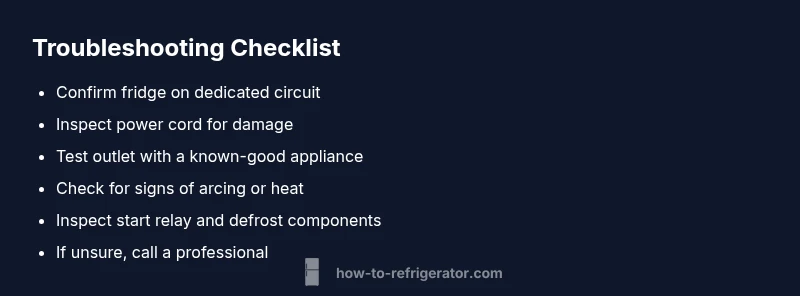
If you notice the circuit breaker trips whenever your refrigerator runs, you are likely dealing with a simple electrical load issue or a faulty component. The phenomenon "refrigerator keeps tripping breaker" is not unique to any brand; it often signals either an overloaded circuit, a damaged power cord, or a failing start relay. Start by confirming the fridge is on a dedicated circuit and that other heavy appliances are not sharing the same breaker. Then inspect the power cord for wear, exposed wires, or scorch marks. If you see any damage, unplug the fridge and replace the cord. Also check the outlet: a loose connection or a worn outlet can cause arcing that trips the breaker. Keep in mind that repeated trips can indicate a more serious problem, such as a failing compressor or defrost heater. In all cases, safety first: unplug the unit before touching wiring, and avoid using extension cords as a long-term solution.
Common Causes to Check First
Many trips come from simple, fixable issues. Start with the easiest checks:
- Overloaded circuit: If other high-draw appliances (microwave, toaster oven, space heater) share the same circuit, the fridge can trip the breaker when it starts.
- Damaged power cord or plug: A frayed cord or loose plug creates arcing or poor contact, which can trip a breaker.
- Faulty start relay or overload protector: Inside some fridges, a failing relay or overload device can cause the compressor to draw a surge that trips the breaker.
- Defective compressor or wiring short: A hidden motor or wire fault can produce unexpected current spikes.
If you identify any of these, take action carefully and consider replacing damaged parts. For safety, do not attempt major rewiring yourself.
Safety First: Immediate Steps If Breaker Trips
When a breaker trips, treat it as a safety signal. Do the following immediately:
- Switch off the refrigerator at the outlet and unplug it. 2) Do not press the reset on a tripped breaker repeatedly; this can mask a fault and pose a fire risk. 3) Inspect the outlet and cord for visible damage or scorch marks. 4) If the outlet looks worn or hot to the touch, stop and use a different circuit or call an electrician. 5) If you suspect a refrigerant or compressor issue, contact a professional rather than running the unit hot or contorted.
Diagnostic Flow Overview
A clear, stepwise approach helps you avoid guesswork. Start with the simplest checks, then progress to component tests, and finally call a pro if the issue persists. The goal is to isolate whether the problem is circuit-related or appliance-related, then apply the correct fix without risking your safety or homes electrical system.
Documentation and Technician Readiness
Keeping notes improves diagnostic accuracy. Record when trips occur, what was running at the time, and any sounds or smells. Take photos of the outlet, cord, and any signs of damage. A technician can use this information to prioritize parts and steps, reducing the time needed for a reliable repair.
Prevention: Keeping the Circuit Healthy
Prevention focuses on load management and routine checks. Ensure the fridge sits on a dedicated circuit, keep cords in good condition, and replace worn outlets promptly. Schedule periodic inspections of home wiring, especially in older homes. Regular maintenance reduces the likelihood of sudden breaker trips and extends the life of your refrigerator.
When to Call a Pro and What to Expect
If the breaker trips again after basic checks, or if you notice burning smells, buzzing sounds, or visible wiring damage, it’s time to call a licensed technician. Expect a safety-focused evaluation, including testing the compressor, start relay, defrost components, and wiring integrity. A professional can confirm if a part needs replacement and provide a warranty-backed repair plan.
Steps
Estimated time: 30-60 minutes
- 1
Power down and unplug
Turn off power to the fridge at the outlet and unplug the cord from the wall. This prevents any risk while you inspect for damage or signs of arcing.
Tip: Use a flashlight to look for damaged insulation or scorch marks on the plug. - 2
Inspect power cord and plug
Examine the cord for cuts, nicks, or exposed wires. If damaged, replace the cord with a model rated for your fridge’s amperage and voltage.
Tip: Do not attempt to repair a damaged cord with tape. - 3
Check outlet and circuit
Plug a lamp or tester into the outlet to verify voltage and inspect the circuit breaker for signs of wear or overheating during operation.
Tip: If the outlet feels warm, stop and call an electrician. - 4
Inspect internal components
Access the back of the fridge to check the start relay and overload protector if accessible. Look for corrosion, burning odor, or melted components.
Tip: Only handle components you can safely access without specialized tools. - 5
Reset and monitor
Reconnect power and reset the breaker if needed. Allow the fridge to run for 30–60 minutes while monitoring for a repeat trip.
Tip: Keep a log of trip times and operating conditions. - 6
Decide on professional help
If the circuit trips again or you notice abnormal noises or smells, contact a licensed technician for a thorough inspection.
Tip: Document symptoms with photos and dates to speed up service.
Diagnosis: Refrigerator trips the breaker when starting or running
Possible Causes
- highOverloaded circuit or shared circuit with other high-draw appliances
- mediumDamaged or frayed power cord or plug
- mediumDefective start relay or overload protector
- lowMalfunctioning compressor or short in wiring
Fixes
- easyMove fridge to a dedicated circuit and unplug other high-draw devices
- easyInspect and replace damaged power cord or plug
- hardReplace start relay/overload protector
- hardHave a licensed pro inspect compressor or wiring for shorts
FAQ
Why does my refrigerator trip the breaker every time I plug it in?
A trip when plugging in often signals a short in the cord, a damaged outlet, or a faulty internal component such as the start relay. Start with a cord and outlet check, then test the fridge on a dedicated circuit before calling a pro.
Usually a damaged cord or faulty component. Check the cord and outlet first, then try a dedicated circuit.
Is it dangerous if a fridge keeps tripping the breaker?
Yes. Repeated breaker trips can indicate an electrical fault that risks a fire or further damage. Stop using the fridge until the issue is identified, and seek professional help if uncertain.
Yes—it's potentially dangerous. Unplug and call a pro if the trips continue.
Can other appliances cause the fridge to trip the breaker?
Absolutely. A shared circuit drawing high current can trip the breaker when the fridge starts. Move the fridge to a dedicated circuit if possible to reduce this risk.
Yes, other devices on the same circuit can cause trips; try a dedicated circuit.
Should I reset the breaker after it trips?
Only reset after you address the root cause. If it trips again, stop and re-check the outlet, cord, and components rather than repeatedly resetting.
Only reset after you’ve checked for the cause. If it trips again, call a pro.
When should I replace the refrigerator power cord?
Replace a damaged cord promptly. If the fridge is older or shows wear beyond the cord, consult a professional to assess whether further repairs are needed.
If the cord is damaged, replace it now and assess other parts if needed.
Watch Video
Top Takeaways
- Isolate fridge on a dedicated circuit to reduce trips
- Inspect cords and outlets for wear or damage
- Faulty start relays or defrost components may require professional repair
- Document symptoms to help technicians diagnose faster
- Call a pro if trips persist or you detect burning odors