Why Is Your Refrigerator Not Blowing Cold Air? Quick Troubleshooting
Urgent, step-by-step guide to diagnose why your refrigerator isn't blowing cold air, with safe checks, a diagnostic flow, and practical DIY fixes to restore cooling.


Most often the fridge isn’t cooling due to airflow issues, a faulty thermostat, or a defrost problem. Start with safe, simple checks: verify the door seals are tight, vents aren’t blocked, and the freezer fan runs when doors open. If these basics don’t restore cooling, follow the diagnostic flow and step-by-step fixes to identify the underlying cause, or call a pro.
Why a Refrigerator Might Not Blow Cold Air
According to How To Refrigerator, many cooling problems start with airflow constraints or a simple control issue. When the airflow pathway between the freezer and fridge is restricted, the evaporator can frost up or fail to distribute cold air properly. If you notice warm air at the vents or inconsistent temperatures, don’t panic—these issues are almost always fixable with careful checks. The crucial step is to distinguish between a door seal problem, an airflow blockage, and a thermostat or defrost fault. The phrase "why is refrigerator not blowing cold air" often points to a combination of blocked vents, dirty condenser coils, or an aging compressor. By testing basic conditions first, you can avoid unnecessary service calls and keep your fridge functioning smoothly.
Quick Checks You Can Do Safely
Before pulling apart panels, run through some high-impact, safe checks. Ensure the door gaskets seal tightly all the way around, and that doors aren’t left ajar even slightly. Check that interior vents are clear and not stuffed with bulky items. Inspect the condenser coils if you can access them—dust and lint reduce heat rejection. Finally, verify the thermostat setting is in the recommended range (about 37–40°F in the fridge, 0°F in the freezer). If these steps don’t restore cooling, proceed to the diagnostic flow for deeper causes, or contact a professional for a hands-on inspection.
Understanding the Diagnostic Flow
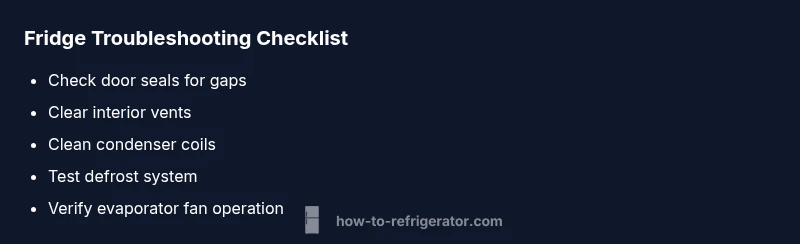
A structured diagnostic flow helps you map symptoms to likely causes and safe fixes. For example, if the evaporator fan runs when the door opens but cold air fails to circulate, you may have an airflow blockage or a defrost issue. If the fan is silent, the evaporator or control board could be faulty. Keep a simple checklist handy: verify door seals, run the fan test, listen for clicking sounds from the compressor, and inspect frost buildup. This flow keeps you from guessing and guides you toward targeted fixes or professional help when needed.
Step-by-Step Overview of the Most Common Fixes
This section summarizes practical fixes and their rationale without diving into the full repair details. The most common fix is restoring airflow and proper venting, followed by cleaning the condenser and ensuring the defrost system works. If frost blocks airflow, a defrost cycle or manual defrost may be required. For thermostat or control issues, recalibration or replacement may be necessary. Remember: safety first—unplug the unit before inspecting internal components.
Safety, Warnings, and Common Mistakes
Working on a refrigerator involves electricity and sharp edges inside the doors. Always unplug before touching any internal parts. Avoid using metal tools near the refrigerant lines, and never spray water directly onto electrical components. Common mistakes include overloading shelves near vents, ignoring frost buildup, and ignoring a humming compressor—these can point to more serious faults. If you smell or hear burning, stop and call a professional.
Prevention and Maintenance Tips
To minimize future cooling problems, schedule regular maintenance: clean condenser coils every 3–6 months, check door seals seasonally, and keep the interior organized to avoid vent blockages. Monitor temperatures with a fridge thermometer to ensure steady performance. Address minor issues promptly, like a slight temperature drift, to prevent frost or motor strain. Consistent maintenance helps extend the life of your fridge and reduces the likelihood of urgent repairs.
When to Call a Technician
If you’ve completed the basic checks and the fridge still won’t cool, or you notice refrigerant smells, it's time to call a licensed technician. A pro can safely diagnose sealed-system faults, compressor issues, or refrigerant leaks. This avoids personal injury and prevents further damage to your appliance.
Steps
Estimated time: 60-90 minutes
- 1
Check thermostat setting
Locate the thermostat and confirm it’s set within the recommended range. If it’s outside, adjust and monitor for 24–48 hours. Record temperatures to see if cooling improves.
Tip: Take a photo of the numeric setting for future reference. - 2
Inspect door seals
Lock the door and inspect for gaps or cracks. Clean the gasket and run the door shut test to ensure a tight seal. Replace damaged gaskets as needed.
Tip: Use a dollar bill test: insert a bill; if it slides out easily, seal needs replacement. - 3
Clear interior vents
Ensure vents inside the fridge/freezer aren’t blocked by shelves or large items. Reorganize contents to promote air circulation and even cooling.
Tip: Keep space around vents clear; don’t overfill near the vents. - 4
Clean condenser coils
Unplug the unit and carefully access the coils. Use a brush or vacuum to remove dust. Reconnect and run to test cooling.
Tip: Do this outside if possible to avoid dust indoors. - 5
Check defrost system
Look for excessive frost buildup on the evaporator. If frost is present, run a manual defrost or test timer/heater for faults.
Tip: If frost recurs quickly, defrost components may need replacement. - 6
Test evaporator fan
With the door open, listen for the evaporator fan when the compressor cycles. If silent, replace the fan motor or repair the wiring.
Tip: Be careful with moving parts; avoid fingers near blades.
Diagnosis: No cold air or uneven cooling from fridge/freezer
Possible Causes
- highDoor seals leaking or not closing properly
- highAirflow vent blocked by food
- mediumDirty condenser coils
- highDefrost system failure causing frost buildup
- lowEvaporator fan or motor failure
- mediumThermostat or temperature control fault
Fixes
- easyTest and replace door seals if damaged; ensure doors seal fully
- easyRemove obstructions from vents and rearrange contents for airflow
- easyClean condenser coils and ensure proper airflow around the compressor
- mediumInspect defrost system and clear frost; replace timer/heater if faulty
- mediumTest evaporator fan operation and replace if not running
- mediumVerify thermostat settings and replace sensor/control if faulty
FAQ
What are the most common causes of a refrigerator not blowing cold air?
Most often issues stem from airflow restrictions, door seals, or a faulty defrost/thermostat system. A clean condenser and proper vent clearance usually fix most homes' problems.
Common causes are airflow, door seals, and defrost or thermostat problems.
How do I test if the evaporator fan is working?
Open the fridge, listen for the evaporator fan when the compressor starts. If you hear no hum or feel no air movement, the fan or its wiring may be faulty.
Listen for the fan when the compressor runs; no sound means the fan might be bad.
Can a dirty condenser coil cause poor cooling?
Yes. Dirty condenser coils reduce heat rejection, causing poor cooling. Clean coils and ensure airflow around the unit.
Dirty condenser coils can choke cooling; clean them to restore heat rejection.
Should I replace the door gasket if it’s worn?
Worn gaskets allow warm air in and cold air out. Replace damaged seals to restore efficiency and cooling.
Replace damaged door seals to prevent warm air from entering.
When is it necessary to call a professional?
If you’ve completed the basic checks and the fridge still won’t cool, or you notice refrigerant smells, contact a licensed technician for safety and proper diagnosis.
If cooling doesn’t return after checks, call a pro.
How long should I wait after adjusting the thermostat?
After changing the thermostat, allow 24–48 hours to see a stable temperature shift. Use a fridge thermometer to track progress.
Give it 24 to 48 hours to confirm the change.
Top Takeaways
- Identify whether airflow or seals are the root cause
- Start with safe, simple checks before complex repairs
- Follow a diagnostic flow to map symptoms to fixes
- Know when to call a professional
- Prevent future issues with regular maintenance