What Is Wrong With Refrigerator Not Cooling? Quick Troubleshooting Guide
Facing a fridge that won't stay cold? Learn what is wrong with refrigerator not cooling and follow our safe, step-by-step guide to diagnose common causes and fix them efficiently.


If your refrigerator isn’t cooling, the most common culprits are airflow and condenser issues. Start by unplugging, checking the thermostat setting, and inspecting the door seals. According to How To Refrigerator, cleaning the condenser coils and ensuring proper airflow often resolves the problem without tools. If the issue persists, move to deeper diagnostics.
What is wrong with refrigerator not cooling? Common causes
If your fridge isn’t cooling, several issues could be at play. According to How To Refrigerator, the most frequent culprits involve airflow and condenser performance rather than a total compressor failure. Start by inspecting accessible components: thermostat, door seals, and the location of the coils. A quick coil cleaning and seal check often resolves cooling gaps without specialized tools. In this guide, we’ll walk you through the logic of diagnosis and safe fixes. By understanding how these parts interact, you can prioritize checks and avoid unnecessary replacements. As you troubleshoot, keep safety in mind and work methodically, testing each fix before moving to the next step. If you’ve gone through these checks and the fridge still isn’t cold, it’s time to move deeper into the diagnostic flow and consider professional help. The goal is to restore proper cold airflow while minimizing energy waste and wear on the compressor.
Safety First: Power, Airflow, and Seals
Before you touch any components, cut power to the appliance to prevent shocks or short circuits. Plug safety in mind: avoid using water near electrical components, and never attempt repairs beyond your comfort level. With the basics secured, examine airflow paths and seals. A blocked drain or dirty condenser coils can dramatically reduce cooling efficiency. How To Refrigerator analysis shows that airflow and seal integrity are critical to maintaining consistent temperatures. A quick visual inspection can reveal a loose door gasket, a kinked vent, or an uncovered vent that allows warm room air to circulate inside. When cleaning, use non-conductive tools and keep the interior panel dry. If the fridge seems warm to the touch or you notice ice buildup, don’t force components—switch off and reassess, then consult the diagnostic flow.
Diagnostic Approach: Check in Order
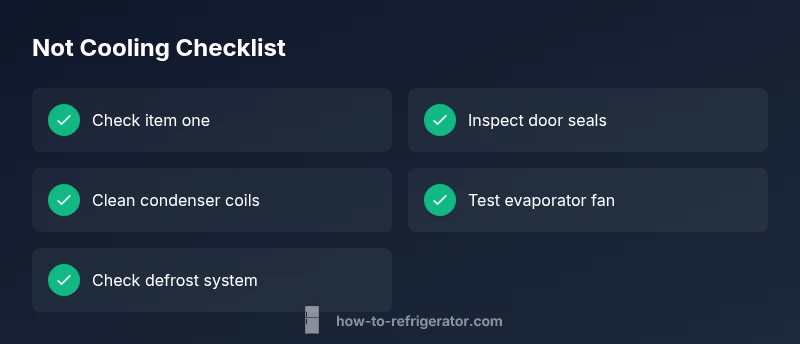
A logical order helps you identify the root cause without unnecessary disassembly. Start with power: confirm the outlet is functional and the plug is snug. Next, verify the thermostat setting, aiming for a mid-range temperature. Then inspect the door seals for air leaks and test with a simple dollar bill trick to assess seal integrity. If the seals pass, move to airflow: locate condenser coils and remove dust, and listen for the evaporator fan in the freezer to confirm it’s circulating air. If you hear no fan or unusual sounds, the evaporator assembly or control board may be at fault. Finally, consider the defrost system: frost buildup can indicate a stalled defrost cycle. This staged approach keeps fixes manageable and reduces the risk of unintended damage.
Most Common Fixes You Can Try Today
Several fixes address the most frequent causes of a fridge not cooling. Start with the simplest: reset the unit by unplugging for a minute or two, then plug back in. Clean condenser coils with a brush and vacuum to restore proper heat rejection. Replace worn door gaskets or reseal the door to prevent warm air intrusion. If the fan is running but air isn’t circulating, test or replace the evaporator fan. For frost or iced-over coils, manually defrost or check the defrost timer and heater for proper operation. If you’re comfortable, you can also reposition the fridge away from heat sources and ensure good clearance around vents. After each fix, wait 15-30 minutes and recheck cooling performance to confirm improvement.
When to Call a Technician
If you’ve completed the basic diagnostic flow and the refrigerator still isn’t cooling effectively, professional help is warranted. A technician can safely test the compressor, check refrigerant levels and leaks, inspect sealed components, and diagnose control board issues. Prolonged compressor strain or refrigerant leaks can lead to expensive damage and safety risks. If your fridge is under warranty, contact the manufacturer or an authorized service provider. Document the steps you’ve already taken; this saves time and helps the technician understand the issue quickly.
Prevention and Maintenance Tips
Prevention is easier than repair. Schedule regular coil cleaning every 6-12 months, ensure proper clearance around the unit, and avoid overloading shelves which impede airflow. Keep the door seals clean and replace them as soon as signs of wear appear. Maintain a steady room temperature and avoid placing the fridge near heat sources like ovens or direct sunlight. Regular maintenance reduces the likelihood of not cooling and extends the life of the compressor and fan.
Steps
Estimated time: 45-90 minutes
- 1
Confirm power and thermostat settings
Ensure the fridge is plugged in and the thermostat is set between 37-40°F (3-4°C). Listen for the compressor and check that the display shows normal operation. If you find a mismatch, correct the setting or reset the unit.
Tip: If the display is blank, check the outlet circuit and GFCI. - 2
Inspect door seals and gaskets
Close the door and look for air gaps. Clean or replace worn seals. A poor seal lets warm air in and makes the freezer struggle to keep cool.
Tip: A simple dollar bill test can help: slide a dollar bill; if it pulls out easily, seal may be worn. - 3
Clean the condenser coils
Unplug the unit, locate the coils (rear or beneath), and carefully remove dust with a brush or vacuum. Dirty coils reduce cooling efficiency.
Tip: Do not use a high-pressure blower; gentle brushing is safer. - 4
Check the evaporator fan and airflow
Open the freezer and listen for the evaporator fan. If you don’t hear it, or it sounds grinding, the evaporator assembly may be faulty.
Tip: Avoid touching moving parts; ask for professional help if the fan is failing. - 5
Assess the defrost system
If you have frost buildup, the defrost cycle might be stuck. Look for frost on the back of the freezer and consider defrosting manually.
Tip: Manual defrost is safe if the appliance is unplugged. - 6
Test the compressor and call for help
If the compressor is hot to touch or makes buzzing sounds after cleaning, it may need professional service.
Tip: Continued operation with issues can cause further damage.
Diagnosis: Refrigerator not cooling effectively
Possible Causes
- highPower outlet or breaker issue
- highDirty condenser coils or blocked airflow
- mediumFaulty evaporator fan
- mediumIncorrect thermostat setting or door seals compromised
- lowDefrost system failure
Fixes
- easyReset the breaker or plug the fridge back in after ensuring power
- easyUnplug, clean condenser coils with a brush and vacuum
- easyReplace worn door gaskets or reseal the door
- mediumTest and replace evaporator fan if faulty
- hardInspect defrost timer/heater and service if needed
FAQ
What is the first thing I should check when my fridge isn't cooling?
Start with power, thermostat, and door seals. Verify the unit is plugged in and the thermostat setting is correct. These quick checks fix many cooling issues without tools.
First check power and thermostat, then inspect door seals; those basics fix many cooling problems.
Can a dirty condenser coil cause not cooling?
Yes. Dirty coils reduce heat rejection and can lead to poor cooling. Clean them carefully following the manufacturer guidelines.
Yes—dirty coils can block cooling. Clean them following the manual.
When should I replace a faulty evaporator fan?
If you hear unusual noises or the freezer isn’t circulating air, the evaporator fan may be failing and needs replacement.
If you hear grinding or don’t hear air, the fan might be bad.
Is it safe to unplug and defrost the fridge?
Unplugging and manually defrosting is safe if you follow precautions and keep a towel handy for melting ice.
Yes, but unplug and be ready for melted ice.
Why is my fridge freezing but not cooling?
This can indicate thermostat or defrost system issues. Check the thermostat setting and defrost components.
Sometimes the thermostat or defrost parts cause that issue.
Watch Video
Top Takeaways
- Check power and thermostat first
- Clean condenser coils to restore airflow
- Replace worn door seals promptly
- If unsure, call a professional
- Regular maintenance saves cooling performance