Why Is My Refrigerator Too Warm? Troubleshooting Guide
Discover why your refrigerator is warmer than expected and learn practical fixes quickly. This expert, homeowner-friendly guide covers safety, diagnosis, and prevention.


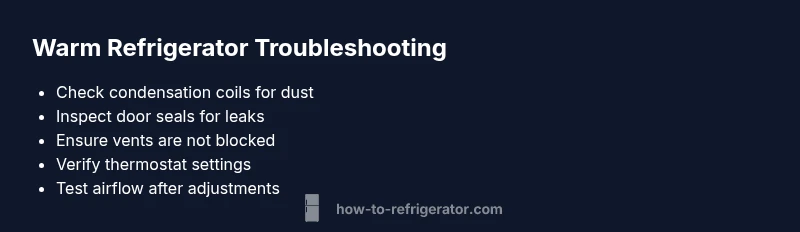
Most likely causes are dirty condenser coils, a faulty door gasket, or blocked internal vents. Begin by cleaning the coils with a brush, inspecting door seals for cracks, and clearing obstructions around the vents. Then verify the thermostat setting (typical ranges: 37-40°F for fresh food, 0°F for freezer) and allow 24 hours to re-stabilize.
Why a Refrigerator Runs Warmer Than Expected
A refrigerator that feels too warm can threaten food safety and rack up energy costs if left unchecked. The most common culprits are airflow issues, dirty condenser coils, or worn door gaskets, all of which reduce cooling efficiency. According to How To Refrigerator, temperature control is essential for preserving freshness and minimizing energy waste. Start with simple checks that don’t require tools, and proceed to safer, more involved steps if needed. By tackling the problem in layers, you’ll often restore proper cooling quickly and without expensive repairs. Remember: even a one-degree difference can change how long foods stay safe, so act fast but safely.
Common Culprits That Increase Temperature
- Dirty condenser coils: Dust and debris block heat exchange, forcing the compressor to work harder and warm air to linger inside.
- Faulty door gasket: Cracks or gaps let warm room air seep in, undermining cooling performance.
- Blocked interior vents/poor airflow: Stacked groceries or containers blocking vents disrupt air circulation.
- Incorrect temperature setting: A misread dial or control malfunction can leave the fridge too warm.
- Ambient heat and frequent door openings: Hot kitchen temperatures or constant access can raise internal temps quickly.
What to do first: ip: Focus on non-intrusive checks like coil cleaning, gasket inspection, and vent visibility before touching electrical components. If you notice frost buildup, unusual noises, or the compressor running constantly, stop and reassess safety.
Diagnostic Checklist: Quick Path to Diagnosis
Before you start disassembling components, run through this quick checklist to narrow down the most likely causes:
- Listen for the compressor: Is it running constantly or cycling oddly? Continuous running can indicate a defective thermostat or a clogged condenser.
- Inspect the door seals: Are there cracks or residue that indicate a poor seal? A bad seal is a frequent culprit.
- Check condenser coils: Are they visibly dusty or obstructed by debris? Dirt reduces heat transfer efficiency.
- Confirm airflow: Can you see clear air paths around shelves and vents? Blocked airflow raises internal temperatures.
- Verify temperature settings: Are the fridge and freezer set within recommended ranges? Incorrect settings often masquerade as equipment failure. If you identify a likely cause in the list, you’ll know where to start and when to call a pro.
Step-by-Step Fix for the Most Common Cause: Dirty Condenser Coils
If your coils are dirty, the easiest, most impactful fix is cleaning them. This section gives a practical, safe approach you can follow without specialized tools.
- Unplug the unit and move it away from the wall.
- Locate the condenser coils (usually at the rear or beneath the fridge).
- Use a coils brush or a vacuum with a soft attachment to remove dust and debris from the fins.
- Wipe with a damp cloth to remove remaining grime; avoid bending the fins.
- Reconnect power and monitor cooling for 24 hours. Tip: Do this every 6–12 months or when you see a visible layer of dust on the coils. A clean coil can dramatically improve cooling efficiency and reduce energy use.
Safety Warnings and When to Call a Pro
Working with refrigerators involves electricity and refrigerant systems. Always unplug before inspecting electrical components or touching coils. If you encounter refrigerant smells, ice buildup that worsens, or warm air persists after basic fixes, call a licensed technician. Do not attempt to repair sealed components yourself.
If you are unsure about the diagnosis or uncomfortable performing repairs, seek professional help promptly to avoid food spoilage and potential hazards.
Prevention: Keeping Your Fridge Efficient
Preventive maintenance is your best defense against warmth and costly repairs. Regularly clean condenser coils, keep the exterior door seals intact, avoid overstuffing which impedes airflow, and ensure adequate clearance around the unit for heat dissipation. Use organizers that don’t block vents and schedule seasonal checks. With simple, proactive steps, your refrigerator will maintain proper temperature more consistently and use energy more efficiently.
Temperature Targets and Quick Reference
Keep fresh food at 37–40°F (3–4°C) and freezer at 0°F (-18°C). Avoid setting the fridge too cold in an attempt to compensate for other issues; this wastes energy and can cause frost and mechanical wear. Use an appliance thermometer to verify accuracy, and adjust gradually in small increments if readings drift. When in doubt, rely on the manufacturer’s guidance for your specific model and consider a service check if conditions persist beyond routine maintenance.
Steps
Estimated time: 60-90 minutes
- 1
Safety first and initial check
Unplug the refrigerator and remove perishables from the area to prevent spoilage. Take a moment to observe any obvious signs: frost, unusual noises, or visible blockages around vents. This prepares you for a safe diagnosis.
Tip: Keep a food thermometer handy to track temperature changes after fixes. - 2
Check and set the temperature
Locate the temperature control and set the fridge to 37–40°F (3–4°C) and the freezer to 0°F (-18°C). Let the unit stabilize for 24 hours and check readings with a proper thermometer.
Tip: If the dial is digital, verify the display shows the correct setpoint and avoid rapid, repeated changes. - 3
Inspect door seals
Close the door on a dollar bill or piece of paper: if you can pull it out easily, the seal may be failing. Clean the gasket with warm soapy water and inspect for cracks or gaps; replace if damaged.
Tip: Polish the gasket edge with a light coating of silicone spray to maintain flexibility. - 4
Clean condenser coils
If coils are accessible, vacuum or brush away dust and debris. For rear-mounted coils, use a coil brush to reach between the fins.
Tip: Do not bend fins; keep a gentle, straight motion to avoid damage. - 5
Check airflow and organization
Ensure vents inside the fridge aren’t blocked by groceries. Reorganize to allow air to circulate and avoid stacking items that obstruct airflow.
Tip: Keep space around items to maintain airflow clearance. - 6
Observe defrost and frost buildup
If you notice excessive frost, the defrost timer or heater may be malfunctioning. This can cause warmth by interfering with cooling cycles.
Tip: Do not attempt to repair sealed defrost components unless trained. - 7
Test and confirm
After each fix, recheck internal temperatures for 24 hours. If temps stay within target, you’ve likely solved the issue. If not, proceed to professional assessment.
Tip: Document observed temps to aid the technician if needed.
Diagnosis: Fridge runs warm or foods spoil faster than usual
Possible Causes
- highDirty condenser coils
- highFaulty door gasket or seal
- mediumBlocked interior airflow or vents
- lowIncorrect temperature setting
Fixes
- easyClean condenser coils and ensure vents are clear
- easyInspect/replace door gaskets; repair leaks around door frame
- easyReorganize interior to improve airflow and avoid vent blockages
- easyVerify and adjust thermostat to recommended ranges; monitor 24 hours
FAQ
Why is my refrigerator warm but the freezer stays cold?
That can happen if the evaporator fan or damper is malfunctioning, or if the condenser coils are dirty. Check seals and airflow first; if the freezer remains cold, the issue might be limited to the fridge compartment.
If the freezer stays cold but the fridge is warm, it often points to airflow or door seal issues; check seals and coils, then inspect the damper and evaporator fan if needed.
How do I know if condenser coils are dirty?
Visible dust on coils and reduced cooling efficiency usually indicate dirt buildup. Use a coil brush or vacuum to remove debris. If you can't access the coils safely, call a pro.
Dust on the coils and poor cooling typically means dirty coils; clean them carefully or consult a technician.
What temperature should my fridge and freezer be?
Aim for 37–40°F (3–4°C) in the fridge and 0°F (-18°C) in the freezer. Use a thermometer to verify, and avoid setting temperatures too low to save energy.
Keep the fridge around 37 to 40 degrees and the freezer at 0 degrees for best results.
Can a damaged door gasket cause warmth inside?
Yes. Cracked or compressed gaskets let warm room air in, raising internal temps. Replace damaged gaskets and clean the seal area to restore proper closure.
A bad door seal lets warm air in, so replace damaged gaskets and clean the seal.
When should I call a professional?
If you notice refrigerant smells, frost where there shouldn’t be any, or if the unit runs constantly after basic fixes, contact a licensed technician. Some issues require diagnostic tools.
Call a professional if you have refrigerant concerns or frost or if the unit still heats after basic fixes.
Watch Video
Top Takeaways
- Address airflow, seals, and coil cleanliness first.
- Use a thermometer to verify accurate temperatures.
- Follow safety guidelines and call a pro for sealed system issues.
- Regular maintenance prevents future warm temps.