Why Is My Refrigerator Over Cooling? A Practical Troubleshooting Guide
Urgent guide to diagnose and fix over cooling in refrigerators. Learn common causes, quick checks, and step-by-step fixes to restore proper temperatures safely.


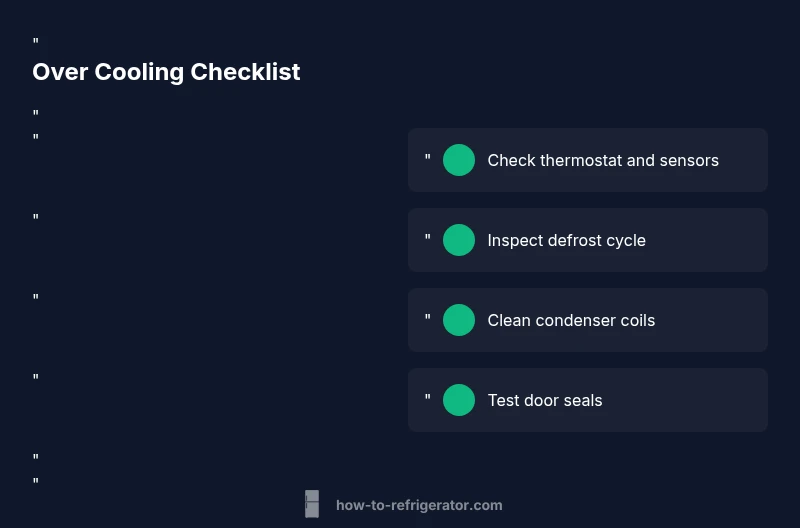
Most refrigerations over-cool due to thermostat misreading, a faulty temperature sensor, or a stuck defrost cycle. First, confirm the thermostat is set to a safe range (roughly 3–5°C) and inspect door seals and vents. Next, clean the condenser coils and verify the defrost timer. If cooling remains excessive, professional service is recommended.
Understanding why is my refrigerator over cooling
In plain terms, over cooling means the fridge or freezer stays colder than intended, causing items to freeze and shelves to develop frost. If you're asking why is my refrigerator over cooling, the root causes usually involve misreading or failing controls, sensors, or the defrost cycle. Modern fridges rely on a thermostat to set coil temperature, a temperature sensor to report actual temperature, and a defrost timer to prevent frost buildup. Small issues in any of these parts can push temps below the intended range, especially if the unit is installed in a very cool room or if the evaporator fan is obstructed. This guide explains how to diagnose, test, and safely fix the most common culprits, so you can restore safe, stable temperatures quickly.
Common culprits that trigger over cooling
- Thermostat setting too low or a damaged calibration can drive the compressor to run longer and chill more than intended.
- Faulty temperature sensor (thermistor) that reports a colder-than-reality temperature and prompts excessive cooling.
- Defrost timer or control that stays in a cooling cycle, frost-free or manual defrost pathways misbehaving and altering airflow.
- Airflow restrictions from blocked vents or frost buildup, which can skew distribution and cause pockets of extreme cold.
- Control board faults or sensor wiring issues that misinterpret temperature data and constantly drive cooling.
Identifying which culprit is at play often requires a mix of quick checks and temperature measurements. The goal is to confirm whether the issue is mechanical (thermostat, sensor, defrost) or related to airflow and insulation.
Quick checks you can perform safely
- Verify the thermostat setting and recalibrate if needed. If your model lets you set a specific degree, aim for around 3–5°C in the fridge and 0–5°C in the freezer.
- Check door seals for wear or gaps; a poor seal can cause the unit to compensate by cooling more aggressively in an attempt to maintain internal temps.
- Inspect the condenser coils (usually behind a front grille or underneath the unit) and clean them if dusty or dirty; restricted heat rejection can paradoxically affect internal temperatures.
- Look for frost buildup in the freezer. Heavy frost suggests a defrost problem that can influence overall cooling behavior.
- Listen for fan operation. A malfunctioning evaporator fan can create uneven cooling and frost that feeds back into the system.
In-depth look at the defrost system and temperature sensor
The defrost system prevents frost from blocking airflow. If the defrost timer or heater fails, frost can accumulate and disrupt normal airflow, causing the fridge to over-cool in an attempt to compensate. Conversely, a faulty temperature sensor or thermistor can report temperatures that are warmer or colder than reality, prompting the control board to adjust cooling inappropriately. Testing these components often requires a multimeter and model-specific service steps. If you’re unsure, avoid replacing parts blindly; follow your appliance’s diagnostic manual or contact a professional.
When to consider part replacement and professional service
If basic checks don’t resolve the issue, parts replacement becomes a practical consideration. Common candidates include the thermostat, temperature sensor, defrost timer, or control board. Ensure you have proper model information (make, model, serial) and a clear symptoms log before calling a technician. A professional can perform precise electrical tests, verify refrigerant integrity, and diagnose sealed-system issues that aren’t user-serviceable. Remember, safety comes first—if you notice burning smells, frost in unusual places, or refrigerant leakage, stop using the unit and seek service immediately.
Prevention tips to keep temperatures stable
- Schedule regular coil cleaning and vent clearance to maintain efficient heat transfer.
- Keep the fridge and freezer doors closed whenever possible and avoid placing hot items inside.
- Place a thermometer in both compartments and routinely compare real temps to the display; recalibrate if you notice drift.
- Use proper food organization to ensure air can circulate; avoid overloading shelves which can trap cold air in one area.
- Protect the unit from temperature shocks by avoiding placement near heat sources, ovens, or direct sunlight.
Steps
Estimated time: 60-90 minutes
- 1
Verify thermostat settings and calibrate
Locate the thermostat control and confirm it is not set too low. If your model supports calibration, adjust to the recommended range and note the setting for future reference. After adjusting, monitor temperatures for 24 hours to see if the issue persists.
Tip: Document the current settings and observed temps to help the next step if needed. - 2
Measure actual temperatures
Place calibrated thermometers in the fridge and freezer away from vents to get accurate readings. Compare against the display; significant discrepancies suggest sensor issues or control misreads.
Tip: Use separate meters for each compartment and record daily readings for a week if needed. - 3
Check door seals and airflow
Inspect gaskets for cracks or wear and perform a flashlight test to detect air leaks. Ensure vents are clear and air can circulate; obstruction can trigger overcooling in some zones.
Tip: Clean seals with mild soap and water; replace damaged gaskets promptly. - 4
Inspect condenser coils and fans
Unplug the unit and locate condenser coils; vacuum or brush away dust. Confirm evaporator and condenser fans operate correctly without unusual noises.
Tip: Clean coils every 6–12 months to maintain efficiency and accurate cooling. - 5
Evaluate defrost system
Check for frost buildup on the evaporator and listen for the defrost cycle. If frost is heavy or the cycle never completes, defrost components may be faulty.
Tip: Never attempt to chip away thick frost with sharp objects; manually defrost if advised by manufacturer. - 6
Decide on next steps
If temps remain too cold after checks, consider professional service for sensor, thermostat, or control board replacement. Keep service records for warranty or future reference.
Tip: Have model details ready and note any observed symptoms for the technician.
Diagnosis: Refrigerator is over cooling; shelves and foods are freezing or frost is building up
Possible Causes
- highThermostat setting too low or calibration drift
- highFaulty temperature sensor/thermistor giving a falsely cold reading
- mediumDefrost timer stuck in cooling cycle or defrost control fault
- mediumDamper/airflow issue causing excess cold air to reach fridge compartment
- lowControl board fault or wiring issue
Fixes
- easyCheck and adjust thermostat to a safe range; recalibrate if possible
- mediumTest or replace the temperature sensor/thermistor if readings don’t match the display
- mediumInspect defrost timer and defrost heater; verify defrost cycle runs as designed
- easyInspect airflow paths and damper for obstructions; clear vents and reseat fans
- easyReset the control board by unplugging for a few minutes and replugging; if persistent, professional diagnosis
FAQ
What causes a refrigerator to overcool, and is it safe for food?
Over cooling is usually caused by thermostat or sensor faults and defrost cycle issues. It can freeze food and alter texture, but it’s generally not hazardous. Adjust settings and check components, then monitor temperatures closely.
Over cooling usually comes from thermostat or sensor faults and defrost problems. It can freeze food and affect texture, but it’s generally safe once corrected.
Can I fix over cooling myself without tools?
Many quick checks, like thermostat setting, door seals, and coil cleaning, can be done without special tools. If temperatures don’t stabilize after these steps, it’s best to call a professional.
Yes, you can do several checks at home, but if temps don’t stabilize, call a professional.
Should I reset the fridge control board?
Resetting by unplugging for a few minutes can clear minor glitches. If the problem returns, professional diagnostics may be required to check sensor and board integrity.
Resetting the board can help with glitches. If it returns, get a professional check.
How long does a defrost cycle typically run?
Defrost cycles vary by model, but issues arise if the cycle never completes. If you notice continuous frost buildup, have the defrost timer or heater inspected.
Defrost cycles differ by model; ongoing frost means a timer or heater problem may be present.
What’s the first step if my fridge is over cooling and I hear knocking or buzzing?
Noise often points to fan or compressor issues. Start with a quick check of the evaporator and condenser fans for obstructions or wear, and then call a pro if unclear.
Noises often mean fans or the compressor have issues. Check fans first; if unsure, contact a pro.
Can a door seal affect over cooling?
Yes, a poor seal can cause temperature fluctuations that confuse the control system. Inspect gaskets and replace if damaged to restore stable temps.
A bad door seal can cause temp fluctuations; inspect and replace if needed.
Watch Video
Top Takeaways
- Identify thermostat and sensor issues early
- Check defrost and airflow before parts replacement
- Regular maintenance prevents overcooling
- Call a professional for sealed-system concerns