Why Is My Fridge Not Working Properly? A Troubleshooting Guide
Is your fridge not cooling or running constantly? This urgent guide covers safe checks, common causes, and step-by-step fixes to restore cooling and prevent waste.


Start with the basics: check power, door switch, thermostat, and condenser coils. If these quick checks don’t restore cooling, proceed along the diagnostic flow and only call a professional when required. This guided approach helps homeowners identify the most likely cause and safely return your fridge to normal operation. Keep safety in mind and avoid risky repairs.
Understanding the Problem: Why is my fridge not working properly
If you’re wondering why is my fridge not working properly, you’re not alone. A fridge that won’t cool or runs nonstop can waste food and spike energy costs in a matter of hours. According to How To Refrigerator, most early fridge faults stem from simple, safe checks you can perform before calling a technician. This is a crash course in fast, practical triage that homeowners can execute with minimal tools.
Symptoms vary, from warm air inside to frost buildup or unusual noises. Before you panic, take a calm, methodical approach: identify the symptom, confirm the scale, and isolate possible causes. This guide is designed for homeowners troubleshooting appliance issues quickly and safely, with steps you can perform without specialized tools.
The purpose of this article is to provide urgent, step-by-step guidance, showing you what to check first, how to diagnose common failures, and when to call a pro. We'll cover not cooling, constant running, frost or condensation, and door-seal problems. By the end, you should have a clear plan to restore cooling and prevent waste.
Common Symptoms You Might See
Common fridge symptoms range from the interior not cooling to the freezer developing frost, or the unit running constantly. You may notice a warm shelf, a faint buzzing, or condensation along seals. If the compressor sounds off-key or the fan cycles loudly, that can signal airflow issues or worn components. The How To Refrigerator team found that the most frequent culprits are power issues, thermostat misadjustments, door seals that leak, and dirty condenser coils that restrict airflow. Start here, then expand to more involved checks.
We’ll map these symptoms to likely causes: power issues, door seals, thermostat errors, clogged condenser coils, defrost timer faults, or duct work problems. Use a simple checklist to separate symptoms from root causes. Note any unusual smells, leaks, or frost patterns; these can point to defrost problems or refrigerant leaks. While leaks require professional service, simple fan or coil debris can often be addressed by a homeowner.
If you see frost on the evaporator or a sudden drop in cooling performance, document the pattern. This helps you distinguish between a defrost problem and a compressor fault. Remember: not every symptom means a major repair. Often, a small adjustment or cleaning step resolves the issue without tools beyond a flashlight and a screwdriver.
Quick Fixes You Can Try Safely
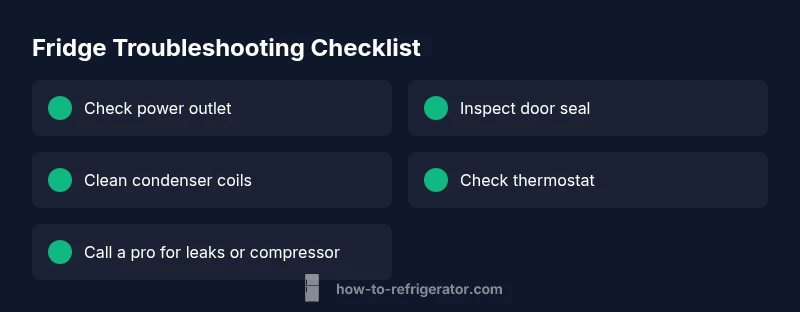
Before you call for help, try these fast, safe checks. First, confirm the fridge is plugged in and that the outlet is energized. Next, ensure the door is fully closed and the door switch is functioning (a pressed switch is often the culprit if the light goes out when you close the door). Check the thermostat setting; it should generally be around 37–40°F (3–4°C) for the fridge and 0°F (-18°C) for the freezer. Inspect the door gasket for cracks or gaps that let warm air in, and clean any visible dust from the condenser coils. If you have frost buildup, allow for a manual defrost if safe and appropriate for your model. If none of these steps restore cooling, proceed to the diagnostic flow.
If the unit continues to run hot or the interior remains warm after these checks, note the time of day and any changes in behavior. This information will help when you seek professional service. Always unplug the appliance before inspecting electrical components and never attempt refrigerant handling yourself. Safety first, cost later.
In some cases, a simple reset of the thermostat or defrost timer can reset the system. Many modern fridges tolerate a brief power cycle: unplug for 1–2 minutes, plug back in, and monitor for 30 minutes. If you still see temperature instability, escalate to the diagnostic flow and, if needed, a qualified technician.
Diagnostic Flow: Symptom → Diagnosis → Solutions
Symptom: Not cooling
Possible causes: Power issue (high), Door seal leak (medium), Thermostat malfunction (high), Defrost timer fault (medium) Potential fixes: Check power outlet and cord, replace door gaskets if damaged, verify thermostat setting, test defrost timer or call for service for defrost system repair
Symptom: Fridge runs constantly
Possible causes: Overloaded compressor, Dirty condenser coils, Faulty fan, Incorrect temperature control Potential fixes: Remove debris from coils, clean fan blades, adjust temperature to recommended range, ensure vents aren't blocked
Symptom: Frost buildup in freezer
Possible causes: Defrost system failure, Evaporator coil blockage, Door left open Potential fixes: Defrost mode if manual and safe to do so, inspect wiring to defrost heater, check door seal integrity
Symptom: Warm smell or leak
Possible causes: Refrigerant leak (high), Condenser failure (medium) Potential fixes: Do not attempt refrigerant repair yourself; call a pro immediately, collect model and serial number for service
Step-by-Step: Restore Cooling When You Suspect Defrost or Condenser Issues
- Power down safely and inspect the outlet; ensure the cord is undamaged. 2. Confirm the door seals are intact and the door closes fully with the light off. 3. Check the condenser coils for dust and debris; vacuum or brush away obstruction. 4. Inspect the evaporator and freezer for visible frost buildup; if excessive, allow manual defrost if the model supports it. 5. Verify the thermostat setting and function; adjust to the manufacturer’s recommended range. 6. If abnormal noises persist, inspect the fan and shut the unit off if obstruction is detected. 7. Reconnect power and monitor temperatures for 1–2 hours, noting any changes. 8. If there is no improvement, contact a professional with your model details.
Tip: Keep a log of symptoms, time, and temperature readings to aid diagnosis. This helps you and the technician pinpoint issues quickly.
Preventive Measures to Avoid Future Frustration
Regular cleaning and inspection reduce mid-cycle failures. Clean condenser coils every 3–6 months and replace worn door gaskets as soon as you notice gaps. Keep the fridge in a cool, ventilated area away from heat sources and ensure proper clearance for airflow. Maintain consistent temperatures by avoiding frequent door openings, and schedule annual professional checkups if you notice any recurring symptoms.
If you're asking why is my fridge not working properly, address basic power and seal issues immediately and keep a detailed symptom log. This proactive approach minimizes food waste and energy use. Remember that complex problems—such as refrigerant leaks or compressor failures—require licensed technicians. Early detection saves money and protects your home.
Steps
Estimated time: 60-90 minutes
- 1
Check power and plug
Unplug the fridge, inspect the outlet, and test with another device to confirm power. Plug back in and verify the display lights up. A loose outlet or damaged cord is a common cause of non-cooling conditions.
Tip: If the outlet is controlled by a wall switch, ensure the switch is ON and that other devices work in the same outlet. - 2
Inspect door switch and gasket
Close the door firmly and listen for a switch click. If the light stays on once closed or the door doesn’t seal, replace or repair the gasket. A leaky seal lets warm air into the fridge, increasing run time and reducing cooling.
Tip: Test the seal by closing a sheet of paper at the door; if you can pull the paper out easily, the seal may be worn. - 3
Check thermostat and temperature settings
Ensure the thermostat is set to a safe range (typically 37–40°F / 3–4°C for the fridge and 0°F / -18°C for the freezer). If readings on the dial are off, the thermostat may be malfunctioning and require replacement.
Tip: Avoid setting the temperature too low; overcooling wastes energy and can stress components. - 4
Clean condenser coils and check airflow
Unplug the unit and clean dust from the condenser coils located either behind the grille or beneath the fridge. Ensure air can circulate freely around the coils and fan. Dirty coils make the compressor work harder and can cause overheating.
Tip: Use a soft brush or vacuum with a narrow nozzle to remove dust without bending fins. - 5
Inspect evaporator fan and defrost system
Listen for the evaporator fan when the door opens. If the fan is silent or noisy, there may be a blockage or motor issue. If frost is accumulating, the defrost heater or timer could be at fault and may need professional service.
Tip: Do not attempt refrigerant work; this requires licensed technicians. - 6
Test post-check performance
Plug back in and monitor temperatures for 1–2 hours. If temperatures stabilize within the expected range, you’ve resolved the issue. If not, escalate to professional repair with your model details.
Tip: Document symptom patterns and timing to speed up diagnosis.
Diagnosis: Fridge not cooling or running continuously
Possible Causes
- highPower issue
- mediumDoor seal leak
- highThermostat malfunction
- mediumDefrost timer fault
Fixes
- easyCheck outlet and cord for power; reset or replace as needed
- easyInspect door gasket for cracks and replace if necessary
- mediumTest thermostat setting; replace if defective
- hardInspect defrost timer and heater; call a professional if faulty
FAQ
Why is my fridge not cooling properly despite being plugged in?
Common causes include a dirty condenser coil, a faulty thermostat, a bad door seal, or a defrost timer fault. Start with power, door seal, and thermostat checks before escalating to more complex issues.
If your fridge isn’t cooling even when plugged in, check power, door seal, and thermostat first, then move to airflow and defrost system if needed.
What should I check first if the fridge isn’t cold?
Check the outlet, power cord, and that the door is fully closed. Verify the thermostat setting and inspect the door gasket for leaks. These quick checks solve many not-cold complaints.
First, confirm power and the door are okay, then check the thermostat setting.
Can I manually defrost a fridge, and is it safe?
Manual defrost can be safe for some models, but not all. Follow the manufacturer instructions and unplug the unit if you perform a manual defrost. If you’re unsure, skip to professional service.
Manual defrost depends on the model—check the manual and don’t force frost removal if you’re unsure.
When should I call a professional?
If you hear unusual noises, detect refrigerant smells, notice persistent warm temps, or suspect the defrost or compressor is failing, call a licensed technician.
Call a pro if you hear buzzing loudly, smell refrigerant, or temperatures don’t improve after basic checks.
Why does my fridge make buzzing or clicking noises?
Buzzing or clicking can indicate a failed fan, a stuck relay, or a compressor issue. If the sounds are new or getting louder, schedule service.
New or louder buzzing may point to a failing fan or compressor—have it checked.
Is it safe to operate the fridge after a defrost issue?
If you suspect a defrost problem, avoid hard freezes or rapid temperature changes. Use the defrost function if the model supports it and contact a pro if frost returns.
Don’t push through frost and temperature swings; use the model’s defrost function and seek help if frost returns.
Watch Video
Top Takeaways
- Identify simple power/door issues first
- Clean vents and coils to restore airflow
- Use the diagnostic flow for deeper problems
- Call a professional for refrigerant or compressor faults
- Keep a symptom log for faster service