Why Is My Refrigerator Freezing My Food? A Home Troubleshooting Guide
Short on time? Learn why your fridge is freezing food and how to diagnose and fix common causes with step-by-step guidance from How To Refrigerator.


The most likely cause is frost buildup from a failing defrost system or a mis-set temperature that allows frost to form and block airflow. Start with quick checks: confirm the fridge is set around 37–40°F and the freezer at 0°F, inspect the freezer defrost drain for clogs, and remove ice if needed. If frost returns, stop using the unit and call a professional for a deeper diagnosis.
Why is my refrigerator freezing my food
If you’ve ever asked yourself why is my refrigerator freezing my food, you’re not alone. Frost can creep in for several reasons, and the result is the same: food in the fridge section becomes hard or icy while frost blankets parts of the freezer. According to How To Refrigerator, the most common culprits are related to frost buildup, temperature control, and airflow. Your refrigerator relies on a delicate balance: the defrost cycle, the thermostat, and the airflow vents must work in harmony to keep the interior at the right temperatures. When one element drops out of spec, cold air can spill into places it shouldn’t, freezing fresh produce or dairy. By understanding how these systems interact, you can identify the likely cause and perform safe, practical fixes.
In this guide, we’ll walk you through the most frequent failure modes, how to test them, and what to do next. You’ll also learn to recognize warning signs that indicate you should call a professional. The aim is to empower you to diagnose quickly without risking your safety or the longevity of your appliance.
Common causes of fridge freezing and how to spot them
Frost buildup is usually the first clue that something in the defrost system isn’t working as it should. If frost forms in the freezer and media in the fridge starts to freeze, the defrost heater or timer may be stuck or malfunctioning. A mis-set thermostat can also drive the compressor to run longer than needed, chilling the air beyond the desired level. Another frequent culprit is an air damper or vent that’s stuck open or closed, which disrupts airflow between the freezer and refrigerator compartments. A damaged door seal can let humid air in, leading to frost accumulation on evaporator coils. Finally, a clogged defrost drain will allow meltwater to refreeze, creating a chilly backflow of cold air into the fridge. By checking these elements one by one, you’ll quickly narrow down the root cause.
How temperature control and airflow affect frost formation
Airflow is the lifeblood of a modern refrigerator. When the evaporator coil frost forms or the damper door misbehaves, cold air can accumulate in unintended areas and cause food to freeze. The thermostat signals the compressor to regulate temperature; if it’s out of calibration, the fridge may overcool. Humidity also plays a role—excess moisture can freeze on coils and pipes, redirecting cold air toward shelves you’re using for fresh produce. Understanding these relationships helps you interpret symptoms, such as ice buildup near the back wall, ice crystals on vegetables, or liquid water pooling in the crisper. Recognizing patterns will guide your next steps, from a simple temperature adjustment to defrosting and more detailed diagnostics.
By taking a measured, systematic approach, you’ll protect perishable foods and avoid unnecessary part replacements. The process emphasizes safety and practicality, ensuring you don’t overreact to a transient frost event while still catching a genuine fault.
Do-it-yourself checks you can perform before pulling the unit out
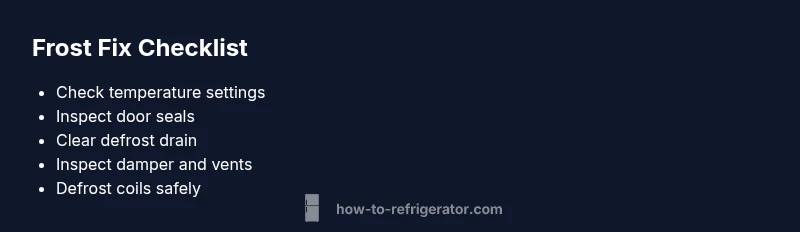
Begin with the simplest checks: verify the temperature settings and the door seals, then inspect for frost buildup. Look for signs that the door has been left ajar or a gasket is damaged. Check the freezer defrost drain for clogs or kinks, which can trap meltwater and create frost elsewhere. If you can access the coils, gently remove dust that could impair heat transfer. A torn door seal or a misrouted ice maker line can also contribute to abnormal cooling. These checks are safe for most homeowners and require no specialized tools. If frost persists after these steps, be prepared to move to more advanced diagnostics or call a professional for an in-depth inspection.
Diagnostic flow: symptom-to-diagnosis path
The most reliable way to narrow down the problem is to observe the symptom, test the likely causes, and apply the simplest fix first. Common symptoms include frost on evaporator coils, food freezing despite a normal fridge setting, and water visible in the drain pan. Start by checking the defrost timer and heater, then the thermostat calibration, and finally the air damper or vents. If you notice moisture while opening the doors or see frost migrating to shelves, this points to airflow issues. After each test, note whether the symptom improves. If not, proceed to the next probable cause. This method keeps you organized and reduces unnecessary troubleshooting steps.
Steps
Estimated time: 60-120 minutes
- 1
Safety prep and power-down
Unplug the fridge and move items away from the appliance. If you need to pull it out for access, use proper lifting techniques and keep the area clear. Wait for the unit to reach room temperature before handling any refrigerant lines.
Tip: Always unplug before starting any interior work to avoid shocks. - 2
Check temperature settings
Verify the fridge is at 37–40°F and the freezer at 0°F using a separate thermometer placed away from airflow sources. Readjust if needed, and monitor for 24–48 hours to see if the issue recurs.
Tip: Use a calibrated thermometer for accurate readings. - 3
Inspect door seals and gaskets
Close each door firmly and look for gaps or cracks in the gasket. A worn seal can let in humid air that condenses and freezes on cold surfaces. Replace damaged gaskets to restore airtight sealing.
Tip: Clean seals with mild soap and water to remove grime reducing seal effectiveness. - 4
Check defrost drain and coils
Locate the defrost drain at the back or bottom of the fridge and ensure it’s clear. If you see frost buildup on the evaporator coils, perform a safe manual defrost following your manufacturer’s guidance or by using the appliance’s defrost function.
Tip: Do not use sharp tools to clear frost; use a turkey baster with warm water. - 5
Test airflow between compartments
Ensure vents aren’t blocked by containers. Rearrange shelves to improve air circulation. If the damper door feels stiff or stuck, it may need service to balance cold air flow.
Tip: Avoid overfilling the fridge, which can impede airflow. - 6
Final test and reassembly
Plug the unit back in, return items, and monitor temperatures for 24–72 hours. If the frost issue reappears, continue with professional diagnosis or advanced repairs.
Tip: Document tested steps and temperatures to discuss with a technician.
Diagnosis: Food freezing in refrigerator compartments despite normal settings
Possible Causes
- highFrost buildup from a failing defrost system
- mediumThermostat miscalibration leading to overcooling
- lowDamper door stuck or misadjusted affecting airflow
Fixes
- easyTest/replace defrost timer and heater; defrost manually if needed
- easyCalibrate or replace the thermostat to restore proper cooling range
- mediumInspect and repair/realign the damper door to restore proper airflow
FAQ
Why does my fridge freeze food even when the temperature is normal?
Normal temperatures can still result in freezing if frost accumulates due to a failing defrost system or airflow problems. Check the defrost timer, thermostat, and damper. A damaged door seal can also allow moist air to condense and freeze, so inspect gaskets and seals.
Frost can form even at normal temps if the defrost system or airflow is off, so check those parts first.
How do I know if the defrost timer is failing?
Symptoms include frost on coils despite a normal setting, water pooling without a leak, or ice buildup in unexpected areas. Access the defrost timer panel, listen for cycling sounds, and test with a multimeter or by substituting with a known-good part.
Frost on coils and unusual cycling can indicate a defrost timer issue.
Is it safe to manually defrost my refrigerator?
Yes, manual defrost is safe if you follow manufacturer guidelines. Unplug the unit, remove food, and allow time for ice to melt. Wipe away melting water and dry before powering back on.
Yes, but unplug first and follow the manual to avoid damage.
Can a damaged door seal cause freezing in the fridge?
A damaged seal lets warm, humid air into the fridge, causing excess frost that can migrate to shelves. Inspect and replace worn gaskets to restore airtight sealing.
A bad door seal often causes frost by inviting humid air inside.
When should I call a professional?
If frost recurs after basic fixes, or you notice refrigerant smells, unusual noises, or water leaks, a professional diagnosis is recommended to avoid voiding warranties or causing further damage.
If the frost keeps coming back after you’ve tried the basics, it’s time to call a pro.
Top Takeaways
- Set fridge to 37–40°F and freezer to 0°F.
- Check for frost buildup and clear defrost drains.
- Inspect doors and gaskets for leaks.
- Follow a step-by-step diagnostic flow before costly replacements.
- When in doubt, contact a professional for definitive repair.