Why Is My Refrigerator Freezing Everything? Troubleshooting Guide
A homeowner-friendly guide to diagnosing a fridge that freezes foods. Step-by-step checks, safety tips, and prevention to keep items at the right temperature.


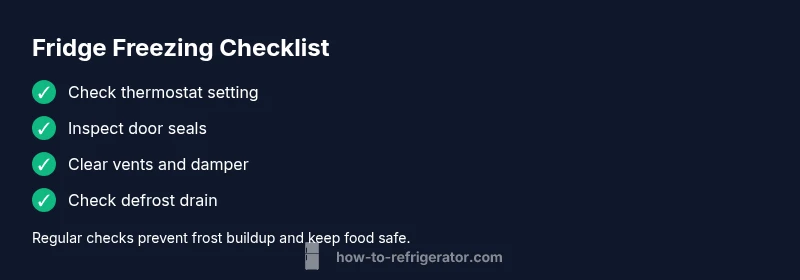
The most common culprits are a mis-set thermostat or an air damper that’s stuck open, which lets extra cold air into the fridge. Start by setting the thermostat to a normal fridge temperature and inspecting door seals and vents for blockages. If the problem persists, test the defrost drain and consider professional help.
Why this happens and what to check first
If you're asking why is my refrigerator freezing everything, you're not alone. The problem usually stems from two systems that govern how cold air moves: the temperature control and the airflow pathways. A fridge that is too cold in the fridge compartment often means the thermostat is set too low, or the cold air is circulating past the damper into the fridge more than it should. Another frequent cause is a damper or door seal that leaks cold air or a defrost cycle that runs incorrectly, causing frost in places it shouldn't. According to How To Refrigerator, most freezing symptoms in the kitchen can be traced back to mis-set settings, airflow blockages, or a malfunctioning defrost/drain system. Start with the simplest checks: confirm the temperature setting is within a normal range, inspect door gaskets for seals, and make sure the vents in the back of the fridge aren't blocked by items. Small changes now can prevent a larger frost problem later. This article walks you through a practical, safety-conscious approach to identify the root cause and restore even cooling across compartments.
Quick checks you can perform without tools
Before diving into disassembly, perform a handful of quick checks that often resolve the issue. First, locate the temperature dial and confirm it's set to the mid-range for refrigeration (not the coldest setting). Then inspect the door gaskets around both doors; a cracked or loose seal can cause uneven cooling and frost build-up. Check the interior vents and shelves for items blocking airflow; even a tall bottle can divert flow. Finally, listen for the evaporator fan when the compressor runs. If you hear no air moving in the fridge when the door is closed, airflow is the likely bottleneck. These steps require no tools and carry minimal risk, yet they solve many cases of unusual freezing.
Common causes explained: thermostat, damper, and defrost system
Thermostat control: A thermostat that is too aggressive or a sensor that has drifted can tell the compressor to run longer and colder than intended, freezing items near the back or shelves. Damper issue: If the air damper that modulates cold air between freezer and fridge is stuck open, cold air floods the fridge and food freezes. Defrost system: A malfunctioning defrost timer or heater can cause frost to accumulate and disrupt normal cooling, occasionally freezing the entire fridge compartment. Defrost drain blockages can also trap water that refreezes and creates ice blocks that change airflow. Understanding these three levers helps you prioritize testing and fixes. How To Refrigerator's guidelines emphasize starting with the simplest test: is the thermostat functioning as intended, is airflow unobstructed, and is the defrost system clearing regularly? If these fail, proceed to deeper checks.
Test defrost system and drain
A blocked defrost drain can cause frost to pool and block the flow of warm air that should melt frost periodically. Start by unplugging the unit and locating the defrost drain near the back wall of the fridge or bottom of the freezer. If you see standing frost in the freezer, the defrost cycle may not be defrosting. Use a turkey baster or sponge to clear any visible ice from the drain tube; a small amount of warm water can help dissolve ice, but do not use hot water on plastic components. After clearing, plug back in and monitor for 24–48 hours. If frost returns or the fridge continues to freeze, the defrost heater or timer may be faulty and require replacement by a professional.
Storage, airflow, and door maintenance strategies
Even well-designed appliances can frost up if items block airflow. Keep groceries neatly organized, avoid overstuffing shelves, and ensure that air can circulate around containers. Pay attention to items near the back wall and keep the freezer and fridge doors closed as much as possible during cleaning or loading. Also, check door seals for wear and tear—the slightest crack can funnel cold air into the fridge and cause freezing symptoms. When organizing, balance ease of access with airflow, and leave a small gap at the back panel for air movement. These small habits dramatically reduce frost buildup and help maintain even temperatures across compartments.
Steps
Estimated time: 60-90 minutes
- 1
Verify thermostat setting
Locate the temperature control inside the fridge and ensure it is set within the normal range (roughly mid-range). If it was set too low, adjust to a typical fridge temperature and monitor for 24–48 hours to see if frost issues resolve. If the setting was already correct, move to the next steps.
Tip: Take a photo of the current setting before changing it, so you can revert if needed. - 2
Inspect door seals
Check both gaskets for cracks, tears, or sticky buildup. A poor seal can cause drafts that frost the interior. Clean with warm, soapy water and dry completely; replace if damaged.
Tip: Close the doors slowly and listen for air leaks around the edges to identify compromised seals. - 3
Test airflow paths
Remove items near vents and ensure shelves aren’t blocking airflow from the freezer to the fridge. Open the freezer and listen for the evaporator fan when the compressor runs; if you don’t hear airflow in the fridge, investigate the damper and fan.
Tip: Keep the freezer organized to prevent accidental damper obstruction. - 4
Check the defrost drain
Unplug the unit and locate the defrost drain. If you see ice, carefully melt it away and clear the tube. Reconnect and run the unit, then observe for frost within 24–48 hours.
Tip: Avoid using sharp objects that could damage the drain; use warm water and a soft brush instead. - 5
Evaluate defrost system components
If frost recurs, test or replace defective defrost timer or heater. This step may require a professional if you encounter electrical components.
Tip: If you’re uncomfortable with electrical components, prioritize safety and call a tech. - 6
Assess evaporator fan condition
Listen for the evaporator fan during normal operation; if it’s silent or makes grinding sounds, the motor may be failing and require replacement.
Tip: Handling the fan usually needs unplugging and accessing the back panel—exercise caution.
Diagnosis: Food in fridge is freezing or entire fridge feels too cold
Possible Causes
- highThermostat control malfunction or mis-set thermostat
- highAir damper stuck open or blocked airflow between freezer and fridge
- mediumDefrost system failure (defrost timer/heater) causing frost buildup and mis-flow
- lowEvaporator fan not functioning, preventing proper air distribution
Fixes
- easyAdjust thermostat to the manufacturer-recommended range and test after 24 hours
- easyInspect and clear any blockage around air damper; assess seals; replace if damaged
- mediumTest defrost system and drain, clear blockages, replace defrost components if faulty
- hardInspect evaporator fan operation and replace fan motor if silent or obstructed
FAQ
Why is my refrigerator freezing everything even though the freezer is fine?
That pattern often points to an airflow or thermostat issue rather than a general cooling problem. Check the damper and thermostat settings, then inspect the door seals for leaks. If frost persists, a professional evaluation may be needed.
Fridge freezing while the freezer is okay usually means airflow or thermostat problems. Check the damper, thermostat, and door seals; if frost continues, call a technician.
How can I tell if the thermostat is faulty?
Test by temporarily setting the fridge to mid-range and watching for 24–48 hours. If temperatures still fall, or items freeze, the thermostat or sensor may be faulty and should be tested or replaced.
Set to mid-range and monitor for a day or two; if it still freezes, the thermostat or sensor could be faulty.
Can a clogged defrost drain cause the fridge to freeze?
Yes. A blocked defrost drain can cause frost buildup that disrupts air circulation and freezes items. Clear the drain and check for recurring ice; if it returns, the defrost components may need replacement.
A blocked defrost drain can freeze the fridge by blocking airflow; clear it and see if the issue returns.
When should I call a professional?
If you’re uncomfortable with electrical components, if the problem persists after basic checks, or if you notice unusual noises or refrigerant smells, contact a trained technician for a precise diagnosis and safe repair.
Call a professional if basic checks don’t fix it or you hear odd noises or refrigerant smells.
Can door seals cause frosting in the fridge?
Damaged seals can allow cold air to leak into the fridge, causing frost buildup. Inspect and replace damaged gaskets to restore proper sealing.
Yes, bad door seals can frost the fridge by letting cold air in.
What maintenance helps prevent freezing?
Regularly clean gaskets, clear vents, and ensure the defrost drain is clear. Keep items organized to avoid airflow blockages and set temperatures to recommended ranges.
Keep seals clean, vents clear, and set temperatures correctly to prevent freezing.
Watch Video
Top Takeaways
- Start with thermostat and airflow tests before deeper fixes
- Defrost drain issues are common sources of frost problems
- Clean seals and vents regularly to maintain proper airflow
- Call a professional if electrical components are involved or the problem persists