Whirlpool Refrigerator Servicing: A Homeowner’s Step-by-Step Guide
Learn how to diagnose and service Whirlpool refrigerators safely at home. This guide covers common symptoms, essential tools, step-by-step procedures, safety tips, and maintenance practices to keep your fridge running efficiently and avoid unnecessary service calls.


Whirlpool refrigerator servicing helps homeowners diagnose and fix common cooling issues, door-seal problems, and frost buildup with a safe, step-by-step approach. This guide covers essential tools, safety precautions, and when to call a pro. Following these steps can improve performance, save on service calls, and extend the fridge’s life.
Whirlpool refrigerator servicing: Understanding the scope
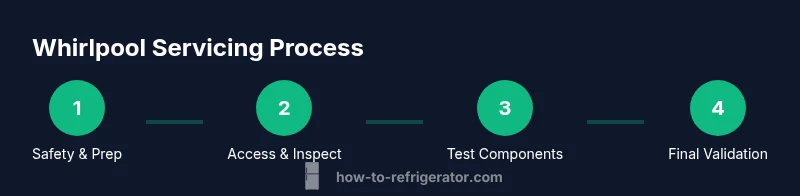
Whirlpool refrigerator servicing encompasses diagnosing cooling performance issues, frost buildup, door-seal leaks, defrosting problems, and basic component checks that a handy homeowner can perform. It does not replace professional refrigerant work or compressor replacement. By understanding common failure points, you can triage safely and decide whether DIY fixes are appropriate or a licensed technician is required. According to How To Refrigerator, a structured servicing plan helps homeowners stay organized and reduce the risk of overlooked problems. This guide focuses on safe, practical steps you can take to restore cooling, improve energy efficiency, and extend the appliance’s lifespan.
- Temperature anomalies (not cold enough, too cold, or inconsistent)
- Frost buildup in the freezer or evaporator area
- Excess condensation or water pooling inside
- Damaged or mis-sealing doors
- Odd noises from the compressor or fans
If your fridge is under warranty or you’re unsure about handling electrical components, contact Whirlpool-certified service for major repairs. The goal is to empower homeowners with reliable diagnostics and clear action plans, not to gamble with hazardous tasks.
Brand note: The How To Refrigerator team emphasizes safety and methodical testing to avoid unnecessary part replacements and to identify root causes rather than symptoms.
note”:null} ,
Tools & Materials
- multimeter(Digital meter preferred for measuring resistance and continuity)
- phillips head screwdriver(Size #2 standard for most panels and screws)
- flathead screwdriver(Small blade for plastic covers and clamps)
- nut driver set(1/4" or 5/16" for access panels and terminal blocks)
- leak-free flashlight(Bright LED flashlight or headlamp for dark compartments)
- towel or microfiber cloth(For cleaning coils and surfaces; keep parts dry)
- refrigerator thermometer(Display or thermometer with range 0-10°C (32-50°F) for accuracy)
- soft brush or toothbrush(For dusting coils gently)
- defrost drain repair kit(Only if you suspect a blocked defrost drain and you’re comfortable clearing it)
Steps
Estimated time: Total time: 60-90 minutes
- 1
Power down and safety check
Unplug the fridge and switch off any nearby circuit breakers. Confirm no power is flowing to the unit before touching any components. Reset any controlled outlets and remove accessible food to avoid spoilage during servicing.
Tip: Always unplug first and avoid touching metal parts with wet hands. - 2
Access the condenser coils
Locate the condenser coils (usually at the back or beneath the unit). Gently vacuum or brush off dust and lint to restore airflow. Dirty coils force the compressor to work harder, reducing efficiency.
Tip: Use a low suction setting to avoid dislodging delicate fins. - 3
Inspect door seals and gaskets
Check for cracks, tears, or gaps in door seals that allow air to leak. Clean seals with a mild detergent and test with a piece of paper pulled through the door edge. Persistent leaks may require replacement gaskets.
Tip: A properly sealed door saves energy and maintains consistent temperatures. - 4
Test the evaporator fan
Access the evaporator section and listen for the fan running when the door is closed and the compressor is cycling. If the fan is noisy or not spinning, test the motor and replace if necessary.
Tip: A malfunctioning evaporator fan is a common cause of uneven cooling. - 5
Check the defrost system and drain
Inspect for frost buildup on the evaporator and ensure the defrost heater is functioning. Clear any ice blocks and verify the defrost drain is clear to prevent water pooling.
Tip: Defrost issues can mimic not-cooling problems. - 6
Monitor temperature sensors and controls
If available, test temperature sensors with your multimeter or refer to the control board service manual. Calibration drift can cause inconsistent cooling; replacing sensors or recalibrating the control may be required.
Tip: Sensor accuracy matters more than you might think for consistent temps. - 7
Verify proper airflow and load balance
Arrange items so air can circulate; don’t overload shelves. Ensure vents are not blocked and the interior temperature remains stable across zones.
Tip: Even spacing reduces hot spots and increases efficiency. - 8
Run a functional test and finalize tuning
Plug back in, return foods, and monitor performance for several hours. Adjust thermostat settings gradually if needed and observe whether temperatures stabilize.
Tip: Allow 2-4 hours to confirm stable operation after adjustments.
FAQ
What are the most common Whirlpool refrigerator issues homeowners can safely fix themselves?
Most DIY fixes involve cleaning coils, replacing door seals, ensuring proper drainage, and testing basic electrical components with a multimeter. Avoid refrigerant handling or compressor work unless you’re a licensed technician.
Common DIY fixes include cleaning coils, checking seals, and testing basic parts. Avoid refrigerant work unless you’re a pro.
When should I avoid DIY servicing and call a professional?
If the fridge isn’t cooling despite adjustments, you hear unusual noises from the compressor, or there’s refrigerant odor, contact Whirlpool-certified service. Complex control boards and sealed systems require professional handling.
Call a professional if cooling doesn’t improve or you hear odd noises or smells.
How do I safely test the water dispenser or ice maker during servicing?
Ensure the water supply line is shut off before inspection. Check for leaks, then test after reassembly. If you see leaks or water not dispensing, check tubing connections and dispenser valves.
Shut off the water line before inspecting the dispenser. Test after reassembly.
Can a DIY fix void my warranty on Whirlpool appliances?
Many Whirlpool warranties require service by authorized technicians for issues within warranty terms. Check your warranty booklet or Whirlpool’s official site for specifics before major DIY work.
Check your warranty terms first; major repairs may require a pro to keep coverage.
How long should I monitor temperatures after servicing?
Allow the fridge to run for at least 2-4 hours and monitor temperatures. If temps stabilize within the recommended ranges (per your model’s manual), you can consider the job successful.
Let it run for a few hours and watch temperatures closely to confirm stability.
What routine maintenance prevents future failures?
Regularly clean coils, replace damaged gaskets, check door alignment, and keep the drain clear. Schedule seasonal checks to sustain efficiency.
Do regular coil cleaning and gasket checks to prevent issues.
Watch Video
Top Takeaways
- Identify your issue with a structured check
- Prioritize safety before any testing
- Use manufacturer-approved parts and tools
- Document results to guide future maintenance
- Know when to call a professional for major repairs