Water in the Refrigerator: Quick Fixes & Prevention
Urgent, expert guide to diagnose and fix water in the refrigerator, from defrost drain blocks to door seal leaks. How To Refrigerator explains safe steps homeowners can take today to stop leaks and prevent future issues.


If you notice water in the refrigerator, start with the simplest checks: ensure the door is fully closed, wipe up spills, and inspect the door seals. Most leaks originate from a blocked defrost drain or a loose drain pan, which How To Refrigerator recommends addressing before considering more complex issues. If the quick checks don’t resolve it, follow the diagnostic flow below for a safe, step-by-step fix.
Understanding water in the refrigerator
Seeing water in the refrigerator can feel urgent, but most cases are solvable with methodical checks. When you hear a rush of water or see pooling on the shelves, the root cause is often a drainage or sealing issue rather than a failed compressor or refrigerant problem. According to How To Refrigerator, the most frequent culprits are a clogged defrost drain, a blocked condensate pan, or a door seal that doesn’t seal properly. Start with low-effort explanations—spills, overflows, or a recently restocked freezer—that could account for the presence of moisture. If none of these simple factors apply, you’re likely looking at a system-level problem that requires cleaning, resealing, or component testing. The goal is to restore proper drainage and prevent moisture from accumulating where it can cause mold or odors. This section sets the stage for practical troubleshooting you can perform safely at home.
Common culprits behind leaks
Leaks can stem from several predictable sources. Being able to identify the root cause quickly saves time and prevents unnecessary part replacements. The most common issues include a clogged defrost drain, a blocked drain pan, a faulty door gasket, and a leaking water inlet valve or ice-maker line. Condensation can also build up if the fridge is set too warm or if the door is left ajar for extended periods. Another frequent offender is a misrouted or kinked drain tube that prevents moisture from draining correctly into the pan below. By knowing these culprits, you can plan targeted checks instead of random part swapping. Remember, the defrost system is designed to manage moisture; if it fails, water can accumulate inside the cabinet.
Quick checks you can perform today
Some steps take just a few minutes and can stop minor leaks in their tracks. Start by inspecting the door seals for cracks or gaps; close the door on a dollar bill or a piece of paper to test the seal's grip. Check that the drain pan beneath the fridge is in place and not cracked or full of standing water. Look for obvious drips from the water line feeding the ice maker or dispenser. Wipe up any visible moisture to prevent mold growth and confirm that the interior light turns off when the door closes. If you find a visible clog in the defrost drain or you notice frost around the back wall, you’re likely dealing with a blocked drain that needs attention.
How to diagnose the leak: symptom to cause
Diagnosing involves mapping what you observe to likely causes. Water pooling on the floor usually points to a blocked defrost drain or an overflowing drain pan. Water inside the fresh-food compartment near crisper drawers often indicates a door seal issue or a misrouted drain tube. If water drips from the ice maker line, inspect the inlet valve and tubing for cracks or loose fittings. A persistent leak that travels along the back wall can indicate frost buildup blocking the defrost cycle, which demands a closer look at the evaporator coil. By classifying symptoms, you can focus on the most probable fixes first and avoid unnecessary replacements.
Step-by-step overview: defrost drain (high level)
The defrost drain carries water from the evaporator to the drain pan. When it clogs, water can back up and spill into the fridge interior or onto the floor. A safe approach is to locate the drain tube, remove any visible obstruction, and flush with warm water. Keep in mind that you should unplug the refrigerator before performing any maintenance near electrical components. A clogged drain pan will overflow if the evaporator continues to frost, so addressing both parts helps prevent recurrence. Always reassemble panels securely to avoid new leaks.
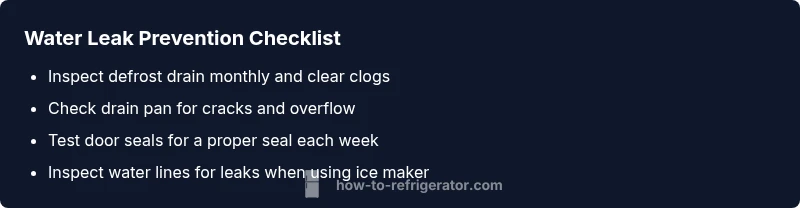
To prevent future blockages, perform periodic checks and gentle cleaning of the drain and pan, especially after long periods of high humidity or frequent door opening. Debris and small food particles can accumulate over time and restrict flow.
Step-by-step overview: door seals and drainage path
A compromised door seal allows warm air to enter, increasing condensation and moisture inside the fridge. Inspect seals for cracks or fraying, and replace if necessary. Ensure the gasket sits evenly against the frame when the door is closed. Misrouted drains or loose connections can also trap water along the drainage path. Inspect the drain hose for kinks or disconnections and reroute it to the correct slot that leads to the drain pan. Replacing worn gaskets and correcting drainage routing dramatically reduces recurring moisture.
Step-by-step overview: water inlet valve and ice maker
If the water inlet valve leaks or the ice-maker line is pinched, water can seep into the refrigerator interior. Check the inlet valve for any signs of dampness, corrosion, or mineral buildup. Tighten fittings only if you’re confident in your plumbing skills, and replace any crusty or cracked hoses. For ice-makers, ensure the ice mold fills correctly and the ejector arm isn’t stuck. After completing these checks, run the ice-maker to verify there are no leaks and observe the water line connections for a while to confirm stability.
Safety, maintenance, and prevention
Safety should guide every troubleshooting step. Always unplug the unit before working on internal components. Use a flashlight to inspect hidden drainage routes and never force components apart. When in doubt, consult the manual for proper disassembly procedures and avoid using metal tools that could cause a short or puncture a line. Regular maintenance—such as cleaning the drain pan, inspecting seals, and listening for unusual noises—helps prevent leaks. Establish a routine that aligns with the appliance’s age and usage patterns and adjust settings to avoid excessive condensation.
When to call a professional and what to expect
Some problems require professional service, especially if refrigerant lines or sealed systems are involved. If you notice persistent leaking after performing recommended checks, or you detect signs of refrigerant odor, contact a licensed technician. A pro can perform a proper leak test, replace defective seals, or service the defrost system using calibrated tools. Have model details, purchase date, and a clear description of the symptoms ready to streamline the service call. Timely expert help prevents further damage and preserves energy efficiency.
Steps
Estimated time: 45-60 minutes
- 1
Unplug the refrigerator
For safety, unplug the unit and move it away from the wall. This reduces the risk of electric shock while inspecting the back panels and connections.
Tip: Keep a towel handy to catch any residual moisture as you work. - 2
Access the defrost drain
Remove the rear access panel inside the freezer or the back panel on the outside if needed. Locate the defrost drain hose; you may see a small drain hole leading to a drain pan.
Tip: Take a photo of connections before touching to aid reassembly. - 3
Clear the drain blockage
Use a flexible plastic wire or a pipe cleaner to gently remove any buildup. Rinse with warm water to flush debris toward the drain pan.
Tip: Avoid metal tools that can scratch the tubing; gentle is best. - 4
Check the drain pan and hose
Inspect the drain pan under the fridge for cracks or overflow. Ensure the hose routes cleanly into the pan and isn’t kinked.
Tip: Wipe down surfaces to monitor any new leaks after testing. - 5
Inspect door seals
Examine door gaskets for cracks, brittleness, or gaps. Replace damaged seals and re-seat an aging door.
Tip: Close the door on a piece of paper to test the seal strength. - 6
Test the water inlet and ice maker
Check the water supply line for leaks; tighten fittings or replace a cracked tube. Run the ice maker to confirm no leaks occur during operation.
Tip: Turn off the water supply while replacing lines to avoid spills.
Diagnosis: Water pooling on the fridge floor or inside the cabinet
Possible Causes
- highClogged defrost drain
- mediumOverflowing defrost drain pan
- mediumFaulty door seal or gasket
- lowLeaking water inlet valve or ice-maker line
Fixes
- easyClear defrost drain and inspect pan; ensure water can flow to the drain pan below
- easyReplace damaged door seals or realign gasket to restore a proper seal
- mediumInspect water inlet valve and ice-maker tubing for leaks; tighten or replace as needed
- easyRe-route/reconnect drain hose and clean tray; recheck after running a test cycle
FAQ
What usually causes water to appear in the refrigerator?
Most often it’s a blocked defrost drain, a misrouted drain tube, or a door seal that isn’t sealing. Ice maker lines can also leak if fittings are loose. Start with these checks before considering major repairs.
Usually it’s a clogged drain or a door seal issue. Check the defrost drain and seal first, then inspect the water line if needed.
How can I stop water from dripping after I fix it?
Ensure the defrost drain is clear and the drain pan is intact. Re-seat or replace door gaskets if necessary, and verify the water line connections are tight.
Clear the drain, inspect the pan, and secure the water line to stop dripping.
Is a clogged defrost drain dangerous to ignore?
Ignoring a clogged drain can lead to mold growth and faster spoilage of stored food. It may also cause more substantial water damage if neglected.
Yes—mold and spoilage are real risks if you ignore a clogged defrost drain.
Do I need to defrost manually if I have water issues?
In many modern fridges, automatic defrost handles moisture. If you notice frost buildup, a manual defrost cycle might help, but follow your model’s manual for proper steps.
Automatic defrost usually handles this, but frost buildup may require manual intervention as described in your manual.
Can a faulty water inlet valve cause leaks?
Yes. A leaking valve can allow water to seep into the fridge interior. Inspect for dampness around fittings and replace the valve if needed.
A bad valve can leak, so check fittings and replace if needed.
When should I call a professional?
If the leak persists after checking drains, seals, and lines or if you sense refrigerant issues, contact a licensed technician for a proper diagnosis and safe repair.
If it keeps leaking after you’ve checked the basics, call a pro.
Watch Video
Top Takeaways
- Identify the source of moisture quickly.
- Prioritize defrost drain and door seals first.
- Never bypass safety procedures; unplug before work.
- Regular maintenance prevents future leaks.