Should Refrigerator Compressor Run All the Time? Fixes and Safety
Learn why a fridge compressor may run continuously, how to diagnose common causes, and safe steps homeowners can take before calling a professional. Includes practical checks and prevention tips.


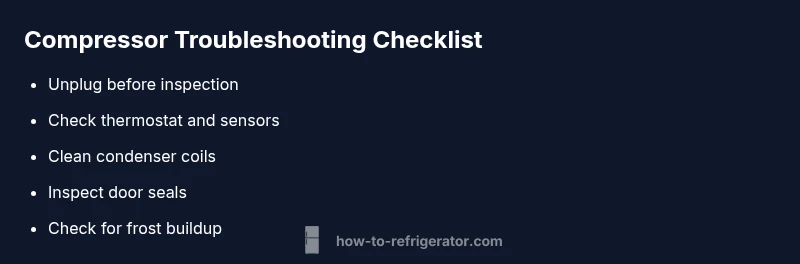
Most likely, a compressor running continuously points to thermostat, sensor, or airflow issues. Quick fix steps: verify the thermostat setting is around 37-40°F, clean the condenser coils, and inspect door gaskets for leaks. If the problem persists, proceed with the diagnostic flow to confirm the exact cause and safe next steps.
Why the refrigerator compressor might run all the time
Should refrigerator compressor run all the time? Not normally. In healthy refrigerators the compressor cycles on and off as needed to maintain the interior temperature. When it appears to run non-stop, it can be a sign of a problem that gradually increases energy use and wears out components. According to How To Refrigerator, homeowners should start with simple checks like thermostat settings and airflow before you dive into more involved tasks. The How To Refrigerator team found that many early symptoms are linked to controls that are set too low, or to airflow obstructions rather than a failed component. This section explains why continuous running happens, how to spot the most common culprits, and what you should check first to avoid unnecessary repairs or wasted energy.
Common causes to consider
There are several frequent reasons a fridge might sound like it is on a constant cycle. A mis-set or faulty thermostat or temperature sensor can tell the compressor to stay on longer than needed. Dirty condenser coils or restricted airflow around the back or sides of the appliance reduce heat rejection, forcing the compressor to work overtime. A damaged door gasket or a door left ajar can let warm air sneak in, causing the unit to run longer. Frost buildup from a faulty defrost system can also cause unusual cycling. If you’re wondering should refrigerator compressor run all the time, start by inspecting these common causes. If any of these conditions are present, address them first to see if the cycle returns to normal. Based on insights from How To Refrigerator, many continuous-running cases are linked to airflow or sensor faults rather than a permanent failure.
Safety first: unplug before inspection
Safety is non-negotiable when troubleshooting an appliance. Before touching any internal components, unplug the refrigerator from the wall outlet. If the unit is in a kitchen with a GFCI outlet, test the outlet first and avoid pulling on cords. Do not attempt to discharge refrigerant or access sealed components. Keep children and pets away as you work. After powering down, allow the cabinet to cool for a few minutes before checking exterior coils, vents, and doors. Use a flashlight to inspect hard-to-see areas rather than leaning or prying. If you smell burning insulation or notice damaged wiring, stop immediately and call a professional.
Quick checks you can perform today
Start with the easiest checks that don’t require disassembling the fridge. Verify the thermostat setting; most foods keep at about 37-40°F and the freezer at 0°F. Check the interior temperature with a thermometer to confirm it’s close to the target. Inspect the door seals for cracks or gaps and ensure they close tightly. Look for obvious frost or ice buildup in the freezer that might indicate a defrost problem. Finally, ensure there is ample clearance around the back and sides of the appliance for proper heat dissipation. If any of these checks reveals a deviation, correct it and monitor performance for a few hours.
Testing the thermostat and sensors
Thermostat and temperature sensors control when the compressor turns on. To test, place a thermometer in the center of the fresh food compartment and record the steady reading after a few hours. If the temperature remains far from your target despite the unit running, the sensor or thermostat may be faulty and require replacement. Some newer models have digital displays with a diagnostic mode; consult the owner's manual for how to access it. Note that thermostat components can fail gradually, so a reading that’s only slightly off could still affect cycling.
Airflow, coils, and door seals
Condenser coils are the engine of the cooling system. If they’re dusty or blocked by lint, heat exchange suffers and the compressor has to run longer. Use a soft brush or vacuum to remove dust from the coils behind the bottom front grille or on the back of the unit, following manufacturer guidelines. Also check that interior vents are unobstructed and the interior is not overfilled, which can push warm air toward the cooling fans. Inspect the door seals; a loose or cracked gasket lets warm room air in whenever the door opens, prompting longer runtime.
Defrost system and frost buildup
Frost in the freezer can indicate a malfunctioning defrost timer, heater, or sense control, causing the heater to stay on or not shut off as designed. If you see frost accumulating along the walls or shelves, run the defrost cycle if your model supports it, or manually defrost following the manual’s instructions. Ice buildup can push the evaporator away from the air channels, reducing cooling efficiency and prolonging compressor operation. After defrosting, monitor cooling to ensure the cycle returns to normal.
When to call a professional and what to expect
If none of the quick checks and routine maintenance resolves the issue, it’s time to contact a licensed appliance technician. Continuous running can signal a failing start relay, a sensor problem, or a sealed system concern that requires specialized tools. A pro will perform measurements with a refrigerant gauge, test electrical connections, and validate temperatures at multiple points. Ask for an upfront quote and schedule a service window that minimizes disruption. The goal is to restore proper cycling without exposing you to safety risks or costly refrigerant work.
Prevention: keeping cycling normal
Regular cleaning, dust removal, and careful monitoring help prevent the compressor from running longer than necessary. Clean condenser coils every six months and check door seals during seasonal maintenance. Keep the fridge in a well-ventilated area, away from heat sources, and avoid overpacking the shelves. Record temperatures periodically and adjust the thermostat if you notice drift. With proactive care, you can reduce energy use and extend the life of the compressor, so it doesn’t have to run all the time.
Steps
Estimated time: 30-60 minutes
- 1
Power off safely and prepare workspace
Unplug the refrigerator and remove any objects blocking access to the rear or bottom vents. Move food away from the coils area and keep a towel handy for condensation. This step reduces risk while inspecting components.
Tip: Always unplug before touching electrical parts. - 2
Check thermostat settings
Ensure the temperature control is not set too low. If you have a sensor-based model, note the reading on the display and compare to the manual’s target range. Make a small adjustment and observe for several hours.
Tip: Use a fridge thermometer to verify actual temperatures. - 3
Inspect condenser coils and ventilation
Locate the coils (usually behind a grille or at the back). Use a brush or vacuum to remove dust until the coils are clean and free of debris. Ensure there is several inches of clearance for airflow.
Tip: Do not use metal tools on coils to avoid damage. - 4
Examine door seals and interior airflow
Check gaskets for cracks; run a simple candle test or insert a thin piece of paper to see if it seals. Clear any items that block vents inside the fridge. Poor airflow can keep the compressor running longer.
Tip: Replace worn seals promptly to restore proper sealing. - 5
Look for frost buildup and defrost as needed
If you notice frost in the freezer, run the defrost cycle (if available) or manually defrost following the manual. Frost blocks air channels and reduces cooling efficiency.
Tip: Never scratch frost with sharp objects. - 6
Test after reassembly and monitor cycles
Plug in the unit and allow it to stabilize. Listen for cycling patterns over several hours and check interior temperatures. If cycles return to normal, you’ve addressed the issue.
Tip: Keep a log of temperatures for a week for trend analysis. - 7
Evaluate the need for professional service
If symptoms persist after these steps, a licensed technician may need to test electrical components or the sealed system.
Tip: Request a written estimate before work begins. - 8
Document preventive habits
Create a simple maintenance routine to keep coils clean, doors sealing, and vents clear. Regular checks help prevent future continuous running.
Tip: Schedule semiannual maintenance reminders.
Diagnosis: Compressor runs continuously after power is on
Possible Causes
- highIncorrect thermostat setting or faulty temperature sensor
- highDirty condenser coils or obstructed airflow
- mediumDoor gasket leaks or the door stays ajar
- lowDefrost system failure causing frost buildup
- lowFaulty start relay on older models
Fixes
- easyAdjust thermostat to recommended setting and test sensor with a thermometer
- easyClean condenser coils and clear the area around the fridge to improve airflow
- easyReplace worn door gaskets and ensure proper door seal
- mediumReview defrost cycle and manual defrost if frost is detected; consult manual if unsure
- mediumReplace faulty start relay or contactor if applicable; consider professional service
- hardIf none of these fix the issue, schedule inspection by a licensed technician
FAQ
Why does my refrigerator compressor run non-stop?
Non-stop running usually points to thermostat or sensor problems, dirty coils, or airflow restrictions. It can also result from a leaking door gasket or frost-related issues. Start with quick checks and then move to more advanced diagnostics.
Non-stop running is usually caused by thermostat, sensor, or airflow problems. Start with basic checks and then diagnose further.
Is it dangerous if the compressor runs all the time?
Continuous operation can raise energy use and component wear, potentially shortening the fridge life. It may also indicate a fault that could worsen over time. Assess the cause and consider professional help if unsure.
It can waste energy and wear parts, so it’s worth investigating and not ignoring.
Can a faulty thermostat cause continuous running?
Yes. A thermostat that reads wrong or a failing temperature sensor can keep the compressor energized longer than necessary. Calibration or replacement may be required.
Yes, thermostat or sensor faults can keep the compressor on too long.
How do I know if the door seal is the problem?
A damaged or loose door gasket allows warm air in. Inspect for cracks, use the paper test, and replace if needed. A poor seal can prolong compressor cycles.
If the door seal is worn or loose, it could let in warm air and keep the fridge running.
When should I call a professional?
If basic checks don’t restore normal cycling or you suspect a sealed-system issue, a licensed technician should diagnose electrical components, refrigerant levels, and compressor health.
Call a professional if it keeps running after checks or you suspect a bigger problem.
Watch Video
Top Takeaways
- Resolve cycling issues with thermostat and airflow checks
- Door seals and frosty buildup are common culprits
- Safety comes first—unplug before inspecting
- If unresolved, a licensed technician should assess sealed-system concerns