Samsung Refrigerator Water Dispenser Repair: A Homeowner's Guide
Learn practical, step-by-step Samsung refrigerator water dispenser repair tips for homeowners. Diagnose symptoms, safety guides, and when to call a pro.


Learn how to troubleshoot and repair a Samsung refrigerator water dispenser with this step-by-step guide. You’ll diagnose common symptoms, perform safe, practical repairs, and know when to call a pro. Start by turning off power, inspecting the water line, and checking the filter, then follow our organized steps to restore flow.
Understanding the Samsung Water Dispenser System
The Samsung refrigerator water dispenser is a compact, interconnected system that draws water from your home supply, passes it through a filtration housing, and delivers it through the door nozzle. In many models, the dispenser relies on a water inlet valve, a dispenser switch or solenoid, tubing, and sometimes a shared line with the ice maker. When you perform Samsung refrigerator water dispenser repair, you’re really diagnosing a flow issue caused by one or more of these parts, plus filters and line conditions. A clogged filter, a kinked or frozen line, or a worn valve are common culprits. For homeowners, the goal is to verify power, confirm water supply, inspect the line, then check the filter and valve in a logical sequence. As you read, you’ll see how these components interact: a healthy valve opens, the pump or gravity moves water, the filter keeps particles out, and the line carries water to the nozzle. The How To Refrigerator team emphasizes that most dispenser problems are solvable with careful inspection and the right parts. If you’ve ever wondered how to approach this repair without risking damage, you’re in the right place for a structured, safety-first method that aligns with best practices in appliance care and maintenance.
The goal of this guide is practical repair, not speculation. Throughout, you’ll find specific steps and checks you can perform with common tools, plus clear signals that indicate when a replacement part is necessary. By focusing on the dispenser’s core path—water supply, filter, valve, and line—you’ll often pinpoint the root cause quickly. The topic Samsung refrigerator water dispenser repair is broad because it encompasses several failure modes, but the core process remains consistent: confirm power and supply, test the valve, inspect lines, filter, and fittings, then test flow. For readers of How To Refrigerator, this approach integrates safety, accessibility, and real-world results.
In this introduction to the repair journey, you’ll see how quick checks can save you time and prevent unnecessary disassembly. Keep in mind that while many problems respond to DIY fixes, certain issues may require professional service, especially if the dispenser’s electronics or internal cooling systems are implicated. By following these steps, you’ll be well-equipped to decide whether you can resolve the problem safely at home or need expert help. Remember, the ultimate objective is to restore reliable water flow without compromising safety or warranty considerations.
Tools & Materials
- Phillips head screwdriver(To remove dispenser panels and screws)
- Flathead screwdriver(For prying or seat adjustments as needed)
- Nut driver set(Useful for hose clamps and fittings)
- Multimeter(Check valve coil continuity and wiring)
- Pliers (needle-nose)(Grip hoses and fittings safely)
- Towel or rag(Catch drips and keep work area dry)
- Safety goggles(Protect eyes from splashes or debris)
- Replacement water filter(New filter to restore flow and quality)
- Short lengths of 1/4 inch tubing(Optional spare line if a section needs replacement)
- Container for water catch(To collect any residual water during testing)
Steps
Estimated time: 60-90 minutes
- 1
Power down and disconnect
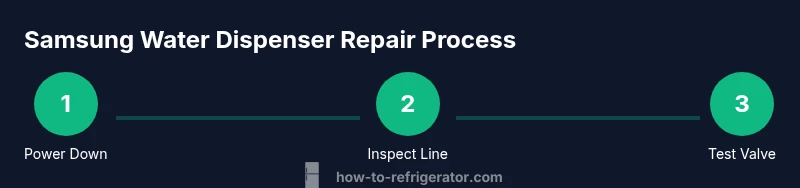
Unplug the refrigerator from the wall outlet and shut off the home water supply valve feeding the fridge. Detach the water line at a convenient access point to avoid leaks and place a towel beneath any residual water. This ensures you won’t receive an electric shock or cause a spill when you begin inspection.
Tip: Keep a labeled container for any drips and record the model for parts compatibility. - 2
Access the dispenser module
Remove the dispenser panel by loosening its screws with the appropriate screwdriver. Gently pry away any protective covers to expose the filter housing, inlet valve, and tubing. Keep screws organized so you can reassemble easily.
Tip: Work slowly and avoid force; misaligning plastic clips can crack housings. - 3
Inspect and replace the water filter
Remove the existing filter and inspect its condition. If the filter is discolored or clogged, replace it with a fresh unit designed for your specific Samsung model. A blocked filter is a frequent cause of weak or no flow.
Tip: Pre-soak new filters per manufacturer instructions and check the gasket seating for a tight seal. - 4
Check the water inlet valve
Locate the inlet valve assembly and test the coil with a multimeter for continuity. If the coil is open or shorted, replace the valve. A faulty valve is a common root cause of intermittent or absent dispenses.
Tip: When removing the valve, inspect the wire harness for corrosion or loose connections. - 5
Inspect the water line for kinks or freezing
Trace the line from the valve to the dispenser. Look for sharp bends, crimps, or ice buildup. If the line is frozen, allow it to thaw in a heat-free environment and ensure there’s adequate insulation to prevent future freezing.
Tip: Do not apply direct heat to hoses; use room-temperature thawing or gentle warming with a hair dryer set on low if approved by the manufacturer. - 6
Test the dispenser switch and solenoid
With power restored, press the dispenser pad or lever to energize the solenoid. You should hear a click indicating the valve is opening. If there is no response, recheck wiring, connectors, and any safety interlocks.
Tip: Never bypass interlocks; a working safety circuit is essential for safe operation. - 7
Reassemble and run a test
Reconnect the water line, reinstall the filter, and secure all screws. Restore power and slowly run water into a cup to verify flow and check for leaks at all fittings. If the water flows consistently, you’ve likely resolved the issue.
Tip: Test multiple times from different temperatures to ensure consistent performance. - 8
What if it still won’t work?
If you’ve completed these steps and the dispenser still fails, the problem may lie in the electronic control board or a more complex plumbing issue. Consider contacting a professional technician or the manufacturer's service program if under warranty.
Tip: Document every test you performed; it helps a pro diagnose faster and could protect your warranty.
FAQ
Why is there no water at the Samsung dispenser?
No water can result from a clogged filter, a frozen or kinked line, a faulty inlet valve, or a disconnected hose. Start by replacing the filter, inspect the water line for kinks or ice, and test the inlet valve with a multimeter before replacing it.
If the dispenser isn’t delivering water, begin with the filter and line checks, then test the valve. Replace components only after confirming the cause.
Can I fix a leaking water line myself?
Yes, you can address minor leaks by tightening fittings and replacing damaged tubing. If the leak persists after reseating fittings, replace the line or valve as needed. Always power down before handling lines.
You can often fix a small leak by reseating fittings or replacing damaged tubing; if the leak continues, replace the affected parts.
How do I know if the water inlet valve is defective?
A defective inlet valve may show no flow, intermittent flow, or inconsistent pressure. Use a multimeter to test coil continuity and visually inspect for corrosion or burnt connectors. Replace if abnormal readings or damage are found.
Test the valve coil with a meter and check for corrosion to confirm if replacement is needed.
How often should I replace the water filter in a Samsung fridge?
Most manufacturers recommend replacing the water filter every 6 to 12 months, depending on usage and water quality. If you notice reduced flow or off-tastes, replace sooner.
Replace the filter every 6 to 12 months or sooner if you notice poor flow or off-tastes.
When should I call a professional for Samsung water dispenser issues?
Call a professional if you have electricity or water hazards, if a new valve or wiring repair is required, or if the issue remains after basic DIY checks. Warranty terms may also affect your decision to service.
If you’re unsure after basic checks or encounter wiring/electrical concerns, it’s best to call a pro.
Can a faulty dispenser affect ice production or temperature?
Yes. A malfunctioning water line or valve can influence ice maker flow and overall temperature stability. Resolve dispenser issues to prevent cascading problems with ice and cooling.
Dispenser problems can impact ice and cooling, so fix dispenser issues to keep ice and temperature stable.
Watch Video
Top Takeaways
- Power down before any inspection or repair
- Filter status is a common culprit for low or no flow
- Check for line kinks, freezes, and valve integrity
- Test flow after reassembly to confirm success
- Know your limits and call a pro when electronics or leaks persist