Refrigerator Water Dispenser Not Working? Quick Troubleshooting Guide
Learn fast, proven steps to diagnose and fix a refrigerator water dispenser not working. From filters to lines, How To Refrigerator walks homeowners through safe, actionable repairs.


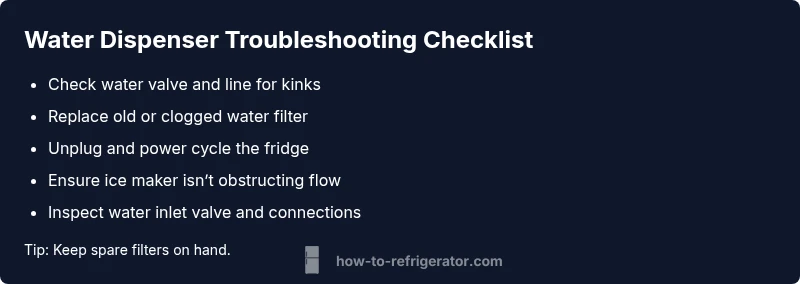
Most often, the water dispenser not working is caused by a blocked or frozen supply line, or a clogged filter. Start with the simplest checks: ensure the water valve is open, inspect the line for kinks or frost, and replace a dirty filter. If that doesn’t fix it, power cycle the fridge and verify the ice maker isn’t causing a flow issue.
Why the Water Dispenser Not Working: Common Causes
When the refrigerator water dispenser not working, most problems come from simple, fixable causes. According to How To Refrigerator, the most frequent culprits are a blocked or frozen supply line, a clogged water filter, or a water valve that isn’t fully open. Other possibilities include a faulty water inlet valve, an ice-maker that blocks flow, or air in the line after maintenance. Pinpointing the exact cause requires a quick, structured check. In many homes, you can fix the issue by thawing a frozen line, replacing an old filter, or reseating a loose connection. Understanding these common failures helps you act quickly and safely, often avoiding a service call. Below we outline the main causes and how to distinguish between them, so you can act fast and safely.
Quick Checks You Can Do Right Now
Before you tear into fixes, do these quick checks to see if the problem is something obvious. First, confirm the water supply valve behind the fridge is fully open. Then inspect the water line for any kinks, bends, or frost buildup; a kinked or frozen line is a frequent cause of no water. Next, check the water filter status; a clogged filter reduces flow or stops dispensing entirely. If your model has an ice maker, ensure it isn’t jammed or actively freezing the water line. Finally, perform a simple power reset by unplugging the unit for a few minutes and plugging it back in to reset the dispenser module. If you notice leaks, frost on the line, or a persistent no-water condition after these checks, move to the diagnostic flow.
Diagnostic Flow: Symptom to Diagnosis
Symptom: Water is not coming out of the dispenser or you hear only an empty click. Diagnosis: The issue usually involves the water supply path, not the motor, especially when you see ice in the tray or hear the pump run without delivering water. Work through the following sequence to confirm the root cause: 1) Verify the shutoff valve is open and the supply line isn’t kinked. 2) Inspect the line for frost or ice build-up. 3) Check the filter and replace if needed. 4) Test the water inlet valve by feeling for a click when the dispenser is pressed; replace if there is no click or if it remains cool. 5) Look for ice maker interference or a frozen drain. If the symptom persists after these steps, you likely have a faulty inlet valve or control module that needs professional service.
Step-By-Step Fixes for the Most Common Cause
The most common fix for a refrigerator water dispenser not working is to address a blocked or frozen supply line or a clogged filter. The step-by-step guide below gives you a precise sequence to restore flow with minimal risk. Begin with safety: unplug the fridge and shut off the water supply. Then inspect the visible water line for kinks. If you see frost, thaw the line by gently warming the area and letting the ice melt; avoid using direct heat. Remove and replace the water filter if it’s old or discolored; run a short flush to clear air. Reconnect the line, ensure the supply valve is fully open, then reconnect power and run the dispenser to test flow. If water still does not flow, verify the water inlet valve is locking in; replace if you hear no solenoid click. Re-check for leaks and secure all connections. Finally, test for normal operation and observe for any frost forming again. Pro tip: keep spare filters on hand and label the fridge’s water shutoff valve.
Safety Tips & Common Mistakes
Safety comes first when working on a fridge. Always unplug the unit before touching water lines or electrical components. Do not force connections or use pliers on plastic fittings. Keep towels handy for possible spills and check for leaks after each reassembly. Common mistakes include skipping the water shutoff, ignoring frost on lines, and assuming a noisy valve means it is functioning properly. If you notice burning smells, sizzling sounds, or signs of water leakage around electrical components, stop and seek professional help immediately.
Prevention: Keeping the Water Dispenser Healthy
To reduce recurring issues with the water dispenser not working, establish a simple maintenance routine. Periodically inspect the water line for kinks and frost, replace the water filter according to the manufacturer’s schedule, and run the dispenser briefly to verify flow after any maintenance. Keep the ice maker clean and ensure it isn’t overfilling or creating pressure on the supply. If your home uses a long, external water line, consider insulating exposed sections to prevent freezing during cold months. Regular checks help you catch problems before they escalate and minimize downtime.
When to Call a Pro
If you have completed the diagnostic flow and the dispenser still doesn’t work, or you detect persistent leaks, unusual noises, or electrical concerns, it’s time to call a professional. In many cases, a faulty water inlet valve, dispenser control board, or a complex ice-maker interaction requires specialized tools and expertise. Having a pro evaluate your system can prevent water damage and ensure safe operation. If you’re unsure, start with a service call sooner rather than later to avoid more extensive damage.
Steps
Estimated time: 45-60 minutes
- 1
Safety first
Unplug the fridge and shut off the main water supply. Keep a towel nearby in case of drips and ensure the area is dry before you begin.
Tip: Label the power cord or unplug using a grounded outlet for safety. - 2
Inspect the water line
Check the visible water line for kinks, twists, or obvious frost. If you see frost, you will need to thaw the line before attempting other fixes.
Tip: Do not force bends; gently reposition the line and ensure it’s routed away from heat sources. - 3
Replace the water filter
If the filter is old or discolored, replace it with a compatible unit. After replacement, run water through the dispenser to flush air from the line.
Tip: Always use the correct filter model for your fridge to ensure proper flow. - 4
Thaw a frozen line
If frost is present, thaw the line gradually. Avoid direct heat; you can use warm towels or place the unit in a warmer area for a while.
Tip: Check the line periodically to prevent overheating or leaks. - 5
Test the water inlet valve
With the fridge still off, disconnect and inspect the inlet valve. When you press the dispenser, a healthy valve should click. If there is no click, the valve may need replacement.
Tip: If you’re unsure about testing the electrical side, skip this step and contact a pro. - 6
Reconnect and test
Reconnect all fittings, turn the water supply back on, plug the fridge back in, and test the dispenser. Observe for leaks and verify steady water flow.
Tip: Test with a cup and watch for drips to catch slow leaks early. - 7
Document and decide
If flow is restored, note what fixed the issue. If not, prepare for professional service and collect model and symptom details to share with a technician.
Tip: Note the model number and pump sound; this helps a technician diagnose quickly.
Diagnosis: Water dispenser won't dispense water
Possible Causes
- highBlocked or frozen supply line
- mediumClogged or old water filter
- mediumWater inlet valve failure
- lowIce maker interference or jam
Fixes
- easyOpen the water valve and remove kinks from the supply line; thaw line if frost is present
- easyReplace the water filter and flush the line to remove air
- mediumTest and replace the water inlet valve if there is no click when the dispenser is pressed
- easyInspect the ice maker for jams or defrost the line if an ice jam is blocking flow
FAQ
Why isn't my refrigerator water dispenser working at all?
Common culprits are a closed valve, a frozen line, or a clogged filter. Start with the simple checks and follow the diagnostic flow to pinpoint the cause.
Check the valve, line, and filter, then run through the diagnostic flow to find the cause.
Can a clogged water filter stop the dispenser from working?
Yes. A clogged filter can dramatically reduce or stop water flow. Replace the filter and flush the line.
Yes, replace the filter and flush the line.
Is it safe to thaw a frozen line by leaving the fridge running?
Thawing is safe if done slowly and with the unit unplugged and the water supply off. Do not apply direct heat.
Unplug, thaw slowly, avoid direct heat.
How often should I replace the water filter?
Follow the manufacturer’s schedule; replace when flow slows or you notice reduced performance.
Follow the manufacturer's schedule.
Will defrost or ice maker issues affect the water dispenser?
Yes, a defrost cycle problem or ice jam can block the water line and stop dispensing.
Yes, a defrost cycle can affect flow.
Watch Video
Top Takeaways
- Start with simple checks before disassembly.
- Replace old filters and thaw frozen lines promptly.
- Test the valve and line for leaks after each fix.
- Use the diagnostic flow to pinpoint root causes.
- Call a pro for valve or control board issues.