Refrigerator Repair Kenmore: A Homeowner's Step-by-Step Guide
A homeowner-friendly, step-by-step guide to diagnose and repair common Kenmore refrigerator issues, with safety tips, tools, parts, and maintenance strategies.


Fix common Kenmore refrigerator problems at home with this step-by-step guide. You’ll learn how to diagnose not cooling, frost buildup, leaks, and noisy operation, plus safe disconnections and basic parts checks. Before you start, gather essential tools, unplug the unit, and review safety precautions. This quick answer sets you up for the deeper, hands-on steps that follow.
Overview of Kenmore Refrigerator Repair Considerations
Kenmore refrigerators are a staple in many homes, and most failures follow repeatable patterns. According to How To Refrigerator Team, diagnosing common Kenmore issues starts with understanding a few core ideas: not cooling, excessive frost buildup, and leaks or moisture intrusion. Recognizing these patterns helps homeowners triage quickly, avoid unnecessary parts replacements, and decide when to call a pro. This guide focuses on practical, model-agnostic steps you can perform on typical Kenmore units—whether side-by-side, French-door, or top-freezer designs. With the right approach, you can regain consistent cooling, reduce warm periods, and extend the life of your appliance. You’ll also learn how small maintenance tasks can prevent costly breakdowns. Throughout this article, you’ll find actionable steps, safety reminders, and references to common parts that wear out over time. By following a homeowner-friendly process, you can diagnose, test, and repair many issues without voiding warranties or specializing in advanced repair. The goal is to empower you with confidence, so you can decide whether the repair is a quick fix or a signal that professional service is warranted. This is a practical, hands-on guide designed for real kitchens and real households.
Safety and Tools for Kenmore Refrigerator Repair
Safety first: unplug the refrigerator before touching any internal components and keep a dry workspace. If you must move the unit, have another person assist and use a dolly or a stable platform. Wear safety glasses and gloves to protect against sharp metal edges and accidental sharp edges on shelves. It’s wise to disconnect any water supply line if you will be handling ice-maker components, to prevent leaks. Gather essential tools so you don’t have to search mid-task: a digital multimeter, a voltage tester, a Phillips and flat-head screwdriver, nut drivers, pliers, a flashlight, and a clean tray for screws. Keep old towels handy for minor drips. If your model uses specialized connectors, consult the user manual to avoid damaging plastic connectors. After you complete each step, recheck the power source before testing cooling performance. If at any point you feel unsure, stop and consult a professional. How To Refrigerator emphasizes safety as the foundation of any repair project.
Diagnosing Not Cooling and Frost Issues
Not cooling is the most common Kenmore problem homeowners face. Start by confirming the thermostat setting and that the unit is getting power. If the temperature control is correct, inspect the condenser coils and remove dust or pet hair that can block airflow. Dirty coils reduce cooling efficiency and increase energy use. Next, check the door seals; a worn gasket can let warm air seep in and confuse the thermostat. A simple paper test can help you gauge seal integrity: close a sheet of paper in the door and feel resistance. Frost buildup on the evaporator coil indicates a defrost problem; if frost covers more than a quarter of the coil, you may have a blocked defrost drain or faulty defrost heater. When in doubt, perform a controlled defrost according to your model’s manual. How To Refrigerator notes that these symptoms often point to the same few parts, making a careful inspection efficient. Based on How To Refrigerator research, repeating checks on the thermostat, coils, and defrost system yields the fastest path to a fix.
Leaks, Condensation, and Water Dispenser Problems
Water-related issues on Kenmore appliances can arise from a few reliable culprits: the inlet valve, supply line, defrost drain, and pan assembly. Start by turning off the water supply and inspecting the line for kinks or cracks; replace with a flexible supply line if needed. For leaks inside the cabinet, look for damp insulation around the evaporator drain pan and confirm that the drain is clear of ice or debris. Condensation can occur if the unit is overfilled or the door remains ajar; ensure proper leveling and door alignment. If your model has an ice maker, test the water inlet valve and check the ice-maker connector for loose fittings. A slow drip from the pan may indicate a clogged defrost drain or a faulty drain heater. Regular defrost maintenance can prevent mineral buildup from causing leaks. The How To Refrigerator Team suggests documenting any leaks with photos to help a technician diagnose the problem efficiently.
Replacing Common Components: Defrost Heater, Evaporator Fan, Start Relay
Before replacing parts, verify the component is indeed faulty with measurements and visual inspection. If the defrost heater is faulty, you may notice frost accumulation and a continuous cooling cycle. Replacing the evaporator fan motor can silence rattling and restore airflow; ensure you disconnect power and handle the fan blades carefully. A failing start relay on the compressor can cause intermittent cooling loss or a warm refrigerator, and replacing it with a compatible Kenmore part is usually straightforward. For any replacement, consult your model’s parts diagram to identify the exact screw locations and harness connections. After installing a new part, run a brief test to confirm the compressor starts smoothly and the temperature drops as expected. If you’re unsure about electrical testing, skip the test and arrange professional service. How To Refrigerator recommends double-checking connectors and securing any loose wiring to prevent future faults.
Maintenance Practices to Extend the Life of Kenmore Refrigerators
Preventive care pays off. Clean condenser coils every six months or more often if you have pets or dusty vents. Ensure the unit sits level to avoid gasket stress and poor door sealing. Check door seals for wear and replace any damaged gaskets promptly to preserve efficiency. Keep the interior clean and dry to minimize odor transfer and bacteria growth. Replace the air and water filters (if applicable) on schedule, using manufacturer-recommended parts. Keep the drain path clear by flushing with warm water or a mild cleaning solution every few months. Regular checks of the temperature control settings and energy-saving modes can also help lower utility costs. By incorporating these routines, you reduce the likelihood of unexpected failures and extend the life of your Kenmore refrigerator.
Troubleshooting Flowchart and When to Call a Pro
Create a simple decision flow in your mind: is the unit cooling? Are there unusual noises? Is there moisture around the drain pan? If not cooling, verify power and thermostat; if the coils are dirty, clean them; if there is heavy frost, consider defrost system issues. If you cannot locate a fault using these checks, or if you encounter burnt components, or if you smell burning plastic, stop and contact a licensed technician. How To Refrigerator suggests using a service call for complex issues such as sealed system leaks or refrigerant problems. For safety reasons and to protect your warranty, avoid refrigerant handling yourself. The How To Refrigerator team emphasizes documenting the symptoms and part numbers to speed up diagnosis if you hire a pro.
Tools & Materials
- Digital multimeter(to test voltages and continuity)
- Screwdriver set (Phillips & flat-head)(various sizes for panels and terminals)
- Nut drivers (various sizes)(for screws and terminal blocks)
- Needle-nose pliers(for wire disconnects and bending wires safely)
- Vacuum or brush for coils(to clean condenser coils without damage)
- Flashlight(to inspect dark corners like panel gaps)
- Replacement parts kit(only if you know the faulty part (defrost heater, evaporator fan, start relay))
- Safety gloves & glasses(personal protection during repair)
- Towels or rags(for spills during defrosting)
Steps
Estimated time: 60-120 minutes
- 1
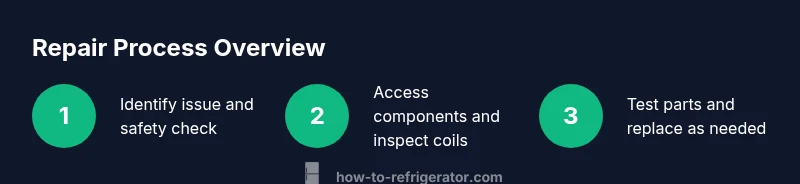
Unplug the refrigerator and clear the area
Power down the unit and remove items from shelves to provide a safe workspace. This first step reduces the risk of electric shock and makes panel screws easy to reach. Confirm the area around the unit is dry before proceeding to the back and cabinet panels.
Tip: Label screws or use a tray to keep them organized. - 2
Move the fridge away from the wall
Gently pull the appliance enough to access the rear panel without bending cords or damaging flooring. This step is essential to reach the condenser coils and service components safely.
Tip: Ask a helper to prevent tipping and protect the floor. - 3
Remove the rear cover to reach condenser coils
Use the appropriate screwdriver to remove screws securing the back panel. Once removed, inspect the condenser coils for dust and debris that block airflow and reduce cooling efficiency.
Tip: Keep track of screws and avoid touching the fan blades. - 4
Vacuum and brush condenser coils
Gently vacuum the coils and brush away dust. Ensure the airflow paths are clear and fins are not bent. Reassemble or test cooling after a quick check to see if performance improves.
Tip: Be careful with delicate coil fins. - 5
Inspect door seals and perform a simple test
Check gaskets for cracks or warping. Use a simple paper test: close a sheet of paper in the door; if it slides out easily with minimal resistance, the seal may be worn.
Tip: A bad seal can cause frost buildup and energy waste. - 6
Check evaporator frost and defrost system
If frost is present on the evaporator coil, the defrost system may be faulty. Inspect the defrost drain for clogs and look for obvious heater or timer issues.
Tip: Defrost issues are common; don’t ignore persistent frost. - 7
Test defrost timer and heater with a meter
Use a digital multimeter to test continuity on the defrost heater and timer according to your model data. Replace a faulty component with a compatible Kenmore part.
Tip: If you’re unsure about electrical testing, seek professional help. - 8
Check compressor start device and fan
Inspect the start relay and ensure the compressor engages smoothly. Listen for a steady compressor hum and verify the condenser fan runs unobstructed.
Tip: Do not bypass safety devices or refrigerant lines. - 9
Reassemble, power on, and test cooling performance
Reattach panels, reconnect the power, and allow the unit to reach target temperature. Confirm cold air flow and monitor for unusual sounds or leaks during a 30–60 minute test period.
Tip: If cooling doesn’t resume promptly, consider professional assessment.
FAQ
What are the most common Kenmore refrigerator problems?
Not cooling, frost buildup, leaks, and unusual noises are the most frequent issues. This guide covers diagnosing and addressing them with safe, home-based steps.
The most common Kenmore refrigerator problems are not cooling, frost buildup, leaks, and odd noises. This guide helps you diagnose and fix them safely at home.
Can I fix my Kenmore fridge myself, or should I hire a professional?
Many tasks, like cleaning coils or replacing a fan, are doable for homeowners with caution. More complex issues—sealed refrigerant faults or compressor problems—should be handled by a licensed technician.
DIY fixes work for simple tasks, but sealed refrigerant issues require a professional.
What tools do I need for basic Kenmore fridge repair?
Essential tools include a digital multimeter, screwdrivers, nut drivers, pliers, a flashlight, and safety gear. An optional replacement parts kit can save time if you know which part fails.
You'll need a multimeter, screwdrivers, pliers, and safety gear for basic repairs.
Is it safe to troubleshoot a refrigerator while it's plugged in?
No. Always unplug the refrigerator before inspecting electrical components. If you must work near water or with the ice maker, disconnect the water supply line as well.
Always unplug first; avoid working on it plugged in.
How long should a Kenmore refrigerator repair take?
Basic maintenance and simple parts replacement can be completed in about 60-120 minutes. More complex diagnostics may take longer or require part availability.
Most DIY fixes take about 1-2 hours, depending on the issue.
Which Kenmore parts are most commonly replaced?
Defrost heaters, evaporator fans, door seals, and start relays are among the most frequently replaced parts, depending on the model and symptoms.
Defrost heater, evaporator fan, door seals, and start relays are common replacements.
Watch Video
Top Takeaways
- Power off before inspection and move with a partner when needed
- Clean coils and test door seals to fix many issues
- Follow model-specific manuals for defrost/electrical tests
- Call a professional for sealed-system or refrigerant problems