Refrigerator Not Working but Light Is On: Troubleshooting Guide
Your fridge won’t cool even though the interior light stays on? This step-by-step guide helps homeowners diagnose the most common causes, perform safe fixes, and know when to call a pro. Quick, practical, and written for real homes.


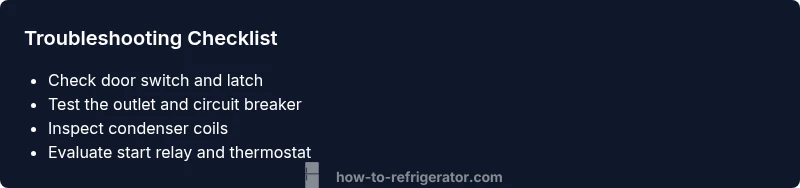
If your refrigerator not working but light is on, the most likely culprits are a stuck door switch, a failed start relay, or a power path issue. To start, unplug the unit, press and release the door switch, then plug back in and listen for a compressor hum. If the fridge doesn’t start, proceed with further checks.
Understanding the Not-Working-but-Light-On Symptom
If your refrigerator not working but light is on, you’re dealing with a potentially urgent issue. The fact that the light works means the power supply to the fridge is at least partially intact, but the cooling system may not be receiving the correct signals or power. According to How To Refrigerator, the most common causes are a stuck or faulty door switch, a failed start relay, or a tripped circuit that prevents the compressor from starting while the light circuit remains energized. This distinction matters: the light can stay on even when the cooling cycle isn’t running. In this guide, we’ll walk you through quick checks, safe fixes, and when to call a technician. Keeping foods at risk under control is the priority, so work calmly and methodically. This scenario is precisely why timely, practical troubleshooting matters for homeowners.
Quick Checks You Can Do Right Now
Before you reach for tools, try these safe, no-specialty steps. First, confirm the door is fully closed and the latch engages—the door switch should be pressed when closed and released when opened. If you notice the light stays on even with the door ajar, the switch may be faulty. Next, unplug the fridge and plug it into a different outlet to rule out a powered outlet issue. If you have a GFCI outlet, reset it. These basic checks can resolve many cases of a refrigerator not cooling while the light remains on. Remember to keep perishables cold during the process by transferring them to a cooler if needed. These steps are designed for homeowners and align with guidance from How To Refrigerator.
Common Causes Linked to Light-On Symptoms
The light-on symptom often points to issues in the control path rather than the cooling system itself. Common culprits include a stuck or defective door switch, a failed start relay or overload on the compressor, an inadequate power path (outlet, cord, or circuit breaker), or dirty condenser coils that reduce cooling efficiency. A faulty thermostat can also mislead the system into not starting even when power is present. Understanding these causes helps you decide which fixes you can safely attempt and when to call a professional.
Reading the Electrical Path: From Outlet to Cold Room
Your fridge operates on a straightforward electrical path: power from the outlet travels through the cord and plug, into the control board or relay, and finally to the compressor and fans. If the light is on but the compressor never starts, you may have a signaling issue (control board or door switch), a relay problem, or a breaker/circuit issue. Checking outlets, reset breakers, and inspecting the cord can solve a surprising number of cases. The key is to test in small, safe steps and document what changes when you perform each action.
Diagnostic Flow Overview (Symptom → Diagnosis → Solutions)
A clear diagnostic approach prevents random fixes. Start with simple power checks and door switch tests, move to relay or control board inspection if the simple tests fail, and escalate to professional service if you detect oil, burning smells, or refrigerant concerns. This section sets up the step-by-step path that follows, ensuring you’re addressing the right component without unnecessary risk. The process emphasizes safety and logical progression.
Prevention and Maintenance Habits
Prevent issues that cause a refrigerator to stop cooling while the light is still on. Regularly clean condenser coils, especially if your fridge is not in a well-ventilated area. Ensure door gaskets seal properly to prevent warm air from entering. Avoid overloading shelves, which can hamper airflow. Schedule periodic checks of the power cord and outlets to catch wear before a failure occurs. Small, consistent maintenance goes a long way toward reliability.
Safety Notes and When to Call a Technician
Safety should never be compromised. Always unplug before inspecting electrical components. If you encounter a burning smell, buzzing, or oil around the compressor, stop and call a professional. A faulty start relay or sealed system issue may require certified technicians and refrigerant handling. This guide helps you triage, but some tasks are best left to a pro. If the repair involves opening the sealed system or replacing refrigerant-related parts, professional service is essential.
Steps
Estimated time: 60-90 minutes
- 1
Power down and test the outlet
Unplug the refrigerator, inspect the power cord for visible damage, and plug into a different outlet to rule out outlet issues. If the fridge starts when using another outlet, the original outlet or circuit is the culprit.
Tip: Use a simple lamp to verify the outlet is delivering power reliably. - 2
Check the door switch and light
With the door open, press the door switch to see if the light turns off when the door is closed. A stuck switch can keep the light on and prevent cooling control from activating.
Tip: If the light flickers when you press the switch, the switch may be worn and need replacement. - 3
Assess the compressor activity
Listen for a faint hum from the compressor after restoring power. If you hear nothing while the light is on, the relay or control board may be at fault.
Tip: Do not touch compressor components if you’re not trained; high voltages can be dangerous. - 4
Inspect condenser coils and airflow
Unplug the unit and vacuum or brush away dust from the condenser coils. Ensure there is at least a few inches of clearance around the back of the fridge for air to flow.
Tip: A clean coil reduces compressor load and improves cooling efficiency. - 5
Test the start relay (if accessible)
If the unit still won’t start, the start relay near the compressor may be failing. This step may require removing panels and could necessitate professional help.
Tip: Label wires before disconnecting any components to ease reassembly. - 6
Check thermostat and temperature settings
Verify the thermostat isn’t set too high and that the temperature inside is appropriate. A mis-set thermostat can prevent cooling even with power present.
Tip: Allow equal air distribution by avoiding frequent door openings during testing. - 7
Perform a controlled test run
After each fix, replug, wait 5–10 minutes, and observe whether the compressor engages and cooling begins. Document which fixes helped or didn’t.
Tip: If the unit cycles on and off rapidly, the thermostat or refrigerant system may require service. - 8
Know when to seek professional help
If you detect refrigerant smells, oily residues, or the compressor hums but won’t start after basic checks, contact a licensed technician. Some repairs require specialized equipment.
Tip: Professional diagnostics can prevent further damage and protect your warranty.
Diagnosis: Refrigerator not cooling but interior light remains on
Possible Causes
- highStuck or faulty door switch
- mediumFailed start relay or overload protector
- mediumPower path issue (outlet, cord, GFCI, circuit breaker)
- lowDirty condenser coils or thermostat mismatch
Fixes
- easyTest and reset door switch by pressing it with the door open and ensuring it clicks when closed
- easyPlug into a known-good outlet; reset any tripped GFCI; replace a damaged cord if present
- mediumInspect the start relay at the compressor and replace if the unit hums but won’t start
- easyClean condenser coils and verify proper airflow; check thermostat settings
FAQ
Why does the light stay on if the fridge isn’t cooling?
The light is on a separate circuit from the cooling system. A faulty door switch or a signaling issue can keep the light energized while cooling fails. Inspecting the switch and power path helps pinpoint the cause.
The light runs on a separate circuit, so it can stay on even when cooling stops. Check the door switch and power path to identify the fault.
Can a tripped circuit breaker cause this symptom?
Yes. A tripped breaker can cut power to the compressor while leaving the light circuit energized. Reset the breaker and test the outlet compatibility before continuing.
A tripped breaker can stop cooling while the light stays on. Reset the breaker and test the outlet before proceeding.
Is it safe to unplug and replug the fridge during troubleshooting?
Unplugging to perform basic checks is generally safe if you follow safety steps, but avoid touching internal electrical components. If you smell burning or see damage, stop and call a pro.
Yes, but unplug carefully and avoid touching inside components. If you smell something nasty, call a pro.
Should I attempt to replace the start relay myself?
Only if you have appliance repair experience. Replacing a relay involves accessing the compressor area and may require disconnection and testing with proper tools. If unsure, hire a technician.
Relays can be tricky; if you’re not experienced with refrigerators, it’s best left to a professional.
When is professional service unavoidable?
If you hear buzzing, smell burnt components, see oil near the compressor, or the unit leaks refrigerant, stop troubleshooting and call a licensed technician immediately.
Call a pro if you smell burning, hear buzzing, or see leaks around the compressor.
Can I prevent this issue from returning?
Regular coil cleaning, door seal checks, and avoiding frequent door openings help. Schedule periodic inspections and keep the space around the fridge clear for airflow.
Keep coils clean, seals tight, and airflow clear to prevent future faults.
Watch Video
Top Takeaways
- Start with power and door switch tests.
- A light-on symptom often means signaling or power-path issues.
- Keep coils clean to maintain cooling efficiency.
- Know when to call a professional to protect the system.
- Document findings to aid future maintenance.