Fixing a Kenmore Refrigerator Not Getting Cold
Urgent, step-by-step guide to troubleshoot a Kenmore refrigerator not getting cold. Safe checks, common causes, diagnostic flow, and when to call a pro.


Most likely cause for a Kenmore fridge not cooling is a dirty condenser coil or a faulty evaporator fan. Start with simple checks: unplug the unit, clean the condenser coils (back/underneath), listen for the evaporator fan when the compressor runs, and verify the thermostat setting. If coils are clean and the fan spins but temps stay warm, the issue may be deeper and you should schedule service.
Refrigerator not getting cold kenmore: understanding the problem
According to How To Refrigerator, many Kenmore cooling problems begin with airflow restrictions or simple component failures. This guide helps homeowners distinguish between a true cooling failure and a symptom that mimics one, such as warm food due to blocked vents. Typical culprits include dirty condenser coils, a malfunctioning evaporator fan, improper door seals, or a thermostat that's out of calibration. We will walk through safe, practical checks you can perform today and then apply a clear diagnostic flow to identify the most likely cause. If your model uses electronic controls, a firmware hiccup can also resemble a cooling issue, so consider that as well. How To Refrigerator analysis shows that addressing airflow and coil cleanliness often resolves many problems without a service call. By the end, you’ll have a concrete plan to restore cooling or know when to call a professional.
Quick safety and basic checks you can perform today
Safety first. Unplug the refrigerator before touching any internal components. If you can access the condenser coils from the back or underneath, carefully vacuum or brush away dust and debris. Wipe down the coils with a damp cloth, but never spray water directly on exposed electrical parts. Inspect door gaskets for damage and ensure the interior vents are not blocked by groceries or containers. A common, reversible cause is poor airflow or an improper seal, which can make the fridge feel warm even when cooling components are functioning. If basic checks restore cooling, you have a quick win; if not, continue with the diagnostic flow.
Common culprits and how to verify them
The most frequent causes of fridge cooling failure in Kenmore models are airflow obstruction and coil condition. Begin by checking the condenser coils—dusty coils reduce heat exchange and force the compressor to work harder, leading to poor cooling. Next, listen for the evaporator fan during the door switch test; if you don’t hear the fan when you expect it to run, the fan motor or wiring may be at fault. A miscalibrated thermostat can also cause undercooling; verify the actual temperature with a separate thermometer in the fresh food compartment. Frost buildup on the evaporator can block airflow and mimic a not-cooling condition, especially in frost-prone models. Finally, inspect the defrost drain for clogs that cause ice buildup and airflow restrictions. Each check narrows the field and points toward the right remedy.
When to test the defrost system and condenser coils
Defrost system problems are a frequent hidden culprit. If your freezer is iced over or you see frost on the evaporator, the defrost timer or heater may be failing, preventing normal cooling in the fridge. To test, look for frost build-up, listen for irregular defrost cycles, and measure the defrost heater element if you have the tools. Simultaneously, verify condenser coil cleanliness by inspecting for dust or pet hair that reduces heat dissipation. If you detect frost but the coils appear clean, the issue is likely the defrost circuit or temperature sensor. In either case, addressing the defrost system or coil condition often restores consistent cooling.
When to call a professional and what to expect
If the simple checks don’t restore cooling, or you notice signs of refrigerant leakage, buzzing from the compressor, or ice buildup that won’t clear, it’s time to contact a pro. Refrigerant work and compressor replacement require specialized equipment and training, and attempting repairs could be unsafe. A qualified technician will perform a load test, check refrigerant charge, and verify wiring and sensor functionality. Remember, not all cooling problems are fixable at home, and postponing professional help can lead to further damage. The How To Refrigerator team recommends prioritizing safety and timely professional assessment when in doubt.
Prevention tips to keep your Kenmore cold well into the future
Preventive steps save time and money. Schedule regular condenser coil cleanings every 3–6 months, depending on dust levels and household factors. Keep the fridge two inches away from walls to maintain airflow and prevent overheating. Periodically verify door seals and avoid overpacking, which can impede air distribution. Calibrate your thermostat settings using a trusted thermometer, and keep a simple maintenance checklist to catch issues early. By adopting these habits, you reduce the likelihood of future cooling problems and extend the life of your Kenmore refrigerator.
Steps
Estimated time: 45-60 minutes
- 1
Power down and access components
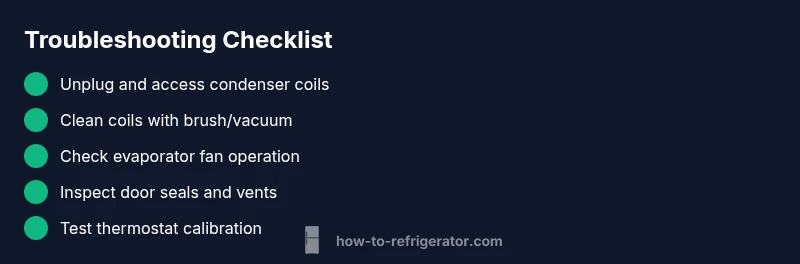
Unplug the refrigerator and locate the condenser coils (back or bottom). If needed, pull the unit out slightly to access the rear or underside panels. This step prevents shock and allows safe inspection of coils and airflow paths.
Tip: Always unplug before touching electrical components. - 2
Clean condenser coils
Gently brush away dust from the coils and use a vacuum to remove stubborn debris. Wipe down with a damp cloth and ensure the surrounding area has unobstructed airflow. Dirty coils are a leading cause of poor cooling in Kenmore units.
Tip: Be careful with coil fins; bent fins reduce airflow. - 3
Check evaporator fan operation
Open the freezer compartment to access the evaporator fan. With the door switch engaged, listen for the fan running. If there’s no sound or you hear grinding, the fan or its wiring may be faulty.
Tip: A faulty fan can dramatically reduce cooling efficiency. - 4
Inspect door seals and airflow
Check door gaskets for gaps and ensure you’re not blocking internal vents with groceries. Poor seals or blocked vents disrupt cold air circulation and mimic not-cooling scenarios.
Tip: Replace damaged seals promptly to restore efficiency. - 5
Test thermostat calibration
Place an external thermometer in the fresh-food compartment and compare readings with the thermostat setting. If temperatures do not align, adjust settings and recheck after 15–20 minutes.
Tip: Small setting changes can have big cooling impacts. - 6
Reassemble and test
Replace all panels, plug the unit back in, and monitor for several hours. Record temperatures to confirm the system reaches the target range.
Tip: Allow time for the temperature to stabilize after any changes.
Diagnosis: Refrigerator not cooling adequately
Possible Causes
- highPower issue or outlet without proper voltage
- highCondenser coils dirty or blocked
- mediumEvaporator fan failure or obstruction
- lowDefrost system failure (defrost timer/defrost heater)
- lowThermostat wiring or calibration issue
Fixes
- easyReset the unit or check the circuit breaker, then verify that the outlet supplies 120V
- easyClean condenser coils and vents; ensure unobstructed airflow around the fridge
- mediumTest the evaporator fan; replace if it does not spin or makes grinding noises
- mediumInspect the defrost system components and timer; replace faulty parts
- easyInspect thermostat connections and calibrate the temperature setting
FAQ
What are the most common signs that a Kenmore refrigerator is not cooling properly?
Common signs include warm food, condensation on doors, frost buildup in the freezer, and a running but inefficient compressor. If you notice any of these together, you likely have a cooling issue that needs inspection.
Look for warm food, frost, or condensation—these are red flags that your Kenmore fridge isn’t cooling correctly.
Can a dirty condenser coil cause not cooling?
Yes. Dirty condenser coils impede heat dissipation, causing the compressor to work harder and cooling to drop. Regular cleaning often resolves this.
Dirty coils reduce cooling and can be fixed by a simple cleaning.
What should I do if the evaporator fan isn’t running?
If the evaporator fan doesn’t run when the door is opened or you hear unusual noises, the fan motor or wiring may be faulty and require replacement.
If the evaporator fan isn’t running, replace the motor or fix wiring to restore airflow.
Is it safe to adjust the thermostat on my Kenmore fridge?
Yes, you can calibrate the thermostat using a thermometer to ensure accurate readings. Avoid large changes—small adjustments often fix undercooling.
You can tweak the thermostat slightly, but check with a thermometer to verify changes.
Can a defrost drain clog cause not-cold symptoms?
A clogged defrost drain can cause ice buildup that blocks airflow, leading to not-cold symptoms. Clear the drain or call a pro if ice persists.
A clogged defrost drain can freeze airflow and cause cooling problems.
When should I call a technician?
Call a technician if basic checks don’t restore cooling, you see refrigerant signs, or you suspect a compressor or sealed system issue.
If basics don’t fix it or you suspect leaks, it’s time to get a professional.
Watch Video
Top Takeaways
- Prioritize airflow and coil cleanliness
- Use a thermometer to verify actual temperatures
- Don't ignore frost buildup or defrost issues
- Know when to call a professional for refrigerant or compressor problems
- Keep a simple maintenance routine to prevent future failures