refrigerator kenmore not cooling: quick troubleshooting guide
If your refrigerator Kenmore isn't cooling, this urgent troubleshooting guide helps diagnose causes, perform safe DIY fixes, and know when to call a pro.


Most likely the issue is a dirty condenser coil or a faulty evaporator fan preventing proper cooling. Start with a quick fix: unplug the unit, clean the condenser coils (back or bottom), and verify the thermostat is set correctly around 37–40°F. If cooling still fails, reset the control board by unplugging for 1 minute, then replug and test.
What refrigerator kenmore not cooling means
When a refrigerator from Kenmore stops cooling, it usually means the cooling system isn’t removing heat fast enough. Common culprits include dirty condenser coils, a failing evaporator fan, a malfunctioning thermostat, or a defrost timer stuck in defrost mode. Understanding the symptom helps target the right fix. According to How To Refrigerator, most issues stem from airflow, temperature control, or the sealed system, so start with safe, simple checks first. If you don’t feel confident, consult the troubleshooting flow below or contact a professional. This guide is designed for homeowners troubleshooting appliance issues with urgency and care.
Common causes at a glance
- Dirty condenser coils blocking heat transfer, often found at the back or beneath the fridge. Regular cleaning restores cooling efficiency.
- Faulty evaporator fan not circulating air through the freezer and into the fresh-food compartment.
- Thermostat or defrost timer malfunction keeping the compressor off or stuck in defrost.
- Damaged door seals or blocked internal vents that prevent cold air from circulating properly.
- Overpacking the fridge or improper product placement that restricts airflow.
- In rare cases, a refrigerant leak or a failing compressor, which typically requires professional diagnosis.
Safety first: quick checks you can do now
Before you touch any components, unplug the unit and remove perishable items to prevent spoilage. Check that the power outlet is working and that the fridge is level to avoid door seal leaks. If the display shows error codes, note them for reference. Use a thermometer to verify the interior temperatures after power restoration. If you encounter buzzing, burning smells, or refrigerant scent, stop and call a pro immediately. These steps are meant to be safe, quick checks homeowners can perform without opening sealed systems.
According to How To Refrigerator, starting with simple, observable issues helps you avoid unnecessary repairs and costs.
Locate and clean condenser coils safely
Condenser coils remove heat from the refrigerant. They’re usually on the back of the unit or under the machine. To clean: unplug the fridge, move it away from the wall, and use a coil brush or vacuum with a brush attachment to remove dust and debris. Rinse surrounding areas and let coils dry before reassembling. After cleaning, plug the unit in and listen for improved cooling over the next 30–60 minutes. Do not use sharp tools on fins; be gentle to avoid damage. Regular coil cleaning every 6–12 months can prevent repeat issues.
Tip: If you can’t access the coils safely, contact a professional rather than forcing access.
How To Refrigerator emphasizes that airflow is the single most impactful factor in restoring cooling efficiency.
Check evaporator fan and airflow paths
The evaporator fan pushes cooled air from the freezer into the refrigerator. If the fan is obstructed, seized, or failed, cooling will stall. To diagnose: open the freezer (careful with frost), listen for the fan when the compressor is running, and check for frost buildup on the evaporator coils. If you don’t hear the fan, or you see ice accumulating in unusual patterns, the fan or defrost components may need replacement. Replacing a failed evaporator fan is a common DIY fix, but replace only with the right part for your model.
Inspect controls: thermostat, defrost timer, and door seals
Set the thermostat to the manufacturer’s recommended range (approximately 37–40°F for the fridge and 0°F for the freezer). Use a separate thermometer to verify actual temperatures. If temperatures don’t respond, the thermostat or defrost timer may be stuck or failing. Defrost timers that fail can cause cooling to stop intermittently. Also inspect door seals for cracks or gaps; a poor seal lets warm room air into the cabinet and dramatically worsens cooling. Replace weathered gaskets to restore seal integrity.
Preventive maintenance and when to call a pro
Regular maintenance reduces future failures: clean condenser coils every 6–12 months, ensure proper airflow, avoid overfilling, and check door seals for wear. If you notice frost buildup, unusual noises, or if the compressor remains warm to the touch after extended operation, these are signs to call a technician. Sealed-system issues, refrigerant leaks, or compressor failures require professional repair. The How To Refrigerator Team recommends a proactive maintenance routine to extend appliance life.
Steps
Estimated time: 60-90 minutes
- 1
Power down and prepare
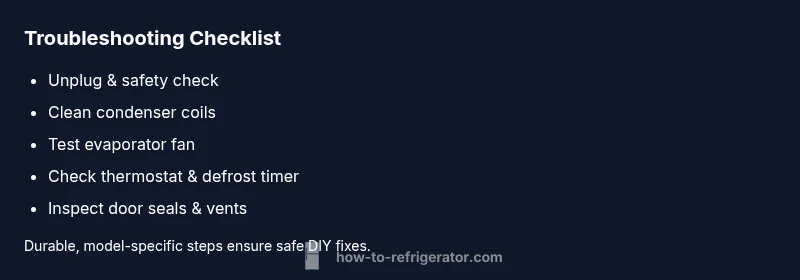
Unplug the refrigerator, remove perishable items, and move the unit away from the wall to access the back or bottom panels. Safety first: avoid touching electrical components with wet hands. This step keeps you safe while you inspect for obvious issues.
Tip: Keep a towel handy for any spills and label removed items to prevent spoilage. - 2
Inspect condenser coils
Look for dust and debris on the coils. Use a coil brush or a low-suction vacuum to clean thoroughly. Gently sweep across all surfaces and fins, avoiding bending the fins. Reconnect power after drying and listen for a change in cooling behavior.
Tip: Regularly cleaning coils reduces energy use and extends compressor life. - 3
Test evaporator fan
Open the freezer and listen for the evaporator fan when the compressor is running. If you don’t hear it or you notice frost buildup, the fan may be blocked or failed. Replace the fan if necessary with the right model and follow the manufacturer’s wiring diagram.
Tip: Never bypass the heating element or defrost components; replace faulty parts with OEM or compatible equivalents. - 4
Check thermostat & defrost
Ensure the thermostat is set within the recommended range. Use an accurate thermometer to verify interior temps. If defrost cycle is stuck, the defrost timer or heater could be faulty and require replacement.
Tip: Document any error codes and refer to your Kenmore model’s service manual for exact spec values. - 5
Inspect doors and airflow
Check door seals for cracks or gaps and test with a simple dollar bill trick to ensure a tight seal. Clear any items blocking vents inside the fridge that prevent cold air from circulating. A blocked vent can mimic a cooling failure.
Tip: Keep the fridge organized so air can circulate evenly. - 6
Re-test and monitor
Plug the unit back in and let it run for 1–2 hours while monitoring both compartments with a thermometer. If there’s still no cooling or if the compressor feels hot, stop and call a technician. Some issues require professional diagnosis and refrigerant handling.
Tip: Record temperatures and any unusual sounds for the technician.
Diagnosis: Kenmore refrigerator not cooling
Possible Causes
- highDirty condenser coils blocking heat transfer
- highEvaporator fan not running or obstructed
- mediumThermostat or defrost timer malfunction
- lowDoor seals leaking or vents blocked
Fixes
- easyUnplug and clean condenser coils; ensure clearance around unit
- mediumTest evaporator fan and replace if faulty
- easyTest thermostat/defrost timer and replace if needed
- easyReplace door seals or clear vent obstructions
FAQ
Why isn’t my Kenmore refrigerator cooling even after cleaning the coils?
Coil cleaning helps, but not cooling can also be caused by a faulty evaporator fan or a bad thermostat. If the fan runs but cooling remains weak, the issue may be the defrost timer or a sealed-system problem that requires a technician. Start with the fan and thermostat checks, then escalate if needed.
Coil cleaning helps, but if the fan or thermostat is faulty, cooling may still be weak. Start with the fan and thermostat checks and call a pro if needed.
Is it safe to unplug the fridge while troubleshooting?
Yes, unplugging before inspections is a basic safety step. Do not touch electrical components with wet hands, and keep food cold by relocating perishables. Reconnect power after checks to test improvements.
Yes, unplug it before inspections. Make sure your hands are dry and reconnect power after checks to test.
Can a faulty door seal cause cooling problems?
Absolutely. A damaged door gasket allows warm room air to enter, raising the interior temperature and straining the cooling system. Replace cracked seals and ensure a tight seal by testing with a dollar bill or felt-tip test.
Yes. A bad door seal lets warm air in, making the fridge work harder. Replace the gasket to fix it.
When should I call a technician for a Kenmore fridge not cooling?
Call a technician if you hear buzzing or clicking from the compressor, notice ice buildup in the freezer beyond normal defrosting, or suspect a refrigerant leak or sealed-system issue. These often require professional equipment and safe handling.
If you hear unusual noises or suspect a refrigerant leak or sealed-system problem, call a pro.
What does ice buildup in the freezer indicate?
Excess frost can signal a defrost issue or an airflow problem. If frost accumulates quickly, the defrost cycle may be failing, the door is kept open, or the coils aren’t cooling properly. Address the defrost circuit and airflow to restore balance.
Excess frost usually means defrost or airflow problems; check those systems and fix the cycle.
Watch Video
Top Takeaways
- Diagnose in steps: coils, fan, then thermostat.
- Clean coils regularly to prevent future failures.
- Test door seals and airflow vents for proper function.
- Know when to call a pro for sealed-system issues.