Refrigerator Is On But Not Cooling: Troubleshooting Guide
Urgent troubleshooting for homeowners: diagnose why a refrigerator is on but not cooling, with safe checks, a diagnostic flow, step-by-step fixes, and professional guidance.


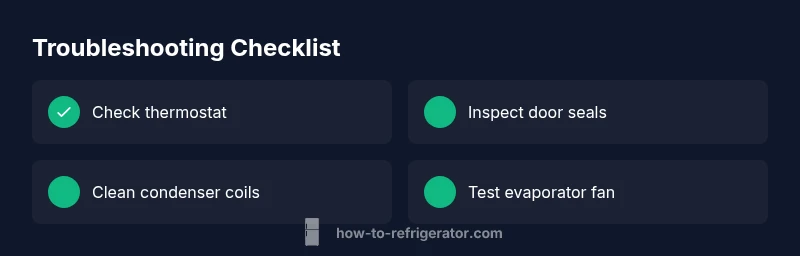
If your refrigerator is on but not cooling, start with the basics. Check the thermostat setting, door gaskets, and that the condenser coils are dust-free. Listen for the evaporator fan and ensure the compressor cycles on and off. If you notice frost buildup, unusual noises, or the unit feels warm, unplug and call a professional. Persistent cooling issues often point to a defective defrost system or compressor.
Why a refrigerator is on but not cooling: safety and setup checks
When a fridge seems to run but fails to chill, the quickest path to answers is a careful, safe checklist. First, confirm you’re not in a defrost or diagnostic mode, and that the unit isn’t placed near a heat source or in direct sunlight. The door should seal completely with no gaps. If the door stays ajar even briefly, warm room air can overwhelm cooling capacity. According to How To Refrigerator, many cooling problems begin with simple misconfigurations or obvious blockages. Start by verifying the thermostat is set to a cooling-friendly level (usually around 37–40°F / 3–4°C for the fresh food compartment) and that both compartments have airtight seals. If the thermostat is correct but the interior remains warm, inspect the door gasket for cracks or wear. A compromised seal allows warm air to continuously enter, forcing the compressor to work harder and potentially overheat. Also, ensure the fridge isn’t packed so tightly that air can’t circulate around the vents. This block lays the groundwork for safer, more effective diagnostics that homeowners can perform without tools beyond a flashlight and a vacuum or brush. If you keep a log of symptoms—noise, frost, water leaks—it helps a professional diagnose faster later on.
Common culprits when a fridge is on but not cooling: what to look for and how to interpret signals
Several issues most often cause a running refrigerator to fail cooling. A mis-set or faulty thermostat is a frequent and easily corrected problem. Dirty condenser coils are another common cause: when coils are covered in dust or pet hair, heat can’t dissipate, and the compressor stalls. The evaporator fan must move cold air from the freezer to the fresh-food compartment; if it’s blocked or dead, cooling stalls. A malfunctioning defrost timer or heater can cause frost to accumulate and block airflow, effectively choking the system. In rarer cases, the compressor or a faulty start relay prevents the system from pressurizing correctly. How To Refrigerator analysis shows that starting with the simplest fixes—thermostat, seals, and coils—narrowly identifies the majority of failures, then guides you toward more advanced tests if needed. Keep an ear out for unusual buzzing or clicking as clues about the compressor or relay. If you hear grinding or the unit runs constantly without cooling, the issue is more serious and may require professional service.
Quick diagnostics you can perform safely: step-by-step checks
Before touching any electrical components, unplug the unit if you plan to inspect electrical parts or coils up close. Use a flashlight to inspect the condenser coils on the back or underneath the fridge; if you see a thick layer of dust, gently brush or vacuum it away. Check the evaporator fan in the freezer compartment by opening the freezer door; you should hear the fan when the door switch is pressed. Inspect the door seals for gaps by sliding a sheet of paper along the door frame; if it pulls out easily, the gasket needs replacement. Ensure the air vents inside the unit are clear of obstructions so cold air can circulate. Finally, confirm the defrost drain isn’t blocked, because a clogged drain can cause frost buildup that reduces airflow. Remember: if you discover refrigerant leaks, a failed sealed system, or a faulty compressor, stop DIY attempts and call a licensed technician. Following these steps creates a solid foundation for the next fixes and minimizes risk to yourself and the appliance.
When to call a professional and maintenance tips to prevent future failures
If you’ve ruled out obvious causes and the fridge still isn’t cooling, it’s time to escalate. A professional can diagnose refrigerant issues, a failing compressor, or a defective defrost timer with specialized tools. For safety and reliability, do not attempt to repair sealed systems yourself. After a repair, schedule periodic maintenance: clean coils every 6–12 months, inspect door seals seasonally, and keep the fridge a few inches away from walls to improve airflow. To prevent repeat problems, consider installing a simple thermometer to monitor interior temperatures and track any fluctuations. Keeping records of your findings helps you recognize patterns and accelerates future troubleshooting.
Final checks and safety reminders
Always unplug before performing any invasive checks, and never attempt to bypass safety devices or refrigerant controls. If you notice ice buildup that seems abnormal, or if the compressor is hot to the touch, contact a professional promptly. A structured troubleshooting approach minimizes risk and maximizes the chances of restoring proper cooling. The How To Refrigerator team recommends keeping a basic maintenance routine: clean coils, test door seals, inspect them for wear, and schedule professional inspection if cooling issues persist for more than 24–48 hours.
Steps
Estimated time: 60-120 minutes
- 1
Check thermostat and door seals
Verify the fridge is set to a proper cooling temperature (around 37–40°F). Inspect door seals for cracks or gaps and ensure they close tightly. A poor seal invites warm air, causing the compressor to run longer and your interior to warm up.
Tip: If you find a damaged gasket, replace it promptly to restore airtight sealing. - 2
Inspect condenser coils
Locate coils (back or bottom of unit) and remove dust, hair, and debris with a brush or vacuum. Clean coils improve heat dissipation and can restore cooling in many cases. Recheck after cleaning to see if the interior temperature drops.
Tip: Do this with the fridge unplugged to avoid electrical hazards. - 3
Check evaporator fan and airflow
Open the freezer to access the evaporator and listen for the fan when the door is closed. If the fan is silent or blocked by frost, it may require defrosting or replacement. Ensure there are no items blocking vents between compartments.
Tip: A functioning evaporator fan is essential for even cooling. - 4
Investigate defrost system
If frost accumulates excessively, the defrost timer or heater may be failing, causing the evaporator to clog. Look for frost close to the back panel and listen for periodic defrost cycles. If in doubt, do not bypass the defrost system.
Tip: Defrost issues are common culprits; addressing them early prevents frost buildup. - 5
Assess the compressor and start relay
If the compressor doesn’t cycle on or runs continuously without cooling, it may indicate a faulty start relay or a failing compressor. This step often requires a professional assessment and refrigerant handling safety.
Tip: Never attempt to recharge refrigerant yourself. - 6
Decide on next steps and safety
If basic fixes don’t restore cooling, call a licensed technician for sealed-system diagnosis and refrigerant checks. Document symptoms and steps taken to aid the technician. Regular maintenance afterward helps prevent repeats.
Tip: Keep the model, serial number, and service history handy for faster support.
Diagnosis: Machine is on but not cooling
Possible Causes
- highThermostat mis-set or defective
- highCondenser coils dirty or blocked
- mediumEvaporator fan not running or blocked
- mediumDefrost timer/defrost heater failure
- lowCompressor failure or start relay issue
- lowRefrigerant leak or sealed-system problem
Fixes
- easyAdjust thermostat to recommended setting and test cooling
- easyClean condenser coils and improve airflow around unit
- mediumTest evaporator fan operation and clear obstructions
- mediumInspect/replace defrost timer or heater if frost buildup is present
- mediumReplace failed start relay or contactor on the compressor
- hardSchedule professional service for refrigerant or sealed-system issues
FAQ
What is the first thing I should check when my refrigerator is on but not cooling?
Begin with thermostat settings, door seals, and condenser coils. A simple correction often resolves the issue. If these are fine, proceed to inspect the evaporator fan and defrost system.
Start with the thermostat, door seals, and coils; small fixes often solve the problem before moving to more complex checks.
Why does a cold fridge sometimes feel warm inside?
Warm interior usually means air isn’t circulating properly. Check the evaporator fan, vents, and frost buildup that might block airflow. Also verify the door seals are airtight.
If it feels warm inside despite the compressor running, it’s usually an airflow or seal issue.
Can a dirty condenser coil cause frost inside the fridge?
A dirty condenser coil primarily impairs heat dissipation, leading to inefficiency and warmer temperatures; frost inside is typically related to the defrost system. Clean coils and observe any changes.
Dirty coils hinder heat disposal, which can worsen cooling performance but frost usually points to defrost problems.
When should I call a technician for a fridge that won’t cool?
If basic checks don’t restore cooling or you suspect refrigerant, compressor, or sealed-system issues, contact a licensed technician. These are not DIY fixes due to safety and legal considerations.
Call a pro if basic fixes don’t work or you suspect refrigerant or compressor problems.
Is it safe to clean the condenser coils myself?
Yes, cleaning coils with a brush or vacuum is safe when the unit is unplugged. Avoid using water directly on electrical components and handle with care.
You can clean the coils safely if the fridge is unplugged and you avoid the electrical parts.
How long should a defrost cycle take?
Defrost cycles typically occur periodically and last a short time. Persistent frost accumulation beyond 24–48 hours warrants inspection of the defrost timer or heater.
Defrost cycles happen regularly; if frost sticks around for days, something’s off.
Watch Video
Top Takeaways
- Start with thermostat, seals, and coils
- Clean coils regularly for optimal cooling
- Listen for fan and compressor signals to diagnose faults
- Call a pro for refrigerant or sealed-system issues