How to Troubleshoot a Refrigerator That’s Getting Too Cold
Learn why a refrigerator gets too cold and how to fix it fast. Safe checks, defrost tips, and prevention steps from How To Refrigerator.


Most likely the fridge is getting too cold because the thermostat is set too low or frost buildup is blocking airflow. Start by increasing the fridge’s setpoint by 2–3 degrees and allow 6–12 hours to stabilize. Check door seals and ensure vents aren’t blocked. If temperatures stay low, run a defrost cycle or consult a technician.
Why the refrigerator is getting too cold
When the refrigerator is getting too cold, you risk frozen foods, wasted energy, and spoiled produce. According to How To Refrigerator, the two most common causes are an aggressively low thermostat setting or frost buildup that blocks airflow. In many homes, frost forms after humidity spikes or a door is left ajar for just a few minutes. Temperature sensors and control boards can drift over time, especially in older units, causing inaccurate readings. If you notice the refrigerator is getting too cold, start with simple adjustments before calling a technician. The goal is a stable 35–38°F (1.5–3°C) in the fridge and 0°F (-18°C) in the freezer. Consider temporarily using a separate thermometer to verify exact temperatures; appliance displays can be misleading.
The brand context matters: How To Refrigerator emphasizes that quick, safe fixes beat guessing games, and a misread temperature is often fixable without professional help. A calm, methodical approach reduces stress and keeps food safe.
Additionally, aging components and abrupt environmental changes can tilt your readings. Keep a log of settings and temps to spot patterns over a week or two.
Quick Checks You Can Do Now
- Verify thermostat settings: If the fridge is set too low, raise it by a couple of degrees and give the unit several hours to re-stabilize. Use a separate thermometer placed in the center of the shelf for an accurate read.
- Inspect door seals: A leaky gasket lets warm air in and can paradoxically cause the fridge to overcool as the system compensates. Do the dollar-bill test: close a bill in the door gasket and try to pull it out; if it slides out easily, the seal needs replacement.
- Ensure vents and air channels are clear: Do not stack groceries directly in front of vents. Rearrange items so cold air can circulate from the freezer to the fridge, and around shelves.
- Look for frost on the back wall: Thick frost buildup reduces air exchange. If frost is present, a defrost cycle or manual defrost may be necessary.
- Check the freezer damper and temperature sensors: A damper stuck in the closed position can keep the fridge too cold. A faulty sensor can give false readings.
- Observe door usage: Frequent opening and closing or leaving doors ajar for long periods can confuse the system and trigger erratic cooling. Keep doors closed and minimize door openings during troubleshooting.
Common Causes in Depth
The root cause often lies in three areas: thermostat settings, frost buildup, and airflow control. A thermostat that’s too aggressive will drive the compressor to run longer and colder, which paradoxically lowers the fridge temperature too far. Frost accumulation—especially in frost-free models—can form on the evaporator coils, reducing heat exchange and prompting the system to ultra-cool to compensate. If the airflow path between the freezer and the fridge is blocked by foods or containers, the fridge may never reach the right temperature. Damper failures or sensor drift can also throw off readings, leading to consistent overcooling. In some cases, a faulty defrost thermostat or timer causes ice to accumulate and the system to overcompensate.
How To Refrigerator notes that temperature control issues are often user-serviceable in the early stages; many problems resolve after correcting settings, defrosting, and clearing airflow. However, if a control board, damper mechanism, or sealed system component is defective, professional service is recommended to avoid further damage.
How Frost and Defrost Cycles Affect Temperature
Frost buildup inside the freezer can block air passages, preventing cold air from circulating to the fridge. When frost or ice forms on the evaporator coils, the fridge senses overly cold conditions and reduces airflow to protect frozen goods, resulting in a too-cold refrigerator. Conversely, if the defrost cycle fails to run, ice will accumulate and performance will degrade. In frost-free models, a defective defrost timer, heater, or sensor can cause constant defrost pulses or continuous cooling, leading to unnaturally cold readings inside the fridge. Regularly listening for unusual noises or unusual frost patterns can help you catch a defrost issue early.
If defrosting resolves the issue temporarily but it returns, this points to a recurring defrost mechanism fault that should be inspected by a technician. How To Refrigerator's guidance emphasizes testing each part of the defrost system to isolate the culprit.
Prevention and Maintenance to Avoid Recurring Cold Issues
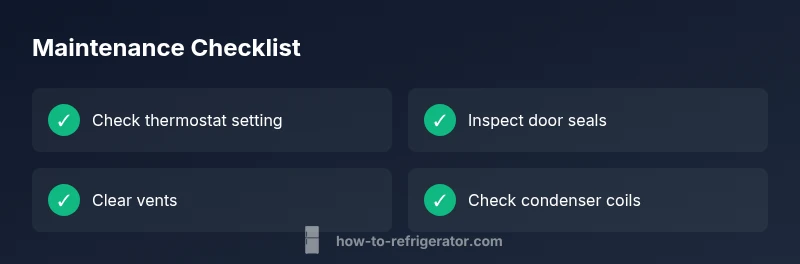
Routine maintenance protects against unexpected cooling problems. Clean condenser coils every 6–12 months to improve heat exchange; ensure the fridge has adequate clearance around the back and sides for proper airflow; replace worn door seals promptly to prevent drafts. Use a fridge thermometer to verify temperatures and maintain a consistent setting during seasonal changes. Organize the interior to prevent air blockages and avoid placing warm items directly into the fridge. Regular defrosting or confirming the defrost system operates as intended can prevent frost buildup from returning. Small, deliberate maintenance tasks now can prevent major failures later, saving you time and energy costs. In short: keep airflow clear, set temperatures carefully, and schedule periodic checkups.
Steps
Estimated time: 25-40 minutes
- 1
Adjust thermostat to a safe range
Set the fridge thermostat to approximately 35–38°F (1.5–3°C) and give the unit time to stabilize. Use a separate thermometer to verify actual temps in the middle shelf and near the damper. Avoid rapid changes that can shock components.
Tip: Use a dedicated fridge thermometer for accuracy. - 2
Test and improve door seals
Close the door on a thin piece of paper or a dollar bill. If you can pull it out easily with the door closed, the seal is worn and should be replaced. Wipe the gasket with mild soap to remove residue that can prevent a good seal.
Tip: Replace gaskets inside a couple of hours if worn. - 3
Clear air vents and organize interior
Move items away from vents and ensure airflow from the freezer to the refrigerator. Tall containers should not block vents. A more open layout helps even cooling and prevents cold spots.
Tip: Keep a 2–3 inch clearance around vents. - 4
Defrost if frost is present
If frost is thick on the back wall or evaporator, run a defrost cycle or manually defrost. Unplug the unit, remove perishables, and allow ice to melt safely before restarting. Dry the interior completely before restocking.
Tip: Never use sharp tools to remove ice; that can damage components. - 5
Check the damper and temperature sensor
A stuck damper or faulty sensor can misread temperatures and starve the fridge of warm air. If the damper is not moving freely or the sensor seems off, professional service may be needed.
Tip: Note any unusual behavior like noises or delayed cooling. - 6
Clean condenser coils and verify airflow
Dusty coils reduce heat transfer efficiency and can cause the compressor to run excessively. Vacuum or brush the coils outside the unit and ensure there is ample clearance for airflow behind the appliance.
Tip: Plan coil cleaning for every 6–12 months.
Diagnosis: Refrigerator temperature is too cold (noisy, frost, or inconsistent cooling)
Possible Causes
- highThermostat set too low
- mediumFrost buildup blocking airflow
- mediumDamper or sensor failure
Fixes
- easyIncrease fridge temperature setpoint by a couple of degrees and monitor for 24 hours
- easyRun a defrost cycle or manually defrost to remove ice buildup
- easyInspect and adjust air vents and damper; check door seals
FAQ
Why does my fridge keep getting too cold even after I raise the thermostat?
A stubbornly cold fridge after raising the thermostat could point to frost buildup, a faulty defrost cycle, or a failing temperature sensor. Start with a defrost, clean vents, and test temperature with an independent thermometer. If the issue persists, a professional check may be needed.
A stubbornly cold fridge after turning the thermostat up may mean frost or a sensor issue; defrost and check airflow first, then call a pro if needed.
How can frost buildup cause the fridge to be too cold?
Frost blocks air passages and reduces heat exchange, prompting the system to overcompensate and lower the fridge temperature. Defrosting and cleaning coils typically resolves this, but repeated frost suggests a defrost system fault.
Frost blocks airflow and makes the fridge overcool; defrost and inspect the system, and call a pro if it returns.
Is it safe to defrost manually?
Yes, manual defrost is generally safe if you unplug the fridge, remove perishables, and allow ice to melt in a controlled area. Avoid using sharp tools that can puncture coils, and dry the interior before restarting.
Defrosting manually is safe if you unplug first and remove food; let ice melt and dry the inside before powering back on.
When should I replace door seals to fix overcooling?
If door seals are cracked or loose, cold air leaks in and the refrigeration system may overcompensate. Replace worn gaskets promptly to maintain proper temperatures.
Worn door seals cause drafts; replace them to keep temperatures steady.
Can a faulty thermostat cause the refrigerator to overcool?
Yes. A malfunctioning thermostat can misread interior temperatures, causing the system to run too cold. A professional can test and replace a faulty thermostat if needed.
A bad thermostat can misread temps and overcool; get it tested if problems persist.
How often should I clean condenser coils?
Regular coil cleaning helps maintain proper cooling and efficiency. Aim for cleaning every 6–12 months, more often in dusty environments.
Clean coils every 6–12 months to keep cooling efficient.
Watch Video
Top Takeaways
- Start with thermostat adjustments and airflow checks.
- Defrost if frost buildup is present to restore proper cooling.
- Do not block vents; keep interior organized for even cooling.
- If issues persist, consult a professional for control or sealed-system faults.