Fixing a Refrigerator That's Too Cold: Quick Guide
Learn practical steps to fix a refrigerator that's too cold. This How To Refrigerator guide offers quick checks, safe fixes, and guidance on when to call a pro.


The most likely cause of a refrigerator that is too cold is overcooling from a mis-set thermostat or defrost system, plus restricted airflow. Start by raising the temperature a notch and letting the fridge stabilize for 24 hours. If the problem persists, check door seals, vents, and the evaporator coil for frost buildup.
Understanding Why Your Fridge Is Too Cold
According to How To Refrigerator, a refrigerator that runs too cold is usually the result of overcooling caused by thermostat miscalibration, frost buildup on the evaporator, or airflow restrictions inside the unit. Food safety is a core concern; when temperatures fall too low, perishables can freeze, leading to texture changes, altered flavor, and wasted food. Most modern refrigerators are designed to maintain two zones with the freezer and fresh-food compartment balanced by air channels, dampers, and a defrost cycle. In practical terms, a fridge that is too cold typically requires a simple rebalancing: adjust the thermostat to a higher setting, clear any frost, and ensure vents are open and unobstructed. A small change can restore balance without compromising safety or energy use. This guide provides a clear, homeowner-friendly approach to regain proper cooling without expensive repairs.
Core Factors: Thermostat, Defrost, and Airflow
Three core factors determine a fridge’s temperature: the thermostat setting, the defrost mechanism, and airflow. If the thermostat is set too low, the compressor may run longer than necessary, pulling the temperature down across both compartments. A faulty defrost timer or control board can cause excessive cooling or frost buildup that blocks air passages. Finally, blocked vents or overcrowded shelves impede cold air from circulating evenly, causing some areas to freeze while others stay too cold. Regular checks can help you spot these issues early. Remember, even a slight misadjustment or a tiny frost pocket can cascade into a broader imbalance affecting the entire unit.
Signs Your Fridge Is Too Cold
Common signs include visible frost on the shelves or walls, food freezing in the crisper, beverages turning icy, and a general sense that the inside feels icy rather than cool. If you notice condensation on the door seal or frost accumulating on the evaporator coil inside the freezer, that can indicate airflow problems or a malfunctioning defrost cycle. The symptom you report—“my refrigerator is too cold”—often points to the need for a thermostat check, vent clearance, or a manual defrost. Early detection helps protect perishable foods and prevents energy waste.
Diagnostic Checklist You Can Do Today
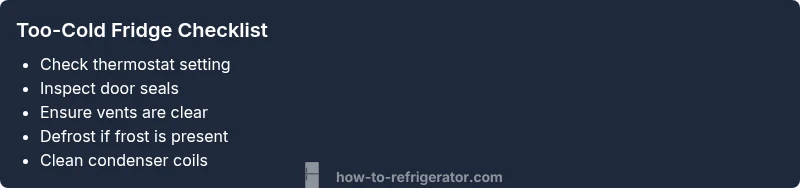
To start diagnosing today, gather a thermometer, a flashlight, and a clean cloth. First, verify the thermostat setting is appropriate and the temperature inside isn’t set too low. Next, inspect the door gaskets for cracks or gaps and test whether doors seal tightly when closed. Check all vents for obstructions by removing tall items and reorganizing shelves to allow air to flow freely. If you see frost around the evaporator coil in the freezer, perform a defrost (manual or automatic) and clean any frost buildup. Finally, observe the fridge for 24 hours after adjustments to confirm that cooling levels stabilize.
Step-by-Step Fix: Nearest-Common Cause
Rebalancing a fridge that’s too cold usually starts with thermostat adjustment, followed by airflow and frost checks. Start by turning the thermostat up by one notch and giving the system 24 hours to stabilize. If frost is present, perform a careful defrost and ensure drainage. Then, check door seals and vents; replace damaged gaskets. Finally, verify that the condenser coils (usually under the unit) are clean and unblocked. If temperatures still drop too low, the issue may be a defrost timer or control board, which typically requires professional service.
Safety Warnings and When to Call a Pro
Always unplug the appliance before performing internal inspections or defrosting to avoid electric shock. Never use knives or metal tools to chip away ice around the coils, which can puncture lines. If you notice refrigerant leaks, buzzing noises, or an error code on the display that you cannot resolve, contact a qualified technician. For persistent issues beyond basic adjustments, a professional inspection can prevent further damage and ensure your unit remains safe and efficient.
Prevention: Keep Your Fridge in Balance
Prevention is simpler than recurring problems. Keep coils clean and free of dust, check door seals regularly, avoid overfilling, and maintain a stable ambient room temperature. Place the fridge away from heat sources and ensure the unit is level. Schedule a routine check every 6–12 months to inspect the defrost system and thermostat calibration. Implementing these habits helps maintain consistent cooling, reduces energy use, and extends the life of your appliance.
Troubleshooting Flow Explained
This flow guides you from simple to more involved checks. Start with the lowest-effort fixes: adjust the thermostat, inspect seals, and clear vents. If these steps don’t resolve the issue, perform a manual defrost and verify frost levels. Recheck airflow and door closure. If frost persists or the thermostat isn’t holding, it’s time to contact a pro. Throughout the flow, document temperature readings and any signs of frost to share with the technician.
When to Consider Replacement
If your refrigerator is older or has frequent cooling anomalies despite professional service, replacement may become more cost-effective than ongoing repairs. Evaluate energy efficiency, reliability, and repair costs against a new unit’s features. Even with a new model, expect a professional installation and potential warranty considerations. The decision should balance safety, energy use, and your household needs.
Steps
Estimated time: 1-2 hours
- 1
Identify and set safe thermostat range
Locate the temperature control and set it to a mid-range and observe for 24 hours. Use an inside fridge thermometer to verify actual temperature.
Tip: Document the setting and observed temps before making further changes. - 2
Check for frost on evaporator coil
Open the freezer and inspect the evaporator area for frost buildup. If frost is visible, perform a controlled defrost or contact a professional if large patches exist.
Tip: Do not scratch or pry frost aggressively to avoid damage. - 3
Test door seals and airflow
Inspect door gaskets for cracks and press the door shut to test for a tight seal. Remove items that block vents and ensure air can circulate between compartments.
Tip: Leave a small opening for air flow if you notice heavy stacking. - 4
Clean condenser coils and check location
Power off the fridge and locate the condenser coils (usually underneath). Vacuum away dust and debris, ensuring the coils remain dry.
Tip: Clean coils every 6–12 months for optimal efficiency. - 5
Defrost if needed and recheck
If frost persists, manually defrost the unit or allow automatic defrost to cycle. After defrost, reassemble shelves and monitor temperatures for 24 hours.
Tip: Never use heat or hot water directly on coils. - 6
Rebalance after stabilization
Once temperature stabilizes, avoid frequent door openings and ensure the unit isn’t placed near heat sources.
Tip: Consider a 1–2 degree adjustment if foods still begin to freeze. - 7
Call a professional if unresolved
If the fridge continues to run too cold after all checks, there may be a faulty thermostat, defrost timer, or control board that requires a technician.
Tip: Obtain the model number and service history before the visit. - 8
Review maintenance plan
Set a routine: monthly quick checks, quarterly vent clearing, and biannual coil cleaning to prevent future issues.
Tip: Keep a maintenance log for reference.
Diagnosis: Machine is too cold; foods freeze or frost forms inside; uneven cooling.
Possible Causes
- highThermostat set too low or calibration drift
- mediumDefrost timer/control board malfunction
- mediumRestricted airflow from blocked vents or overcrowded shelves
- lowFrost buildup on evaporator coils
- lowImproper installation or ambient temperature impact
Fixes
- easyIncrease temperature setting by 1 notch and monitor 24–48 hours
- easyCheck vents and reorganize shelves to restore airflow
- easyInspect and replace damaged door seals; ensure tight closure
- mediumPerform manual defrost if frost blocks the evaporator; ensure drainage
- hardIf thermostat or defrost system appears faulty, contact a professional
FAQ
Why does my fridge get too cold after a defrost cycle?
A malfunctioning defrost cycle can over-cool the fridge or create frost that blocks airflow. If you notice frost after the cycle, have the timer or control board tested. A simple reset of the cycle might fix minor issues.
If the defrost cycle is stuck, your fridge may overcool. A technician can test the timer and control board.
How should I adjust the thermostat safely?
Set the thermostat to a mid-range and allow 24 hours to stabilize. Use a fridge thermometer to confirm actual temperatures and avoid frequent changes.
Start with a mid-range setting and wait a day to see if temperatures balance.
Is frost buildup dangerous for my fridge?
Moderate frost can block airflow, causing freezing issues. Severe frost can damage the evaporator. Defrost and clean as needed, and if frost returns, inspect defrost components.
Frost can block airflow; defrost and inspect components if it keeps coming back.
When should I call a professional?
Call a pro if the fridge remains too cold after thermostat adjustment, or if you notice refrigerant signs, loud buzzing, or error codes. A technician can diagnose control boards and sealed systems safely.
If it stays too cold after basic fixes, a professional needs to review it.
Can a too-cold fridge damage food?
Yes. Perishables can freeze and textures can change, reducing quality and safety. Adjust the temperature and monitor food condition after fixes.
Yes, some foods can freeze, so adjust the temperature and check food quality.
What simple checks help prevent this problem?
Keep coils clean, ensure vents aren’t blocked, and inspect seals regularly. A stable ambient temperature and proper spacing around the unit also help.
Clean coils, keep vents clear, and check seals to prevent issues.
Watch Video
Top Takeaways
- Start with thermostat adjustment and vent clearance.
- Address frost buildup promptly to restore balance.
- Maintain airflow and clean coils for consistent cooling.
- If in doubt, call a pro to avoid safety hazards.